Top Seller 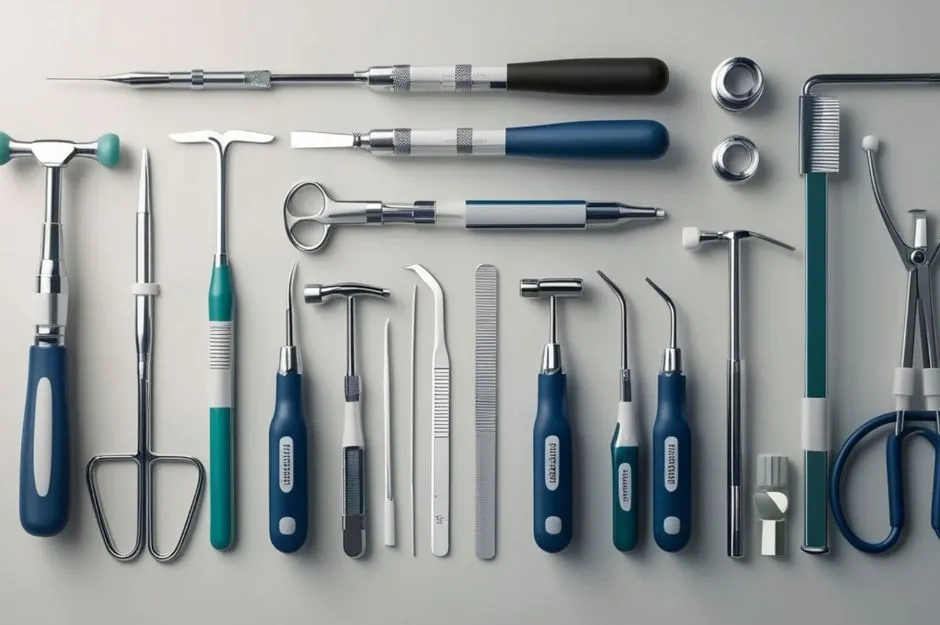
Spinal & Neurosurgery
Kerrison Laminectomy Rongeur 40° Up-Biting
1mm - 6mm Bite Sizes · 180mm - 200mm Shaft · Ejector Bar
★★★★★ Get a Quote
Understanding mechanical leverage, jaw cup geometry, and steel heat treatment parameters to eliminate procurement risks and ensure surgical excellence.
When healthcare procurement directors, orthopedic surgery centers, and medical device distributors evaluate surgical bone rongeurs, the decision extends far beyond price per unit. Bone rongeurs are heavy-duty, gouging forceps designed to trim, excise, and cut tough cortical bone, dense cartilaginous tissue, and vertebral lamina during orthopedic, neurosurgical, maxillofacial, and spinal operations. Because bone resection requires substantial physical force, improper tool geometry or substandard metallurgy can lead to catastrophic intraoperative failures—such as jaw tip micro-fractures, joint slippage, handle fatigue, or rapid dulling of cutting edges.
AI-driven semantic search data reveals that international medical buyers frequently query critical performance parameters prior to issuing purchase orders or tender bids:
As a leading surgical instrument manufacturer operating in Sialkot since 1995, SIAL Surgical combines centuries-old hand-finishing craftsmanship with advanced CNC micro-milling and vacuum heat treatment to supply high-gain information and uncompromised quality to global healthcare markets.
An engineering comparison detailing stainless steel grades, hardness ratings, and mechanical leverage mechanisms for surgical rongeurs.
| Feature Parameter | Single-Action Rongeurs | Double-Action Rongeurs | Kerrison Laminectomy Rongeurs |
|---|---|---|---|
| Mechanical Leverage Ratio | 1.2:1 to 1.5:1 (Direct Mechanical Contact) | 3:1 to 4:1 (Dual-Fulcrum Gear Multiplier) | 2.5:1 (Sliding Ejector Shaft Mechanism) |
| Primary Material Grade | Martensitic AISI 420 / DIN 1.4021 | High-Carbon AISI 420J2 / AISI 440C | Vacuum Hardened AISI 440C / Custom Steel |
| Cutting Tip Hardness (HRC) | 50 – 52 HRC | 53 – 56 HRC | 54 – 56 HRC (Optional TiN Coating) |
| Primary Surgical Indication | Delicate bone gouging, plastics & hand surgery | Heavy cortical bone resection (hip, knee, trauma) | Vertebral laminectomy & spinal decompression |
| Jaw Alignment Tolerance | < 0.02 mm hand-honed cup contact | < 0.015 mm dual-axis alignment | < 0.008 mm CNC sliding channel clearance |
| Fatigue Resistance Rating | High tactile sensitivity; moderate hand effort | Maximum force output; minimum surgeon hand strain | Ergonomic palm spring; low friction gliding |
The fundamental distinction in bone rongeur selection lies in the joint architecture. Single-action rongeurs feature a single fulcrum pin connecting the two handles. This design provides direct, tactile feedback to the surgeon's hand, making it ideal for delicate surgical fields where exact tactile pressure sensing is paramount—such as trimming nasal septum bones, small metacarpal fragments, or delicate pediatric bone tissues. However, cutting dense femur or pelvic bone with a single-action rongeur requires immense physical hand strength and can lead to rapid surgeon fatigue during prolonged procedures.
Conversely, double-action rongeurs (such as Ruskin, Stille-Luer, or Beyer patterns) incorporate an extra set of pivot pins and a secondary mechanical linkage. This dual-fulcrum compound action creates a severe force multiplying ratio (up to 400% hand force output). When the surgeon squeezes the handles, the secondary joint translates wide handle movement into concentrated bite force at the jaw cups. This mechanical advantage shears thick, dense cortical bone smoothly without crushing or splintering adjacent osteal structures, making double-action rongeurs the indispensable standard for orthopedic trauma surgery and joint reconstruction.
Direct factory manufacturing featuring precision-ground jaws, satin non-glare finish, and heavy-duty spring mechanisms.
1mm - 6mm Bite Sizes · 180mm - 200mm Shaft · Ejector Bar
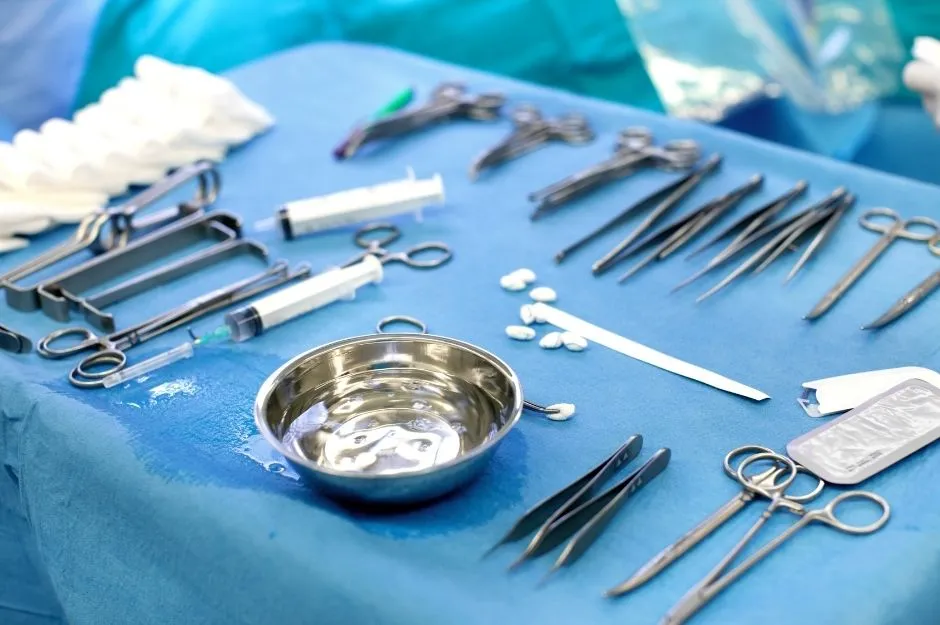
180mm / 230mm Length · 3mm / 5mm Jaws · Curved & Straight

220mm Length · Dual Fulcrum · Deep Scoop Cup Jaws
160mm Straight / Curved · Delicate 2mm Scoop Tip
An overview of world-standard rongeur designs produced for healthcare catalog distributors.
Engineered specifically for spinal laminectomy and neural decompression. Features a sliding punch ejector bar that cuts bone against a hardened stationary footplate.
The definitive double-action rongeur for general orthopedic bone removal. Offers superior mechanical force multiplication with minimal handle movement.
Designed for heavy trauma operations where deep gouging and large bone section excision are necessary.
Slightly curved, medium-duty double action rongeurs widely used in ENT, mastoidectomy, and hand surgery.
Curved single-action and double-action instruments designed specifically for oral, dental implant, and alveoloplasty procedures.
Custom engineering based on customer technical drawings, master samples, or proprietary surgical modifications.
How advancing surgical techniques, strict CSSD sterilization mandates, and smart manufacturing are shaping global rongeur sourcing.
The global market for orthopedic and neurosurgical instruments is undergoing a technological transformation driven by infection control mandates, minimally invasive surgery (MIS), and automated manufacturing standards. Sourcing managers and medical equipment importers must stay aligned with key industry shifts over the coming decade:
Traditional fixed-shaft Kerrison rongeurs present a major challenge for Central Sterile Supply Departments (CSSD). Blood, osteal dust, and tissue debris frequently accumulate inside the enclosed sliding channel between the ejector bar and fixed footplate shaft. If uncleaned, dried protein residues cause shaft friction, mechanical binding, and potential cross-contamination risks. Modern hospital tenders increasingly specify take-apart or hinged-shaft cleanable Kerrison rongeurs. These designs allow sterile processing staff to unlatch the top slider without tools, expose the internal lumen for ultrasonic bath cleaning and flushing, and reassemble the tool in seconds.
Under intense operating room lighting, highly polished stainless steel instruments create glare that accelerates surgeon eye fatigue. Furthermore, repeated cutting of dense bone causes edge erosion over time. Future procurement is moving rapidly toward PVD Ceramic and Titanium Nitride (TiN) coated rongeurs. A ceramic PVD coating creates a jet-black, non-reflective surface that enhances visual contrast against bone and blood. Additionally, TiN edge coatings increase surface hardness beyond 70 HRC, extending the cutting edge lifespan up to 300% compared to uncoated stainless steel.
Historically, Sialkot surgical manufacturing relied heavily on artisan hand-filing to shape the concave cups and joint box-locks of bone rongeurs. While hand craftsmanship remains vital for final honing, modern high-end production utilizes 5-axis CNC micro-milling machines. CNC milling ensures that jaw cup radii, slide keyways, and rivet holes are machined to micron-level repeatability. This guarantees that replacement parts fit perfectly, jaw closure force is distributed evenly across both cup lips, and biting clearance remains flawless across large bulk production runs.
Regulatory authorities such as the US FDA and European MDR require strict end-to-end traceability for reusable Class I and Class IIR medical devices. Future surgical bone rongeurs must feature high-resolution, corrosion-resistant 2D DataMatrix laser etching or embedded micro-RFID tags. This allows hospitals to track the total autoclave cycle count of each rongeur, schedule preventive maintenance sharpening before jaw failure occurs, and verify genuine manufacturer provenance during compliance audits.
Every single bone rongeur produced in our Sialkot facility undergoes rigorous physical, mechanical, and chemical validation prior to export packing.
Raw stainless steel forgings are batch-tested via optical emission spectroscopy to verify exact Chromium (12.5–14.5%) and Carbon (0.25–0.40%) elemental ratios.
Heat-treated rongeur jaws are tested on the Rockwell C scale (HRC 50–56) to ensure optimal balance between cutting toughness and brittle resistance.
Every rongeur cup lip is tested on synthetic bone block and cardboard fiber to confirm zero lip overlap, clean punch shearing, and instant spring return action.
Instruments undergo a 30-minute distilled water boil test and citric acid passivation according to ASTM A967 to ensure zero microscopic surface rust risk.
SIAL Surgical is a premier ISO 9001:2015 certified manufacturer and global exporter of surgical, dental, orthopedic, and specialty instruments based in Sialkot, Pakistan—the recognized global capital of surgical instrument manufacturing.
Since 1995, we have served medical device brands, hospital group purchasing organizations (GPOs), and healthcare catalog distributors across more than 60 countries. By merging hand-honed die craftsmanship with 5-axis CNC machining and strictly controlled vacuum heat treatment, SIAL Surgical delivers German-equivalent mechanical performance at highly competitive direct factory prices.
Eliminate middleman markups with direct factory supply from Sialkot.
Build to your CAD drawings, master samples, or custom laser logos.
Full batch material certs, technical dossiers, and compliance files.
Streamlined logistics, customs export clearing, and sample dispatch.
In-depth answers addressing top technical, quality control, and procurement questions from global medical importers.
Single-action rongeurs feature one pivot fulcrum joint, transferring user hand pressure directly at a 1:1 to 1.5:1 ratio. They provide high tactile feedback for fine, delicate bone trimming in plastic or pediatric surgery. Double-action rongeurs incorporate a dual-pivot gear system that multiplies hand force up to 3:1 or 4:1. This significantly reduces surgeon hand strain when shearing heavy cortical bone during joint replacement or trauma procedures.
We utilize high-grade martensitic surgical stainless steels, predominantly AISI 420J2 and AISI 440C (equivalent to DIN 1.4021 and DIN 1.4125). Cutting tips and cup edges are vacuum heat-treated to 50–56 HRC for superior edge retention, while spring shanks are specially tempered to ensure high tensile fatigue strength without distortion.
Our Kerrison rongeurs are manufactured using precision 5-axis CNC micro-milling, ensuring sub-10 micron tolerances between the sliding top ejector bar and fixed shaft channel. This microscopic clearance prevents tissue debris from jamming the sliding channel. Furthermore, cutting footplates are vacuum hardened to eliminate footplate flexing under heavy vertebral bone load.
Yes. As a dedicated OEM and private-label manufacturer, we offer permanent high-resolution fiber laser etching for distributor logos, custom catalog numbers, lot batch codes, and 2D UDI DataMatrix codes. We also supply custom pouches, branded color boxes, and sterile-ready packaging according to distributor branding requirements.
All SIAL Surgical instruments undergo chemical passivation in compliance with ASTM A967 and ISO 16061 standards. The process removes free iron particles from the stainless steel surface, forming a dense chromium-oxide passive barrier. This guarantees resistance against pitting, discoloration, and rust during repeated 134°C (273°F) autoclave steam sterilization cycles.
Our standard MOQ for catalogue bone rongeurs starts at 20 to 50 pieces per model pattern. For custom OEM designs or private label modifications, MOQ depends on specification complexities and usually starts at 50 units. Evaluation samples can be manufactured and dispatched within 10 to 14 business days via express courier.
We export to healthcare distributors, hospital suppliers, and brand owners in over 60 countries across North America, the European Union, the United Kingdom, the Middle East (UAE, Saudi Arabia), Latin America, and Asia-Pacific. Full export documentation and certificate of origin are provided with every bulk shipment.
Submit your inquiry today for OEM private labeling, bulk hospital procurement, or sample evaluation. Our international trade team is standing by.