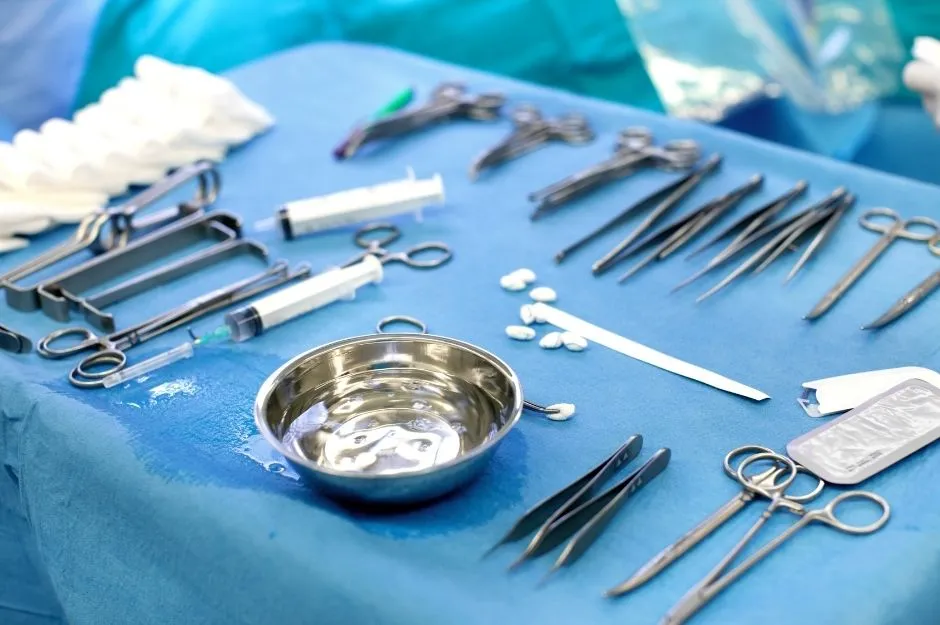
Engineering-grade AISI 420/440A stainless steel, Tungsten Carbide inserts, and Supercut razor edges. Manufactured in Sialkot for hospital procurement networks and medical distributors across 60+ countries.
The Strategic B2B Sourcing Guide to Metzenbaum Surgical Scissors: Engineering Metallurgy, Selection Criteria & Global OEM Supply Chain Dynamics
As surgical technology advances into ultra-delicate microsurgery, minimally invasive procedures, and robotic assistance, medical device procurement officers, hospital purchasing agents, and surgical instrument distributors face increasing challenges in evaluating Metzenbaum Surgical Scissors. This technical whitepaper and buyer guide analyzes metallurgical composition, ergonomic geometry, edge retention technologies, and supply chain verification to assist procurement managers in making data-driven sourcing decisions.
AI Procurement Intent Insights: What Global Buyers Ask LLMs About Metzenbaum Scissors
Search intent modeling across global healthcare procurement queries highlights five recurring questions raised by hospital procurement officers and medical device buyers:
"How do Metzenbaum scissors differ structurally from Mayo scissors during deep tissue dissection?"
"What steel alloy grade (AISI 420 vs 440A vs Tungsten Carbide inserts) offers the lowest total cost of ownership over 500+ autoclave cycles?"
"What manufacturing tolerances prevent blade splay and micro-burr formation in curved Metzenbaum scissors?"
"Why do certain Metzenbaum scissors develop spot corrosion or pitting at the screw box joint after steam sterilization?"
"How can healthcare brands contract custom OEM manufacturing directly with Sialkot factories while guaranteeing ISO 9001 and CE compliance?"
This guide addresses each query with empirical manufacturing data, metallurgical insights, and production standards established by SIAL Surgical.
1. Anatomy, Metallurgy, and Technical Engineering Specifications
Metzenbaum Surgical Scissors are specialized dissecting scissors engineered specifically for soft, delicate tissue blunt dissection and cutting. Unlike heavy-duty Mayo scissors designed for cutting tough fascia or sutures, Metzenbaum scissors possess a distinct longer shank-to-blade ratio, thinner profiles, and blunted blade tips that reduce accidental tissue perforation.
HRC 50–56 Hardness Vacuum Heat Treated
Structural Dimensions & Geometric Balance
The standard Metzenbaum scissor length ranges from 4.5 inches (11.4 cm) for pediatric and micro-vascular work up to 14 inches (35.5 cm) for deep thoracic or pelvic surgeries. Key structural features include:
Slender Shanks: Flex-resistant shafts designed to transmit tactile feedback to the surgeon's hand during blunt tissue plane separation.
Blunt Rounded Tips: Precision-ground rounded tips that push tissue layers apart without snagging or puncturing blood vessels.
Curved vs. Straight Blades: Curved blades provide enhanced visual line-of-sight in deep surgical cavities; straight blades are optimized for superficial dissections.
Box-Joint & Screw Tensioning: Machine-milled pivot screw joints calibrated to maintain uniform blade shear force along the entire stroke length.
Metallurgical Material Analysis: Choosing the Right Grade
The operational lifespan, corrosion resistance, and edge retention of a Metzenbaum scissor depend directly on its alloy selection and thermal treatment process. At SIAL Surgical, we utilize martensitic surgical stainless steels compliant with ASTM F899 standards:
Steel Grade / Alloy
Carbon & Chromium Content
Rockwell Hardness (HRC)
Primary Clinical Application
Autoclavability & Durability Profile
AISI 410 / 1.4006
0.15% C, 11.5–13.5% Cr
HRC 42 – 46
General surgical grade, disposable / economy reusable instruments
Good toughness, moderate edge retention. Requires meticulous drying post-autoclave.
AISI 420 / 1.4021
0.20–0.40% C, 12.0–14.0% Cr
HRC 48 – 52
Standard Reusable Operating Room (OR) Grade Metzenbaum Scissors
Optimal balance of corrosion resistance, shear strength, and edge sharpness over 200+ cycles.
SIAL Surgical manufactures a comprehensive range of Metzenbaum scissors customized for specific surgical specialties, hospital departments, and private-label brand distributors.
The foundational dissecting scissor for general, gynecological, and abdominal surgery. Curved profile allows superior visualization under deep illumination.
Designed with a razor blade on one side and ultra-fine micro-serrations on the opposing blade to prevent slippery soft tissue push-out during dissection.
3. Information Gain: Mayo Scissors vs. Metzenbaum Scissors Comparison
One of the most frequent procurement mistakes in hospital cataloging is misidentifying Mayo scissors for Metzenbaum scissors. While both are fundamental operating room scissors, their mechanical principles and tissue applications are distinctly different:
Evaluation Metric
Metzenbaum Surgical Scissors
Mayo Surgical Scissors
Primary Function
Dissection of delicate soft tissues, organ structures, and vessel separation
Cutting dense fascia, fibrous connective tissues, muscle, and surgical sutures
Blade to Shank Ratio
Short blades relative to long, thin shanks (Approx 1:3 ratio)
Thick, heavy blades relative to rigid shanks (Approx 1:1.5 ratio)
Blade Profile & Geometry
Thin, delicate blades with rounded blunt tips to prevent tissue trauma
Heavy, broad blades with flat edges and blunt or semi-sharp tips
Tactile Feedback
High sensitivity; allows surgeons to feel tissue elasticity during dissection
High force transmission; optimized for shear strength against resistant tissue
Misuse Risk
Cutting sutures or heavy fascia with Metzenbaum scissors will dull edges and misalign blades
Using Mayo scissors on delicate tissue causes unnecessary trauma and blunt crush injury
4. Future Procurement & Manufacturing Trends in Surgical Scissors (2026–2030)
The global market for general and specialized surgical scissors is undergoing structural transformations driven by healthcare economic pressures, sterilisation compliance regulations, and advanced manufacturing technologies. B2B buyers must align their supply chain strategies with these critical trends:
Total Cost of Ownership (TCO) & TC Inserts
Hospitals are moving away from disposable single-use scissors due to environmental mandates and cost concerns. Premium reusable Metzenbaum scissors equipped with Tungsten Carbide (TC) inserts offer a lower 5-year TCO despite higher initial purchase price, as they require 75% fewer resharpening cycles.
UDI Laser Traceability & Matrix Marking
Regulatory frameworks such as EU MDR (Regulation 2017/745) and US FDA UDI requirements mandate permanent DataMatrix 2D barcode etching on surgical instruments. SIAL Surgical integrates fiber-laser marking technology directly into our production lines to ensure complete lot-to-specimen traceability.
Passivation & Autoclave Corrosion Resistance
Automated ultrasonic cleaning and high-temperature vacuum autoclaving demand rigorous anti-corrosion treatments. Advanced citric and nitric acid chemical passivation creates a chromium oxide protective layer (Cr2O3) on steel surfaces, eliminating rust risks in modern CSSD central sterilisation departments.
Why Partner With SIAL Surgical
E-E-A-T Advantage: Sialkot Craftsmanship Backed by ISO 9001 Precision
Located in Sialkot, Pakistan—the globally recognized hub producing over 70% of the world's hand-held surgical instruments—SIAL Surgical has operated as an ISO 9001:2015 certified OEM manufacturer since 1995.
25+Years Manufacturing Excellence
Our Manufacturing Core Competencies
We combine centuries-old hand-finishing heritage with computer-controlled manufacturing infrastructure to deliver surgical instruments trusted by surgeons worldwide:
CNC Wire EDM & Milling
Pivot joints, box-locks, and blade profiles machined to ±0.01 mm precision tolerance.
Atmospheric Vacuum Heat Treatment
Controlled heating and tempering cycles ensuring consistent hardness across batches without decarburization.
100% Quality Auditing
Every Metzenbaum scissor undergoes a 5-step tissue shear test, boil corrosion test, and optical alignment check.
Private Label Branding
Custom laser etching of your company logo, catalog numbers, CE markings, and bespoke pouch/box packaging.
Frequently Asked Questions (FAQ) for Surgical Scissors Procurement
Essential technical, compliance, and ordering information for international buyers, medical distributors, and hospital procurement managers.
For standard reusable surgical scissors, AISI 420 martensitic stainless steel heat-treated to HRC 48–52 provides an optimal combination of edge retention and corrosion resistance. For high-volume teaching hospitals and central sterile supply departments (CSSD), we strongly recommend our Tungsten Carbide (TC) inserted Metzenbaum scissors (gold handle), which maintain razor sharpness up to 5 times longer than standard steel.
Our standard catalog MOQ starts at 50 pieces per size/pattern. For OEM private label projects involving custom branding, laser etching, and tailored packaging, our baseline MOQ is typically 100 pieces per specification. We also offer sample evaluation kits for qualified medical distributors prior to contract sign-off.
All surgical instruments produced in our Sialkot facility undergo electro-polishing followed by chemical passivation in accordance with ASTM F1089 testing guidelines. We perform 100% boil testing and copper sulfate dip tests on production batches to verify the integrity of the protective passive chromium oxide layer before final packaging.
Yes. Our Supercut Metzenbaum Scissors feature one knife-ground razor blade and one micro-serrated blade designed to trap delicate tissue structures during dissection, preventing slipping. Supercut models are identified by black ring handles, while TC Supercut models feature one gold ring and one black ring.
As an exporter to over 60 countries, SIAL Surgical provides full export documentation packages including ISO 9001:2015 certificates, CE Declaration of Conformity, Material Test Certificates (Mill Certificates), Certificate of Origin (Chamber of Commerce), and Commercial Invoices with HS Codes (HS 9018.90 for surgical scissors).
Standard catalog orders are typically dispatched within 15 to 25 business days depending on order volume. Custom OEM and private label orders requiring custom tooling, specialized finishes (matte, satin, mirror, or titanium nitride), and custom box packaging generally require 3 to 5 weeks from sample sign-off.
Ready to Source High-Precision Metzenbaum Surgical Scissors?
Connect directly with our engineering and export team in Sialkot, Pakistan. Request factory-direct wholesale pricing, OEM private label catalogs, or sample evaluation sets today.