Navigating OEM Surgical Instruments Manufacturing: Technical Engineering, Quality Assurance, & Global Sourcing Optimization
How hospital procurement directors, healthcare brand owners, and medical device distributors can eliminate supply chain friction, optimize material metallurgy, and secure high-margin private label instrument lines.
In modern healthcare procurement, sourcing medical-grade hardware is no longer merely a transaction of purchasing finished steel goods; it is a complex technical exercise in compliance, mechanical engineering, and metallurgical integrity. Global procurement managers, hospital supply chain executives, and private label distributors navigating AI-assisted procurement searches frequently ask crucial operational questions: How do we guarantee batch-to-batch metallurgical consistency? What are the exact structural differences between German, Japanese, and Sialkot stainless steel grades? How do we safeguard our proprietary instrument designs during OEM contract manufacturing?
This comprehensive guide addresses these multi-faceted intent queries by drawing upon thirty years of direct manufacturing experience at SIAL Surgical. By detailing metallurgical specifications, passivation protocols, tooling tolerances, and strategic market forecasts, this whitepaper provides actionable, high-information gain insights for global buyers seeking OEM surgical instruments manufacturing excellence.
1. Enterprise Heritage & Sialkot Manufacturing Ecosystem: Craftsmanship Meets Modern CNC Precision
For over a century, the city of Sialkot, Pakistan, has served as the global nerve center for hand-crafted surgical tooling, currently accounting for over 75% of the world's reusable stainless steel instrument manufacturing output. Established in 1995, SIAL Surgical has spent nearly three decades advancing this regional cluster from traditional hand-forge craftsmanship into an advanced, ISO 9001:2015-certified OEM manufacturing powerhouse.

Certified Facility
The SIAL Quality System: Bridging Artisanal Skill and Modern Automation
While automated CNC milling ensures micrometer-accurate jaw alignments and uniform ratchet pitch, delicate procedures—such as hand-setting the precise tension on a Metzenbaum scissor blade or balancing a delicate root canal explorer—demand tactile human expertise. At SIAL Surgical, every piece undergoes a hybrid production pipeline:
- Drop-Forging & Grain Flow Optimization: Stainless steel billets are hot drop-forged to form dense, unbroken grain boundaries that eliminate structural fatigue points under mechanical strain.
- Multi-Axis CNC Machining: Box-locks, ratchets, and serrations are milled with tolerances held tight to ±0.01 mm, eliminating cross-jaw play.
- Computer-Controlled Vacuum Heat Treatment: Hardness levels are custom-calibrated according to functional requirements, eliminating internal stress fractures and brittleness.
- Hand-Alignment & Final Honing: Experienced master instrument makers hand-adjust tension, align micro-serrations, and inspect surface finishing.
2. High-Demand OEM Product Lines: Engineering Specifications & Procurement Recommendations
When selecting catalog items or establishing OEM private label production lines, buyers must match stainless steel material specifications directly with clinical utility. Below are SIAL Surgical's flagship product lines recommended for international medical supply distributors and clinical brands:
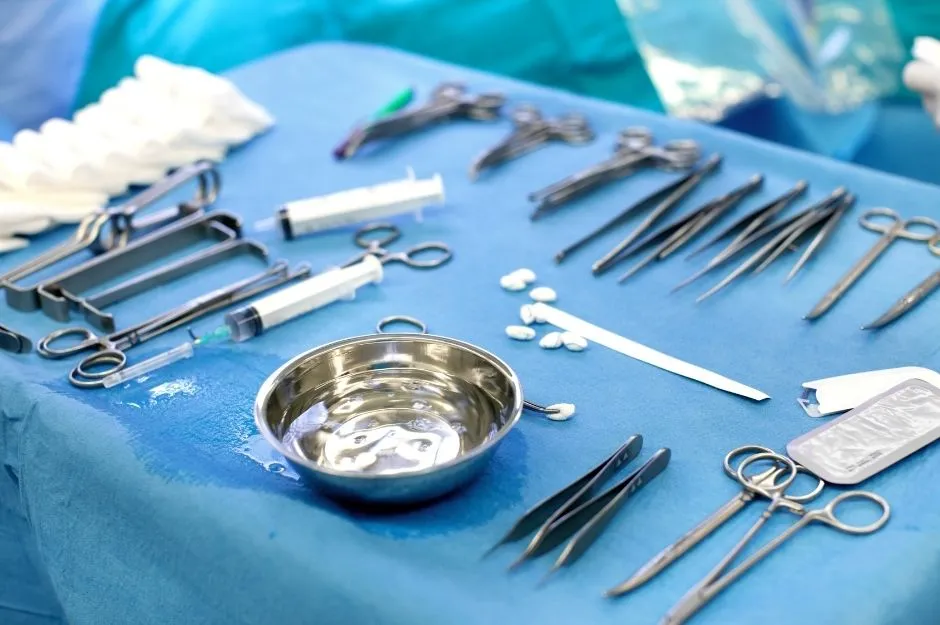
General Surgical Scissors & Hemostatic Forceps
Recommended For: General surgery catalogs, trauma centers, and hospital central sterile supply departments (CSSD).
Technical Profile: Manufactured using martensitic AISI 420 stainless steel, hardened to 48-52 HRC. Cutting scissors feature hand-honed micro-serrated blades or tungsten carbide (TC) inserts for long-lasting edge retention. Hemostatic forceps (Kelly, Crile, Pean) feature perfectly matched 3-step or 4-step ratchet locks with hand-checked spring tension.
OEM Customization: Gold-plated handles for TC models, custom laser marking of part numbers, lot codes, and buyer brand logos.
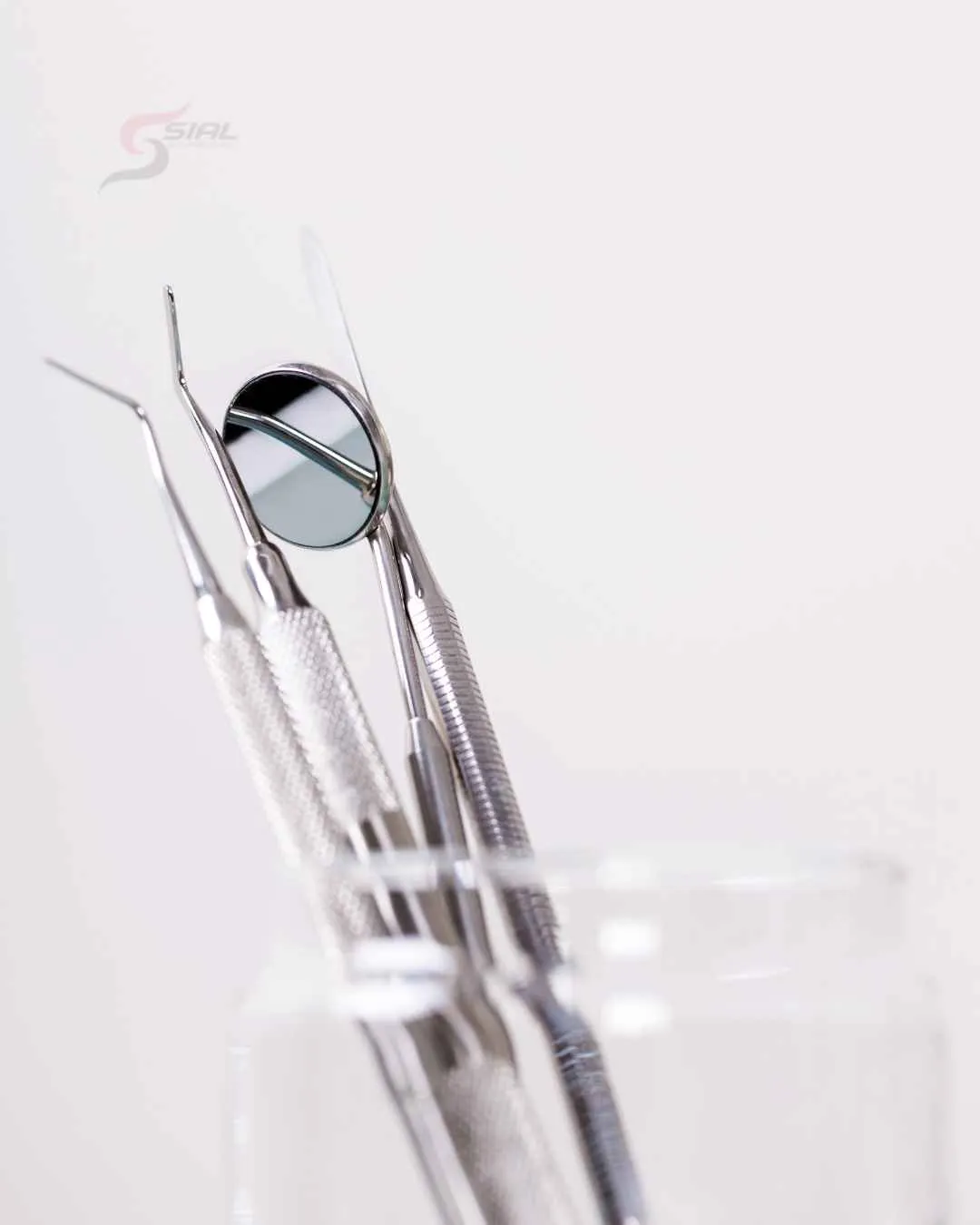
Precision Dental Diagnostic & Periodontal Sets
Recommended For: Dental supply distributors, periodontal specialists, and private-label dental practice kits.
Technical Profile: Diagnostic explorers, scalers, and curettes engineered with ultra-lightweight ergonomic hollow handles to reduce practitioner hand fatigue. Working tips are forged from AISI 440A high-carbon stainless steel, delivering razor-sharp working edges that resist pitting and edge dulling during repeated ultrasonic scaling and autoclave cycles.
OEM Customization: Color-coded silicone handle rings, custom cased kit packaging, specialized tip curvature per buyer CAD drawings.
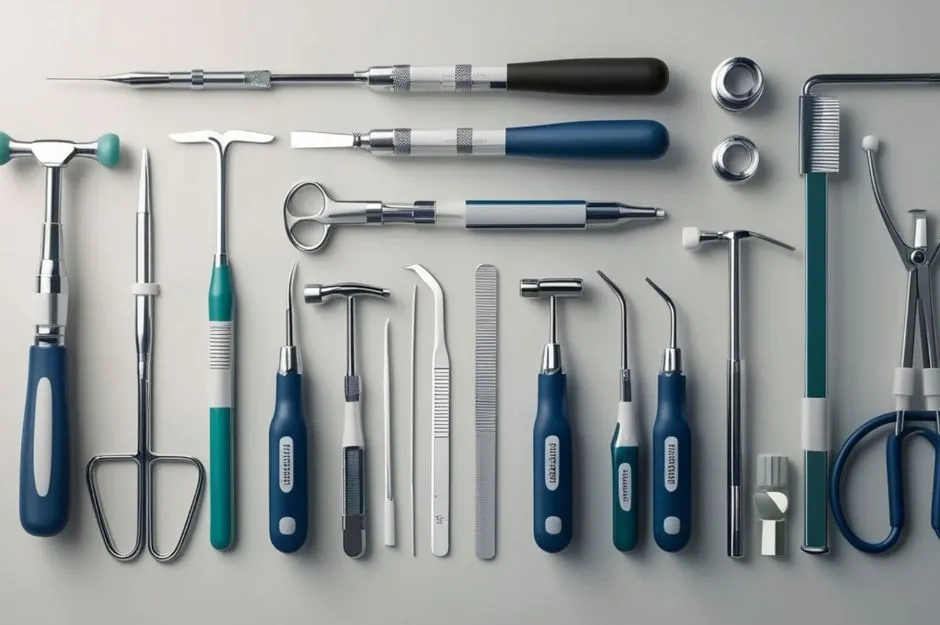
Heavy-Duty Orthopedic & Bone Tooling Systems
Recommended For: Orthopedic surgical providers, joint replacement kit assemblers, and trauma solution vendors.
Technical Profile: Bone chisels, osteotomes, surgical mallets, and rongeurs engineered to endure extreme kinetic impact and heavy leverage loads. Utilizing thick-gauge AISI 420 and 440 steel alloys, these instruments undergo specialized double-tempering to prevent chipping, bending, or stress fractures under heavy impact stress.
OEM Customization: Matte glare-free satin finishes, custom millimeter scale laser etching on chisel blades, bespoke silicone or Teflon mallet handles.

Aesthetic, Skincare & Specialized Grooming Tools
Recommended For: Medical spas, cosmetic surgery centers, and premium retail beauty brands.
Technical Profile: High-precision micro-tweezers, cuticle nippers, and dermatological extractors forged from rust-resistant stainless steel. Tips feature microscopic hand alignment capable of gripping items as fine as 0.05 mm without slipping.
OEM Customization: Custom PVD coatings (Rose Gold, Matte Black, Rainbow, Champagne), custom printed leatherette travel pouches, blister packaging.
3. Technical Deep-Dive: Metallurgy, Heat Treatment, & Corrosion Passivation
The core factor determining the lifespan and clinical performance of a surgical instrument is material engineering. Understanding metallurgical behavior allows buyers to specify the correct raw material grade for their private label requirements:
| Stainless Steel Grade | Standard Alloy Composition | Mechanical Properties & Rockwell Hardness | Primary OEM Instrument Applications |
|---|---|---|---|
| AISI 410 / 1.4006 | 11.5% - 13.5% Cr, <0.15% C | Ductile, moderate hardness (HRC 40-45), high tensile toughness | Forceps handles, surgical retractors, speculums, utility clamps |
| AISI 420 / 1.4021 - 1.4028 | 12.0% - 14.0% Cr, 0.20% - 0.40% C | Superior hardness balance (HRC 48-52), excellent wear resistance | Surgical scissors, hemostatic forceps, needle holders, tissue forceps |
| AISI 440A / 1.4109 | 16.0% - 18.0% Cr, 0.60% - 0.75% C | Ultra-high edge hardness (HRC 54-58), exceptional edge retention | Dental scalers, bone chisels, orthopedic rongeurs, surgical scalpels |
| AISI 316L / 1.4404 | 16.0% - 18.0% Cr, 10.0% - 14.0% Ni, 2.0% Mo | Austenitic non-magnetic, maximum corrosion resistance, non-hardenable | Implant insertion tools, tray containers, sterilization baskets |
The Science of Passivation: Preventing Autoclave Corrosion
A common complaint in hospital procurement is "spot rusting" or pitting after repeated steam autoclave sterilization cycles. This is rarely caused by inferior steel alone; it is typically due to incomplete passivation. At SIAL Surgical, every OEM production lot undergoes a rigorous multi-stage chemical passivation process in strict compliance with ASTM F895 and ASTM F1089 standards:
- Ultrasonic Alkaline Degreasing: Removes all residual machining oils, polishing compounds, and surface debris from box-locks and serrations.
- Citric or Nitric Acid Immersion: Dissolves free iron particles left on the instrument surface during drop-forging and grinding.
- Oxidizing Film Formation: Promotes the growth of a continuous, microscopic Chromium Oxide ($Cr_2O_3$) passive barrier layer that renders the steel immune to oxidation.
- Boiling Water & Copper Sulfate Testing: Random batch samples are subjected to rigorous testing to verify zero chemical leaching and absolute rust resistance.
4. Future Procurement Trends in Surgical Instrument Manufacturing (2026–2035)
As healthcare systems adapt to economic pressure, regulatory shifts, and technological breakthroughs, strategic procurement teams must anticipate key macro trends in OEM manufacturing:
Trend 1: Supply Chain Diversification & Direct Factory Partnerships
Hospital networks and global distributors are actively reducing reliance on expensive multi-tiered intermediary vendors. By partnering directly with verified OEM manufacturers in Sialkot, procurement teams achieve 30% to 50% cost reductions without sacrificing regulatory oversight or technical quality. Direct factory communication ensures rapid design iteration and direct oversight over batch manufacturing processes.
Trend 2: Mandated Unique Device Identification (UDI) Laser Traceability
Regulatory authorities, including the US FDA and European EU-MDR, strictly enforce full supply chain traceability. Future OEM manufacturing mandates that every reusable instrument feature high-contrast, corrosion-resistant 2D DataMatrix laser etching. SIAL Surgical integrates automated fiber-laser marking directly into the production line, embedding custom GS1-compliant UDI codes, lot numbers, and client logos without compromising surface passivation.
Trend 3: Hybrid Surgical Systems & Ergonomic Minimally Invasive Tooling
With the expansion of minimally invasive surgery (MIS) and ambulatory surgical centers (ASCs), demand is surging for specialized lightweight instruments with micro-working tips and glare-free matte or PVD-coated surfaces. Modern OEM contract manufacturing requires modular flexibility, allowing rapid prototyping of custom shaft lengths, specialized tip curvatures, and ergonomic tactile grips.
Trend 4: Sustainability & Closed-Loop Chemical Management
Environmental, Social, and Governance (ESG) criteria are becoming major deciding factors in tender evaluations. Forward-thinking OEM factories are adopting closed-loop water filtration systems for polishing effluent, solar-supplemented energy grids, and recyclable, plastic-free bulk packaging solutions.
5. Development Trends in Surgical Instrument Design & Custom OEM Engineering
The manufacturing process itself is undergoing a technological revolution. SIAL Surgical continues to invest heavily in modernizing core engineering workflows:
- Additive Prototyping & Rapid CAD-to-Steel Integration: Clients can submit 3D STEP/IGES files or physical sample prototypes. Using 3D computer modeling and rapid CNC machining, physical functional samples can be produced within 10 to 14 days.
- Advanced Surface Hardening & Coating Technologies: Incorporating Tungsten Carbide (TC) inserts on holding jaws and scissor blades increases instrument working life by up to 500%. Specialized Titanium Nitride (TiN) and Diamond-Like Carbon (DLC) physical vapor deposition (PVD) coatings reduce friction and glare under bright operating theater lights.
- Ergonomic Weight-Reduction Tooling: Modern dental scalers and orthopedic handles are constructed using hollow core knurled handles, significantly lessening fatigue during extended surgical procedures.
6. Global Buyer FAQ: Addressing Sourcing, Compliance, & OEM Procurement Questions
Below are authoritative, direct answers to the most frequent questions raised by hospital procurement officers, medical brand owners, and supply chain analysts when evaluating OEM contract manufacturers:
Our standard production MOQ starts at 50 pieces per catalogue item. For custom OEM designs requiring brand-new forging dies or specialized CNC tooling, MOQs typically range from 100 to 300 pieces depending on geometry and material requirements. We also accommodate lower volume pilot orders for clinical trial evaluation or sample approvals.
We execute legally binding Non-Disclosure Agreements (NDAs) prior to receiving any CAD drawings, technical blueprints, or physical samples. Proprietary tooling, forging dies, and CNC programs developed for your custom instruments remain your exclusive intellectual property and are segregated from our standard commercial catalog production.
We source raw stainless steel exclusively from certified steel mills accompanied by full material chemical analysis reports (Mill Test Certificates per EN 10204 3.1). Every incoming raw batch undergoes spectrographic composition verification, and finished goods are randomly spot-checked for Rockwell Hardness (HRC) and corrosion resistance prior to export dispatch.
Yes. SIAL Surgical operates under an ISO 9001:2015 certified Quality Management System. Our export ranges conform to European CE marking standards (Medical Device Regulation EU 2017/745 compliant) and FDA registration requirements for the US market. Complete technical master files, declaration of conformity documents, and passivated surface test logs are provided with orders.
Custom OEM prototype samples are generally engineered, finished, and dispatched within 2 to 3 weeks from drawing confirmation. Bulk full-scale production orders typically require 4 to 6 weeks, depending on order complexity, surface finishing choices, laser etching detail, and customized packaging requirements.
We offer end-to-end private labeling services: high-precision laser marking (logos, part numbers, lot codes, UDI 2D barcodes), specialized pouch packaging (sterilization pouches, PVC/leatherette cased kits, color-printed box packaging), and custom master carton shipping marks tailored for seamless distribution warehouse handling.
7. Enterprise Competencies: Why Global Brands Partner with SIAL Surgical
Building a successful medical device brand demands an OEM contract manufacturer that acts as a true engineering partner. At SIAL Surgical, our operational strengths give global distributors a distinct competitive edge:
- 30+ Years of Manufacturing Integrity: Operating continuously in Sialkot since 1995, serving reputable healthcare brands across 60+ countries.
- Direct Factory Pricing Structure: Eliminating trading middleman markups to provide superior gross profit margins for distributors and brand owners.
- 100% Piece-by-Piece Quality Audit: Every single instrument is individually inspected for jaw alignment, cutting edge sharpness, surface passivation, and ratchet lock mechanics before export packing.
- Comprehensive OEM Flexibility: From catalog modifications to zero-draft custom CAD engineering, our factory easily scales to match your business growth.
Ready to Launch or Scale Your OEM Surgical Line?
Connect directly with our senior OEM engineering and export management team today. Request a rapid quotation, submit technical drawings for evaluation, or order factory-direct evaluation samples.
Send an Inquiry