Featured Medical & Surgical Grade Instrument Catalog
Designed for Singapore's high-standard healthcare institutions, clinical research centers, and medical device distributors, our precision-manufactured product portfolio complies strictly with international bio-compatibility standards and Singapore Health Sciences Authority (HSA) medical device framework specifications.
Navigating Singapore's Surgical Instrument Procurement Landscape
Singapore stands as the primary healthcare and biomedical hub in Southeast Asia, driven by renowned institutions such as Singapore General Hospital (SGH), National University Hospital (NUH), Mount Elizabeth Hospital, and Novena Specialist Center. The demand for medical-grade and surgical-grade stainless steel instruments in Singapore is governed by strict regulatory compliance oversight from the Health Sciences Authority (HSA) under the Health Products (Medical Devices) Regulations.
For healthcare procurement managers, surgical equipment distributors, and private label OEMs operating within Singapore, sourcing directly from high-precision Chinese manufacturing facilities provides a decisive competitive advantage: balancing cost efficiency without sacrificing metallurgical integrity, sterilization tolerance, or mechanical performance. This comprehensive technical guide analyzes the critical selection metrics, metallurgical science, and regulatory frameworks required to procure surgical instruments from China for the Singaporean market.
Technical & Metallurgical Benchmark: Surgical Stainless Steel Grades
Understanding the metallurgical composition of surgical instruments is essential for ensuring longevity and preventing micro-corrosion during high-temperature Central Sterile Services Department (CSSD) autoclave cycles. Premium surgical instruments manufactured in China utilize specifically matched steel alloys categorized under international standards like ASTM F899 and ISO 7153-1.
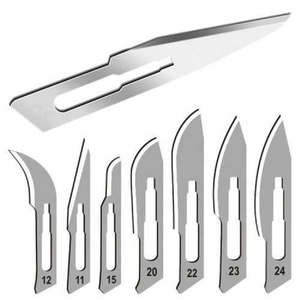
Used primarily for cutting instruments such as Mayo surgical scissors, dissecting scalpels, and bone chisels. Hardened via vacuum heat treatment to achieve a Rockwell Hardness rating of 50–56 HRC. Provides exceptional blade sharpness retention and resistance to deformation under mechanical shear stress.
Selected for non-cutting instruments, cannulas, catheter connectors, and holloware requiring high ductility and superior pitting corrosion resistance. Contains elevated molybdenum content (2–3%), making it immune to harsh chemical disinfectants and high-salinity organic fluids.
All instruments undergo chemical passivation treating in citric or nitric acid baths to form a continuous chromium oxide (Cr₂O₃) passive layer. This process neutralizes free iron impurities, guaranteeing zero rusting under Singapore’s high humidity and rigorous autoclave sterilization protocol (134°C for 18 minutes).
Localized Application Scenarios in Singapore's Medical Sectors
Surgical procedures demand specialized tool geometries depending on the operational environment. China’s advanced OEM factories engineer tailored solutions suited for Singapore’s distinct medical ecosystems:
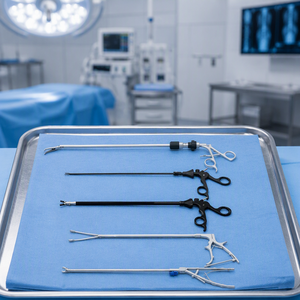
Laparoscopic procedures performed in gastrointestinal and gynaecological suites require ultra-precise 5mm grasping forceps and biopsy instruments. Featuring electro-insulated shafts, dual-articulating jaws, and 360-degree rotation handles, these instruments allow Singaporean surgeons to execute complex tissue manipulation with minimal incisions.
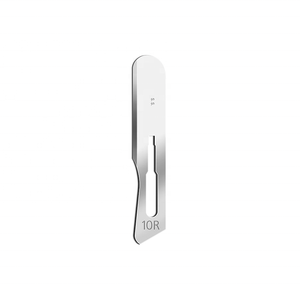
Singapore's thriving medical aesthetics market heavily utilizes precision surgical scalpels and sterile dermaplaning blades (#10R butterblade design). Crafted with Swiss-honed carbon steel or surgical stainless steel edges, these single-use blades ensure seamless stratum corneum exfoliation without micro-lacerations.
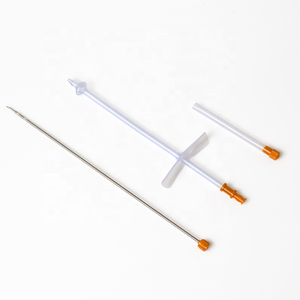
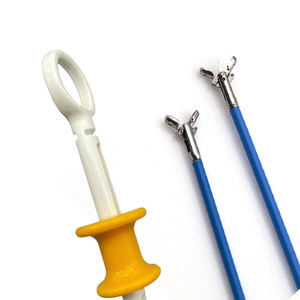
Flexible biopsy forceps (OD 1.0mm to 2.4mm) and suprapubic puncture sets are designed for rapid deployment in ambulatory care surgical centers. Smooth PTFE coating over stainless steel inner wires minimizes friction within flexible endoscope channels, ensuring tactile precision during diagnostic sampling.
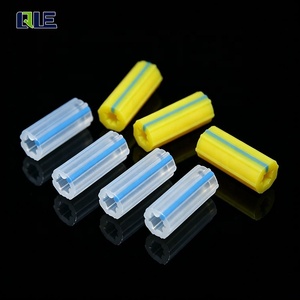
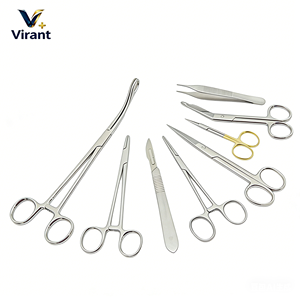
Compliant with National Parks Board (NParks) Animal & Veterinary Service (AVS) guidelines, specialized veterinary surgical sets incorporate heavy-duty hemostatic forceps, needle holders, and silicone tip protectors designed for soft tissue procedures across small companion animals and exotic fauna.
Information Gain: Total Cost of Ownership (TCO) Analysis for Singapore Procurement
When evaluating China-manufactured surgical grade instruments versus European tier-1 alternatives, Singaporean procurement heads must account for the complete lifecycled expenditure. While European instruments carry a 200–400% brand markup, top-tier Chinese manufacturers operating under ISO 13485 utilize identical Japanese or Swedish raw stainless steel coils (e.g., Sandvik steel grades) and identical CNC 5-axis grinding machinery.
By leveraging the China-Singapore Free Trade Agreement (CSFTA), Singaporean importers enjoy preferential tariff concessions, lower freight lead-times (5–7 days direct shipping from Ningbo/Shanghai port to Jurong/Pasir Panjang Port), and expedited custom clearance via Singapore Customs TradeNet system.
Manufacturer Core Strengths & Enterprise Capabilities
As an established medical device original equipment manufacturer (OEM) and private label exporter, our factory integrates generational artisan hand-finishing with automated state-of-the-art manufacturing technologies:
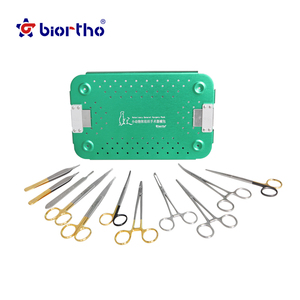
Combining time-honored hand fitting of box-locks, ratchets, and scissor bevels with high-speed CNC milling and electro-discharge machining (EDM) to guarantee smooth jaw alignment and effortless ergonomics.
Operating under rigorous Quality Management Systems with full raw material melt certificate tracking, in-process dimensional audits, and 100% pre-shipment functional testing for cutting sharpiness and spring tension.
Full OEM customization capabilities including ultra-fine fiber laser marking of custom brand logos, UDI barcode etching, specialized satin non-reflective or gold-plated handles, and custom sterile blister pouching.
Frequently Asked Questions (FAQ) for Singapore Importers
Here are clear answers to essential commercial, technical, and regulatory questions asked by healthcare buyers in Singapore:
Request a Custom Quotation or Technical Catalog for Singapore
Partner with China's leading surgical instrument manufacturing facility. Contact our dedicated Asia-Pacific export office today for technical specifications, factory-direct wholesale pricing, and OEM support.