Certified Medical & Trauma Scissors Catalog for Poland Import
Engineered from high-martensitic surgical steel (AISI 420/440A) featuring precision blade alignments, non-corrosive passivation, and high-frequency autoclavability (134°C). Custom private labeling available for Polish medical wholesalers.
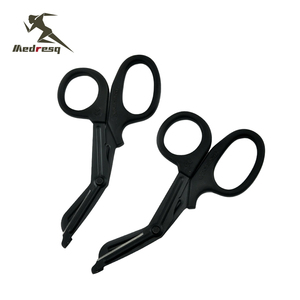
Wholesale Medical Trauma Shears Stainless Steel Plastic Handle Bandage Scissors
- Autoclavable up to 143°C
- Blunt safety tip prevents patient skin trauma
- High-leverage ergonomic pivot pin
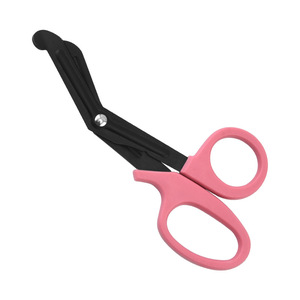
6 Inch Fluoride Coated Stainless Steel Smooth Edge Nurse Scissors
- Non-stick PT-FE / Fluoride outer surface
- AISI 420 surgical stainless core
- Smooth shearing action for thick bandages
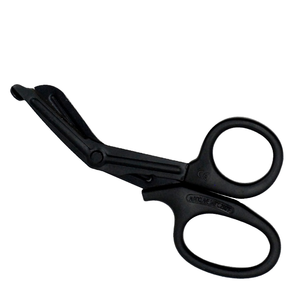
All Black EMT Trauma Shears Non-Stick Stainless Steel Blunt Tip Scissors
- Cuts denim, leather, seatbelts & thin sheet metal
- Non-reflective matte black passivation
- Reinforced center rivet for high stress
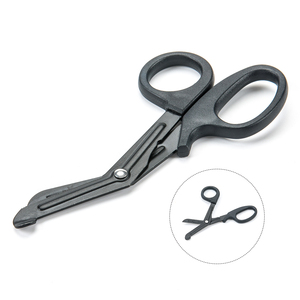
Stainless Steel Nurse Scissors Bandage Medical Trauma Shears
- 100% Rust-proof ASTM standard steel
- Ergonomic finger rings for comfort
- Dual-bevel hand-honed blade edges
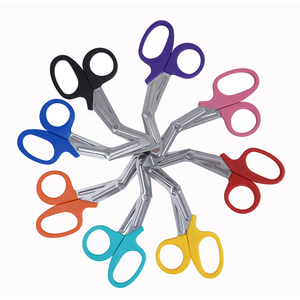
High Quality Stainless Steel First Aid Medical Bandage Scissors for Nurse
- Angled tip design for easy bandage lifting
- Precision-machined blade alignment
- Custom laser marking supported
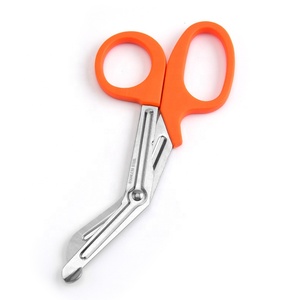
Mini First Aid Scissors Stainless Steel Angled Blade Rounded Safety Tip
- Ultra-lightweight high-impact polymer handles
- Curved safety probe tip prevents punctures
- Resistant to disinfectant chemical washes
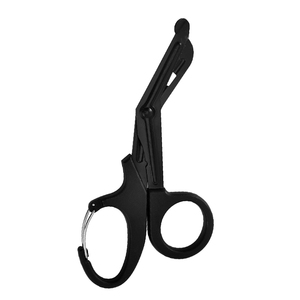
Industrial Grade Black Handle Non-Stick Multifunctional Medical Scissors
- Integrated oxygen cylinder wrench slot
- Reinforced heavy-gauge jaw fulcrum
- Tested against 1,000+ autoclave sterilization cycles
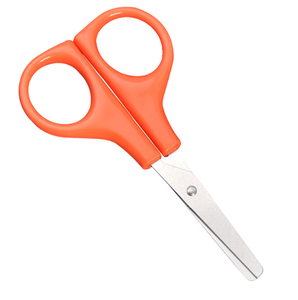
Industrial Grade 5.5 Inch Stainless Steel Surgical Scissors Sharp Tip
- Rockwell Hardness 54-56 HRC
- Seamless joint movement without lateral blade play
- Full compliance with EU Medical Device Regulation (MDR)
Technical Whitepaper: Sourcing Medical Scissors for Poland's Healthcare Market
An in-depth guide for Polish medical equipment importers, hospital procurement officers, and medical device distributors navigating EU regulations, steel metallurgy, and supplier audits.
EU MDR (2017/745) & URPL Compliance
Medical scissors exported to Poland must strictly comply with the European Union Medical Device Regulation (EU MDR 2017/745) under Class I / Class I reusable surgical instrument classifications. As an ISO 9001:2015 certified manufacturer, our facilities maintain full technical documentation, Risk Management Files (ISO 14971), and UDI (Unique Device Identification) readiness to enable seamless registration with the Polish Office for Registration of Medicinal Products, Medical Devices and Biocidal Products (URPL).
Advanced Surgical Metallurgy (AISI 420J2 / 440A)
The performance of medical scissors depends entirely on martensitic stainless steel selection and heat-treatment grain structure. We utilize high-purity AISI 420J2 (X30Cr13) and AISI 440A stainless steel alloys. Controlled vacuum hardening and cryogenic tempering yield a Rockwell Hardness of 52 to 58 HRC. This guarantees that scissor blades retain razor-sharp shearing edges through thousands of cut cycles without micro-chipping or wire-edge roll.
Automated Passivation & Anti-Corrosion
Hospital sterilization facilities across Poland enforce rigorous chemical and thermal autoclave cycles. To prevent intergranular rust, pitting, and stress corrosion cracking, our scissors undergo multi-stage ultrasonic cleaning and chemical passivation per ASTM A967. This process strips free iron particles from the surface, creating an ultra-pure chromium oxide (Cr2O3) passive layer capable of withstanding hundreds of 134°C steam sterilization cycles.
Localized Application Scenarios across Poland's Medical Infrastructure
Our medical grade scissors are customized for the operational demands of Poland’s public health network (NFZ), private medical groups, emergency services, and military units.
1. Zespoły Ratownictwa Medycznego (ZRM) & LPR
Paramedics operating in Polish State Medical Rescue (Państwowe Ratownictwo Medyczne) ambulances and Lotnicze Pogotowie Ratunkowe (Air Rescue) require heavy-duty trauma shears capable of shearing through motor vehicle seatbelts, leather jackets, motorcycle boots, and thick winter clothing instantly. Our 7.5-inch fluoride-coated trauma shears are the standard choice for high-stress extrication.
2. Szpitalne Oddziały Ratunkowe (SOR) & Operating Rooms
In Polish Emergency Departments (SOR) and hospital surgical suites (in cities such as Warszawa, Kraków, Poznań, and Wrocław), surgical Mayo and Metzenbaum scissors demand flawless tip alignment and satin non-glare finishes. Precise box-lock construction ensures smooth cutting action without tissue snagging during delicate wound debridement and surgical procedures.
3. Primary Healthcare (POZ) & Private Clinics (NZOZ)
Outpatient primary health care clinics (Podstawowa Opieka Zdrowotna) and non-public health care facilities (NZOZ) require durable, cost-effective nurse bandage scissors for daily dressing management, suture removal, and medical tape trimming. High corrosion resistance ensures low lifecycle cost for clinic procurement budgets.
Market Trends Driving Medical Instrument Import in Poland
Understanding the economic and regulatory shifts shaping hospital purchasing and medical distribution in Central Eastern Europe.
1. Modernization of Polish Hospital Facilities
Supported by EU Cohesion Funds and national healthcare infrastructure programs, Polish hospitals are upgrading surgical inventory and emergency equipment. Procurement managers are prioritizing high-end reusable instruments that provide verifiable longevity over cheap disposable alternatives to align with sustainability goals.
2. Shift Toward Direct Factory OEM Sourcing
To combat rising supply chain costs across Western Europe, major Polish medical wholesalers are bypassing European distributors and establishing direct manufacturing relationships with certified OEM factories in Sialkot, securing higher profit margins while maintaining CE compliance.
3. Growing Demand for Custom Private Labeling
Polish healthcare distributors increasingly request custom laser logo etching, barcode packaging (GS1/EAN standard), and localized Polish-language Instructions for Use (IFU) to strengthen local brand equity in domestic public tenders.
Technical Specification Matrix: Medical Scissors Comparison
Select the optimal surgical scissor configuration based on steel grade, blade profile, handle ergonomics, and clinical application.
| Scissor Type | Steel Grade | Hardness (HRC) | Blade Features | Sterilization Tolerance | Primary Polish Application |
|---|---|---|---|---|---|
| EMT Trauma Shears (7.5") | AISI 420J2 Stainless | 52 - 54 HRC | Micro-serrated lower blade, safety probe tip | Autoclave 134°C / Chem-disinfectant | ZRM Ambulances, Air Rescue (LPR), SOR |
| Fluoride Coated Shears | AISI 420 + PTFE Coating | 52 - 54 HRC | Non-stick coating, anti-friction smooth pivot | Autoclave 134°C / Alcohol Wipe | Burn Units, Wound Dressing, Ward Nursing |
| Mayo Surgical Scissors | AISI 440A Stainless | 54 - 56 HRC | Heavy bevel, straight/curved dissection edges | Standard Steam Autoclave (1,000+ cycles) | Operating Theatre (OR), Fascia Cutting |
| Metzenbaum Scissors | AISI 440A / Tungsten Carbide | 56 - 58 HRC | Slender profile, razor-sharp delicate tissue tip | Standard Steam Autoclave (1,000+ cycles) | Delicate Tissue Dissection, Plastic Surgery |
| Lister Bandage Scissors | AISI 420 Stainless | 52 - 55 HRC | Angled blades with smooth rounded safety knob | Standard Steam Autoclave (1,000+ cycles) | POZ Clinics, Outpatient Wards, Nursing |
Our Manufacturing Supremacy & OEM Engineering Capabilities
Combining traditional hand craftsmanship with modern numerical machine controls (CNC) to deliver unmatched precision surgical instruments.
Hot Drop Forging & CNC Machining
Every pair of scissors begins as raw martensitic steel forged under heavy drop hammers to align grain structure for high yield strength. CNC milling machine centers precise box locks, screw joints, and finger rings to within ±0.01 mm tolerances, eliminating looseness and blade wobbling during heavy use.
Vacuum Heat Treatment & Cryo-Tempering
Hardening is executed in computer-controlled vacuum furnaces to prevent oxygen decarbonization of the steel matrix. Subsequent sub-zero cryogenic processing transforms retained austenite into hard martensite, delivering high edge sharpness retention and resistance to bending stress.
Strict Quality Assurance & Cut Tests
100% of manufactured scissors undergo rigorous functional inspection before packing. Trauma shears are tested against 4-layer denim, leather, and synthetic webbing. Surgical scissors are tested on thin latex sheets to verify clean shearing action along the entire length of the blade to the extreme tip.
Frequently Asked Questions by Polish Medical Importers
Clear answers to key questions regarding customs clearance, certification, sampling, and MOQ for importing medical scissors into Poland.
What are the regulatory requirements for importing medical scissors into Poland?
Medical scissors imported into Poland must comply with EU MDR 2017/745 regulations. Reusable surgical scissors fall under Class I / Class Ir. Importers must ensure devices carry CE marking, technical documentation, Declaration of Conformity, and proper labeling with UDI barcodes. As a direct manufacturer, we provide all required technical files and certificates to assist your registration with URPL.
What is the Minimum Order Quantity (MOQ) for OEM/Private Label orders to Poland?
Our standard Minimum Order Quantity (MOQ) starts at 100 pieces per catalog item for stock standard designs. For custom private-label branding (laser logo etching, custom color handles, and bespoke packaging with Polish language text), MOQ typically ranges from 300 to 500 pieces per model.
How do you ensure corrosion resistance against hospital disinfectants used in Poland?
Our scissors are produced from medical-grade AISI 420/440A stainless steel and pass through multi-stage passivation baths (per ASTM A967). This forms an impermeable passive oxide layer that protects the steel against aggressive chemical cleaners commonly used in Polish healthcare institutions, such as surface alcohol wipes, quaternary ammonium compounds, and high-temperature autoclave cycles.
What is the typical shipping lead time from factory to major Polish cities (Warsaw, Gdańsk, Gdynia)?
Air freight orders (for urgent sample runs or small batches) typically arrive in Poland within 5 to 8 business days via DHL/FedEx/UPS. Sea freight shipments (LCL or full container loads) routed to the Port of Gdańsk or Gdynia take approximately 25 to 35 days. Express door-to-door customs cleared shipping is available.
Can I request pre-production samples for physical evaluation and tender submissions?
Yes. We strongly encourage hospital procurement managers and medical wholesalers to evaluate sample units prior to placing production orders. Pre-production samples complete with custom laser marking can be dispatched to your Polish office within 3 to 7 working days.
What payment terms are offered to verified Polish distributors?
Standard terms for new B2B accounts are T/T (Telegraphic Transfer) with a 30% production deposit and 70% balance prior to shipment dispatch. Irrevocable Letters of Credit (L/C at sight) are accepted for large-scale tender orders and volume container purchases.