Precision Operating Room & Specialized Surgical Instruments
Exceeding international ISO 7153-1 and ASTM F899 standards for cutting integrity, corrosion resistance, and ergonomic control.
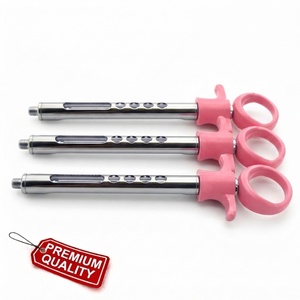
Premium Quality Manual Dental Aspirating Syringe Set Pink Handle Steel Body Surgical Instrument CE Certified
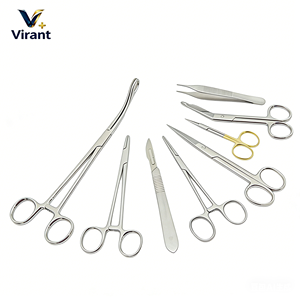
Stainless Steel Veterinary Surgery Instrument Set Includes Hemostatic Forceps Organize Cutting Kit For Animal Health
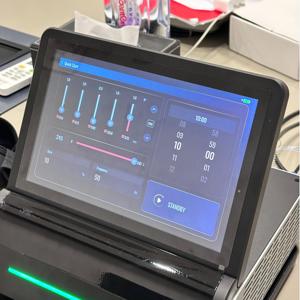
Portable Veterinary Surgical Laser Machine For Animal Soft Tissue Surgery
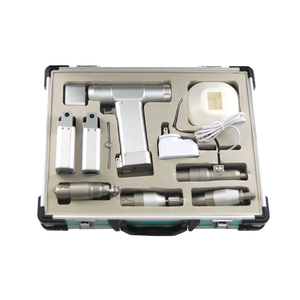
Hot Selling Animal Orthopedic Bone Surgical Medico Power Tool Mini Bone Drill Set Multi-functional Drill for Orthopedic Surgery
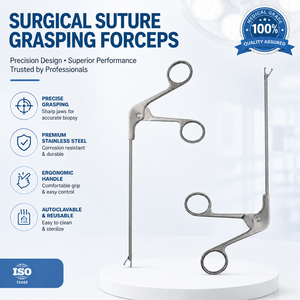
Surgical Suture Grasping Forceps Arthroscopy Surgical Instrument Stainless Steel OEM ODM Medical Forceps Autoclavable
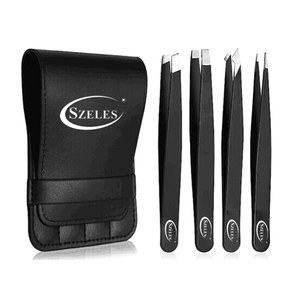
1.5mm Thickness High Quality Set Eyebrow Tweezers With Light Slanted Eyebrow Tweezers Stainless Steel Eyebrow Tweezers
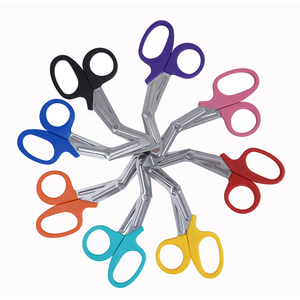
High Quality Stainless Steel First Aid Medical Bandage Scissors for Nurse
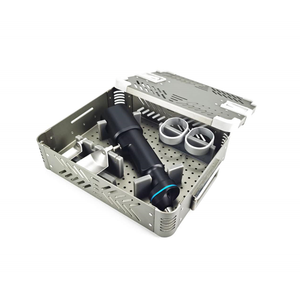
Wholesale Medical Power Tool For Orthopedic Clinic Equipment Low Price Veterinary TPLO Saw Instrument
Engineering Benchmark: The Anatomy of High-Performance Operating Room Scissors
Operating room (OR) scissors represent one of the most critical handheld surgical tools in modern hospital operating theaters. The distinction between standard utility shears and genuine operating room scissors lies in the metallurgical composition, edge geometry micro-tolerances, box-lock friction control, and chemical passivation integrity. As a premier original equipment manufacturer (OEM) and global exporter based in Sialkot—the premier manufacturing hub for precision surgical instruments—our enterprise bridges traditional metal-smithing master craftsmanship with state-of-the-art multi-axis CNC milling, automated vacuum heat treatment, and laser-guided bevel sharpening.
Metallurgical Integrity & Material Selection Principles
The operational lifespan of operating room scissors is primarily governed by the crystal structure of the raw steel alloy. We utilize premium medical-grade martensitic stainless steels, predominantly AISI 420 (X30Cr13), AISI 410, and AISI 440A, compliant with international medical standards including ISO 7153-1 and ASTM F899.
For high-wear cutting applications, our specialized Tungsten Carbide (TC) variant scissors feature precision-sintered TC inserts vacuum-brazed to the cutting edges at temperatures exceeding 1,050°C. This hybrid architecture yields an exceptional Rockwell Hardness rating of 55 to 58 HRC on the cutting edge while retaining toughness in the shank and finger loops to absorb mechanical stress without fracturing.
Information Gain Benchmark: Every production batch undergoes rigorous chemical composition analysis, ultrasonic cleaning, and boiling water test (ASTM F1089) to guarantee 100% surface passivation and corrosion immunity against harsh hospital autoclaving environments.
| Technical Property | Standard Operating Scissors | SIAL TC Premium OR Scissors |
|---|---|---|
| Base Steel Alloy | AISI 410 / AISI 420J1 | AISI 420J2 + Sintered TC Inserts |
| Edge Hardness (HRC) | 45 – 48 HRC | 55 – 58 HRC (Gold-Handle Series) |
| Corrosion Resistance | Basic Passivation | Electro-Chemical Passivation (ASTM F1089) |
| Autoclave Cycle Life | ~ 300 Cycles | 1,500+ Standard Autoclave Cycles |
| Bevel Configuration | Standard Bevel Cut | Micro-Serrated SuperCut Edge Geometry |
| Screw Joint Friction | Manual Torque Setting | CNC Calibrated Friction Torque Lock |
Why Global Healthcare Distributors & Hospital Networks Choose Us
Decades of export experience, absolute quality assurance, and end-to-end OEM/ODM custom private label manufacturing services.
Sialkot Metallurgical Heritage
Combining over a century of regional hand-smithing expertise with modern German-engineered precision tooling machinery. Our master craftsmen hand-tune every blade bevel to achieve effortless shearing action across delicate tissue and heavy bandages alike.
Complete ISO 9001:2015 & CE Quality Management
Our manufacturing facility operates under strict Quality Management Systems (QMS). Every production lot features complete material lot traceability, batch heat-treatment certificates, and full regulatory compliance documents required for EU, US FDA, and Middle Eastern healthcare tenders.
Turnkey Private Label & OEM Solutions
From high-precision fiber laser marking of custom product SKUs and brand logos to bespoke clinical packaging (pouch sealing, color-coded handles, custom-printed box packaging), we provide seamless contract manufacturing for global medical brands.
Future Procurement Trends for Operating Room Scissors & Surgical Tools
Key structural shifts shaping international B2B medical purchasing over the next decade.
Shift Towards Tungsten Carbide & SuperCut Technology
Hospital procurement committees are rapidly transitioning from standard stainless steel scissors to Tungsten Carbide (TC) and micro-serrated SuperCut scissors. Although TC scissors incur a 15-25% premium on initial purchase order cost, their 5x extended sharpening life cycle drastically lowers total cost of ownership (TCO) and minimizes repair overhead for central sterile supply departments (CSSD).
Digitized UDI & RFID Instrument Tracking Integration
Global regulatory bodies (including the US FDA and EU MDR) require Unique Device Identification (UDI) compliance. Modern operating room scissors must now feature high-density 2D Matrix laser etching capable of surviving hundreds of high-temperature sterilization cycles, enabling automated tracking throughout the hospital workflow.
Ergonomic Anti-Fatigue & Non-Reflective Coating Finishes
Surgeons performing multi-hour procedures demand lightweight, balance-optimized shanks with specialized ergonomic finger rings. Furthermore, high-intensity surgical glare in modern hybrid operating rooms has accelerated demand for matte satin, electro-passivated black ceramic, or titanium-nitride (TiN) non-reflective surface coatings.
Near-Shoring & Diversified Supply Chain Resiliency
Healthcare supply chain managers are diversifying procurement away from single-source distributors. Direct factory partnerships with certified manufacturers in Sialkot offer guaranteed lead times, direct factory pricing, and resilient buffer inventory programs for high-volume hospital consumables.
Environmental Sustainability in Sterile Packaging
B2B importers are prioritizing suppliers who utilize recyclable protective sleeves, eco-friendly transport cartons, and non-toxic chemical cleaning processes, adhering to global green procurement guidelines without compromising sterile barrier integrity.
Rigorous Batch Metallurgical Certification Requirements
Tender specifications increasingly demand mill test certificates (MTC) proving elemental alloy compliance (Chromium, Carbon, Nickel content) alongside verified passivation testing to eliminate risk of post-sterilization rusting or pitting in operating suites.
Technological & Development Trends in Surgical Scissors Manufacturing
How advanced metallurgy, robotic manufacturing, and surface engineering are redefining cutting precision.
1. Automated Robotic CNC Sharpening & Edge Profiling
Traditional manual grinding inherently introduces subtle human variance across scissor blades. Next-generation factory lines integrate 5-axis robotic CNC grinding machines equipped with laser measurement feedback. This guarantees exact bevel angle repeatability (typically 45° to 55° depending on pattern) across thousands of production units, eliminating drag during tissue dissection.
2. Nanostructured PVD & Diamond-Like Carbon (DLC) Coatings
Physical Vapor Deposition (PVD) processes allow the deposition of microscopic DLC or Titanium Aluminum Nitride (TiAlN) films onto scissor blades. These coatings provide surface hardness ratings exceeding 70 HRC, drastically reducing surface friction, extending sharpness retention, and providing an inert chemical barrier against harsh enzymatic cleaners.
3. Vacuum Hardening & Cryogenic Sub-Zero Treatment
To eliminate residual retained austenite in martensitic stainless steel, modern heat treatment protocols combine computerized vacuum furnaces with deep cryogenic freeze cycles (-196°C using liquid nitrogen). This metallurgical transformation optimizes grain refinement, increasing edge retention by over 35% compared to conventional air-cooled heat treatment.
Quality Assurance Note: Cryogenically treated operating room scissors exhibit vastly superior dimensional stability and stress resistance, preventing blade mis-alignment or loosening at the pivot screw during intensive surgical procedures.
Frequently Asked Questions (FAQ) for Global Buyers
Clear, expert answers regarding specifications, minimum order quantities, certifications, and OEM manufacturing.
What is your factory's Minimum Order Quantity (MOQ) for surgical scissors?
Our standard catalogue minimum order quantity starts at 50 pieces per model/size for standard stainless steel scissors. For custom OEM designs, specialized handle coatings, or private label laser-etched instruments, MOQs typically range between 100 to 300 pieces depending on customization complexity. Trial orders for distributor evaluation are negotiable.
Are your operating room scissors compliant with international regulatory standards?
Yes. SIAL Surgical operates an ISO 9001:2015 certified Quality Management System. Our full range of surgical instruments is manufactured to meet CE marking criteria for the European market and aligns strictly with ISO 7153-1 and ASTM F899 standards. Technical master files, Declaration of Conformity, and FDA compliance documentation are provided upon request.
Which steel grades are utilized for cutting tools vs. non-cutting instruments?
We strictly match steel chemistry to functional demands. Cutting instruments (Mayo, Metzenbaum, Iris, and Bandage Scissors) utilize martensitic stainless steels (AISI 420J2 or AISI 440A) to achieve high hardness and sharp edge retention. Non-cutting tools or tissue forceps utilize AISI 410 or austenitic stainless steels to prioritize flexibility, spring tension, and structural toughness.
What is the difference between standard, Tungsten Carbide (TC), and SuperCut scissors?
Standard scissors feature solid martensitic steel throughout. Tungsten Carbide (TC) scissors incorporate ultra-hard sintered TC inserts along the cutting edges (identified by gold-plated finger rings), offering up to 5 times longer edge life. SuperCut scissors combine one razor-sharp micro-beveled blade with one micro-serrated blade to grip slippery tissue cleanly without push-out.
Can you provide custom OEM branding, laser marking, and custom packaging?
Absolutely. We offer complete OEM/ODM contract manufacturing. We can laser-etch your company logo, custom part numbers, lot codes, and UDI matrix barcodes onto the shanks. Furthermore, we supply sterile-ready pouches, custom blister packs, leatherette cases, and branded inner/outer cardboard cartons tailored to your sales channel.
What are your typical production lead times and international shipping options?
Standard catalogue stock orders ship within 10 to 15 business days. Full custom OEM production runs typically require 3 to 5 weeks depending on order volume and finishing requirements. We support all global freight logistics including Express Air Courier (DHL/FedEx/UPS) for urgent shipments, Air Cargo, and LCL/FCL Sea Freight with full export documentation.
Partner with Sialkot’s Leading Surgical Instruments Manufacturer
Upgrade your product portfolio with precision-engineered operating room scissors, specialized dental tools, and custom OEM manufacturing solutions backed by ISO 9001:2015 certification and 25+ years of export excellence.