Precision Instruments & Medical OEM Solutions
Explore our high-demand surgical tools, clinical consumables, and micro-hemostatic forcep lines engineered for rigorous medical compliance.
Comprehensive Engineering & Procurement Guide: Mosquito Hemostatic Forceps Manufacturing
In modern surgical environments—spanning micro-vascular procedures, pediatric general surgery, plastic reconstruction, ophthalmic interventions, and advanced veterinary medicine—the Halsted Mosquito Hemostatic Forcep stands as a foundational instrument. Designed specifically to control local hemostasis by clamping small blood vessels during delicate tissue manipulation, these forceps demand absolute metallurgical consistency, flawless micro-serration alignment, and uncompromising mechanical yield strength.
As a leading Chinese surgical instrument manufacturer with deep heritage in metal forging and CNC micro-machining, our production infrastructure integrates traditional hand-finishing craftsmanship with automated vacuum heat treatment and ultrasonic chemical passivation. Understanding the critical technical variables of mosquito forcep manufacturing is essential for medical equipment procurement directors, hospital supply chain executives, and private-label distributors seeking high-margin, regulatory-compliant supply chains.
Metallurgical Selection & Material Properties
The performance of a mosquito hemostatic forcep relies primarily on the stainless steel alloy grade utilized in forging. Unlike standard utility clamps, surgical mosquito forceps require a precise balance between high tensile strength (to prevent jaw twisting under lateral pressure) and flexural memory (to enable smooth, repeatable engagement of the interlocking ratchet mechanism).
| Steel Grade Standard | Hardness (Rockwell HRC) | Corrosion Resistance | Primary Surgical Application |
|---|---|---|---|
| AISI 420 (Martensitic) | HRC 44 – 48 | High (Passivated ASTM A967) | Standard Reusable Surgical Forceps, Halsted Micro-Clamps |
| AISI 410 (Martensitic) | HRC 40 – 44 | Moderate to High | Utility Hemostats, Single-Use Clinical Procedure Kits |
| AISI 304 / 316L (Austenitic) | Non-Hardenable (HRC < 25) | Maximum Chemical Inertness | Non-Magnetic Microsurgical Handles & Laparoscopic Cable Hubs |
| Tungsten Carbide (TC) Inserts | HRC 65 – 70 (Insert Tip) | Ultra-High Wear Resistance | Premium Micro-Serrated Jaw Inlays for Extended Service Life |
Our manufacturing facility exclusively employs certified high-purity AISI 420 martensitic stainless steel for our standard mosquito forcep line. By applying precise, multi-stage vacuum heat treatment followed by cryogenic tempering, we establish a homogenous grain structure that eliminates brittleness while guaranteeing a Rockwell hardness range of HRC 44 to 48. This ensures that the delicate, tapered jaws resist permanent deformation even under repeated autoclave sterilizations at 134°C.
Anatomical Precision: Box-Lock Integrity & Serration Geometry
The structural reliability of a mosquito forcep is evaluated by two key mechanical criteria: joint geometry and jaw serration pitch.
- Precision Box-Lock Joint: The pivot joint must maintain a mechanical clearance tolerance of less than ±0.015 mm. A loose joint allows scissor-action overlapping of the jaws, causing vascular shear rather than compression. Conversely, a tight joint induces operator thumb fatigue during delicate micro-clamping. Our automated CNC milling ensures friction-free joint articulation.
- Transverse Serration Profile: The inner surfaces of Halsted micro-mosquito jaws feature fine, precision-cut transverse serrations. Unlike aggressive tissue forceps, hemostatic serrations must clamp endothelial layers securely without slicing micro-vessel walls. Serration depth and pitch are calibrated to distribute clamping force uniformly across the entire working length of the jaw.
- Interlocking 3-Step Ratchet Mechanism: The finger-ring ratchet must engage with tactile feedback, providing incremental clamping pressures (low, medium, firm) that hold position without slipping during complex vascular ligation.
Manufacturing Superiority: Why Tier-1 Global Brands Partner With Us
Operating out of advanced surgical instrument manufacturing hubs, our factory bridges high-capacity automated production with stringent international regulatory compliance. We provide OEM, ODM, and bulk private-label manufacturing services tailored to regional healthcare regulatory frameworks including US FDA, European CE MDR, and ISO 13485 QMS.
ISO 13485 Certified QMS
Full device traceability from raw billet melt certificates through 100% passivated batch verification, fulfilling global audit readiness for hospital networks.
5-Axis CNC Precision
Sub-micron tolerance grinding of forcep tip radii, box-lock channels, and finger ring contours ensures part-to-part consistency across high-volume production runs.
ASTM A967 Chemical Passivation
Automated citric and nitric acid passivation removes free iron particles from the instrument surface, forming an impenetrable chromium oxide passivation layer.
OEM Private Labeling & Branding
Fiber laser marking for custom logos, SKU catalog codes, Matrix UDI codes, and custom pouch/box packaging engineered for retail or institutional distribution.
100% Functional Quality Control
Every single forcep undergoes manual tactile ratchet testing, jaw tip alignment verification under magnification, and corrosion boil tests prior to shipment.
Global Logistics & Compliance
Established export fulfillment to over 60 countries across North America, Europe, the Middle East, and Asia-Pacific with consolidated freight options.
Strategic B2B Procurement Trends in Surgical Forceps (2025–2030)
The global market for general and micro-surgical instruments is undergoing significant structural shifts driven by cost optimization, stringent cross-contamination protocols, and supply chain reshoring/nearshoring dynamics. Procurement directors and medical device importers must adapt their sourcing strategies to navigate the following key industry trends:
1. Shift Toward Hybrid Procurement Models (Reusable vs. Single-Use Kits)
While hospital operating rooms (ORs) maintain high-grade reusable AISI 420 stainless steel Halsted Mosquito Forceps for major surgeries, ambulatory surgical centers (ASCs), outpatient clinics, and emergency medical kits are increasingly adopting pre-sterilized, single-use hemostatic forceps. Importers are balancing their inventories by offering dual-tier catalogues: premium reusable lines guaranteed for 100+ autoclave cycles, and cost-efficient clinical-grade lines optimized for procedure pack integration.
2. Mandatory UDI Implementation & Digital Traceability
Regulatory authorities including the US FDA (GUDID) and European Union (EUDAMED under MDR 2017/745) require Direct Part Marking (DPM) of Unique Device Identifiers (UDI) on reusable surgical instruments. Modern mosquito hemostatic forceps must accommodate high-density 2D DataMatrix laser codes on finger rings or shank areas. Our factory utilizes high-precision cold-laser engraving that maintains UDI legibility after hundreds of passivation and sterilization processes without creating micro-fissures where bacteria can harbor.
3. Direct-from-Factory Tier-1 Sourcing vs. Intermediary Trading
To offset rising labor and material costs, global distributors are shifting away from third-party export brokers in favor of direct technical partnerships with verified Chinese manufacturers. Direct collaboration facilitates custom blade/jaw modifications, faster tooling turnaround times, and reduced landed costs by 20% to 35% while granting direct access to raw material mill certificates and audit records.
Future Product Development & Technology Trends
Surgical engineering continues to evolve alongside advances in minimally invasive surgery (MIS), robotic surgical platforms, and ergonomic clinical design. Manufacturers investing in next-generation surface treatments and micro-mechanical modifications are capturing market share in premium healthcare sectors.
Diamond-Like Carbon (DLC) & Black Oxide Coatings
Anti-reflective matte-black ceramic coatings reduce glare from high-intensity OR overhead surgical lights and lasers, improving visual clarity during microsurgical and laparoscopic procedures.
Titanium Alloy Micro-Mosquito Forceps
For MRI-guided surgical suites and neurosurgery, non-magnetic Titanium (Ti-6Al-4V) mosquito forceps offer 40% lighter weight than steel, reducing surgeon hand fatigue during multi-hour micro-vascular operations.
Ergonomic Handle Geometry & Silicone Grips
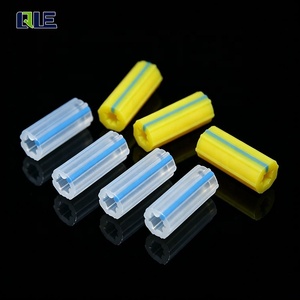
Integration of medical-grade silicone color-coded sleeves (as showcased in our product catalog) aids clinical instrument sorting while providing anti-slip tactile feel during wet surgical conditions.
Frequently Asked Questions (FAQ) for OEM Buyers & Importers
Below are detailed answers to key technical, regulatory, and commercial questions commonly raised during procurement evaluations.
Partner with China's Premier Surgical Instrument Factory
Upgrade your surgical product lineup with high-precision, ISO 13485 certified Mosquito Hemostatic Forceps and specialized medical tools. Request a competitive factory-direct quote or custom sample kit today.
Inquire Now