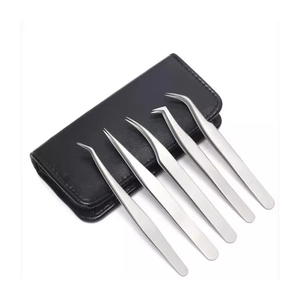
Featured Medical & Dental Instruments OEM Portfolio
Direct factory manufacturing, precision engineering, micro-polished surface treatments, and custom branding options.
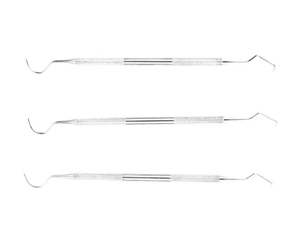
Dental Probes Explorer Curette Endo Periodontal Double-Ended Instruments Set Manual Stainless Steel 3-Year Warranty CE Certified
Contact Us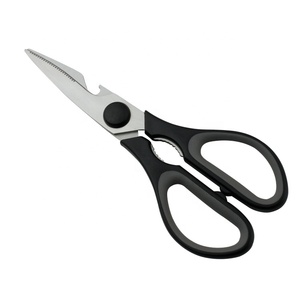
Wholesale Kitchen Poultry Shears Scissors Stainless Steel Custom OEM Customized Logo Item Soft Handle Scissors
Contact Us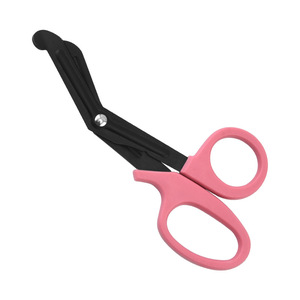
6 Inch Medical Use Trauma Shears Bandage Shears Fluoride Coated Stainless Steel Smooth Edge Nurses Scissors
Contact Us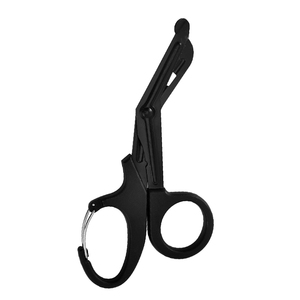
Industrial Grade Black Handle Non Stick Multifunctional Medical Scissors for Nurses Patent Bandage Shears
Contact Us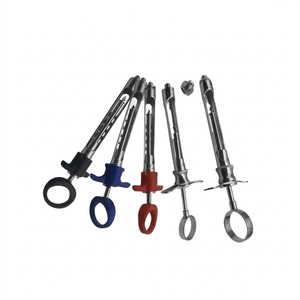
Dental Aspirating Syringe Set Stainless Steel Manual Cartridge Instruments for Professional Dentistry
Contact Us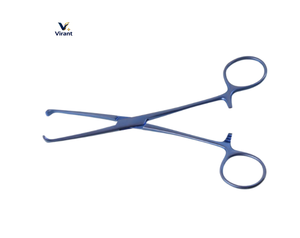
Virant Basic Veterinary Instrument Set Manual Reusable German Stainless Steel Surgical Kits CE ISO13485 Approved
Contact Us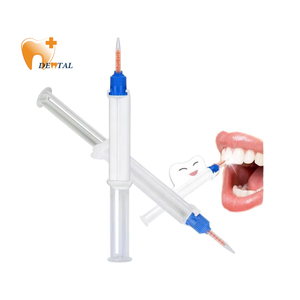
Professional Dental Grade 2.5 ml Dual Syringe with Mint Teeth Whitening Gel Catalyst Multi-Purpose Accessories Kit
Contact Us30+
Years Manufacturing Excellence
±0.01mm
Tolerance Precision Machining
60+
Global Export Markets
100%
Passivation & Inspection Rate
Executive Summary: High-Precision Dental Impression Trays Procurement
In modern prosthodontics, restorative dentistry, and orthodontics, the fidelity of a physical dental impression remains the ultimate baseline for clinical outcome accuracy. Whether capturing precise preparation margins for fixed crown and bridge prosthetics, full-arch implant scan bodies, or aligner thermoforming models, the structural integrity of the dental impression tray directly governs dimensional stability and hydro-colloid or elastomeric impression material retention.
As a leading China dental impression trays manufacturer and OEM/ODM supplier, our engineering division bridges decades of precision metallurgical hand-craftsmanship with modern automated CNC Deep-Drawing, micro-perforation punching, and robotic passivation processes. Operating under stringent ISO 9001:2015 and ISO 13485 quality management frameworks, we provide global dental brand owners, hospital procurement consortiums, and medical device distributors with high-performance dental impression systems engineered for zero-distortion clinical results.
Information Gain Key Takeaway: Dynamic deformation during impression tray seating accounts for up to 68% of crown margin misfit issues. Utilizing premium medical-grade AISI 304 austenitic stainless steel (18/8 Chrome-Nickel composition) or rigid high-density autoclavable polymers prevents lateral wall flexure under heavy hydraulic impression viscosity (such as heavy-body Polyvinyl Siloxane or Polyether).
Technical Classification & Product Recommendation Matrix
Selecting the optimal dental impression tray architecture depends on anatomical variation, arch configuration, patient dentition status, and the rheological characteristics of the impression compound. Below is an engineering overview of our primary manufactured lines:
| Tray Category | Material Engineering | Key Features & Retentive Mechanism | Primary Clinical Application |
|---|---|---|---|
| Perforated Stainless Steel Trays | AISI 304 Stainless Steel (0.8mm – 1.0mm gauge) | Staggered 2.0mm micro-perforations; mechanical lock rim; autoclavable (134°C). | Alginate & PVS impressions for crown, bridge, and general diagnostics. |
| Rim-Lock Non-Perforated Trays | Deep-drawn Medical Grade Steel, mirror/satin finish | Internal perimeter undercut rim-lock channel; supreme fluid pressure containment. | High-precision elastomeric impressions, edentulous or dentulous final impressions. |
| Implant Window Trays (Open-Tray) | Modular Polycarbonate or Sectional Stainless Steel | Custom removable clear windows for impression coping access; rigid base. | Multi-unit implant impression coping pick-up procedures. |
| Water-Cooled Hydrocolloid Trays | Thermal Conductive Brass / Stainless Steel Tubing | Integrated perimeter water circulation tubing for controlled rapid cooling. | Reversible hydrocolloid impression protocols. |
| Sectional & Quadrant Trays | Rigid Chrome-Plated Alloy / Autoclavable Polymer | Dual-arch bite registration capability; low patient displacement volume. | Single-tooth inlay/onlay and single crown preparations. |
Engineering Excellence & Metallurgical Superiority
Why do leading European, North American, and Asia-Pacific medical brands source their impression tray inventory from our facilities in China? The answer lies in metallurgy, surface chemistry, and micro-geometry consistency:
1. Anti-Corrosion & Passivation Engineering
Every metallic tray undergoes automated chemical passivation according to ASTM A967 / ISO 16061 standards. Immersed in ultra-pure citric or nitric passivation baths, free iron particles created during stamping or laser-cutting are stripped from the surface, forming a dense, self-healing Chromium Oxide ($\text{Cr}_2\text{O}_3$) passive layer. This guarantees over 1,000 autoclave cycles at 134°C (273°F) without pitting, rusting, or stress corrosion cracking.
2. Ergonomic Anatomical Contouring & Rim-Locks
Inferior impression trays often suffer from sharp edges or flat vault profiles that cause patient discomfort and asymmetrical material thickness. Our CAD/CAM deep-drawing molds accurately mirror global epidemiological arch variations (Upper Dentulous, Lower Edentulous, Pedodontic, and Maxillofacial shapes). Smoothly rolled borders and precision-soldered or stamped handles ensure rigid leverage during insertion and removal.
The Physics of Impression Material Retention
Impression material tearing during tray retrieval from intraoral undercuts is a major cause of remake errors. Our proprietary staggered perforation arrays create an interlocking mechanical matrix with Alginate, Polyether, and Addition Silicones (PVS). Paired with peripheral Rim-Lock ridges, the shear strength between tray wall and impression body exceeds 2.4 MPa, eliminating intra-oral detachment.
Global Procurement Trends: 2025–2030 Industry Analysis
As the international dental landscape evolves, B2B procurement officers, hospital purchasing agents, and private label brand managers must align with several critical industry shifts:
1. Coexistence of Digital intraoral Scanning & Physical Trays
While digital intraoral scanners (IOS) continue to gain market share, physical impression trays remain indispensable. Global market research indicates that over 55% of complex multi-unit implant restorations, full-arch removable prosthetics, and deep subgingival preparations still rely on physical impressions due to optical scanning limitations near soft tissue hemorrhaging or saliva flow. Trays are increasingly designed to accommodate hybrid workflows—such as scan-body physical pick-ups.
2. Transition Towards Single-Use Sterilized vs. High-Duty Reusable
Hospitals and DSO chains are divided between single-use rigid autoclavable plastic trays (to eliminate cross-contamination liability) and ultra-durable medical-grade stainless steel trays (to reduce environmental plastics footprint). China manufacturers with dual production capability in injection moulding and metal stamping provide distributors with a resilient supply chain strategy.
3. Private Labeling (OEM) and Custom Perforation Patterns
Distributors are moving away from generic unbranded stock. Brand owners require direct laser marking of customized part numbers, QR code traceability for hospital sterilization tracking, and custom color-coded anodized aluminum or plastic finishes. Our automated fiber-laser marking line ensures crisp, non-fading logos even after repeated thermal cycles.
Accelerate Your B2B Dental Instrument Supply Chain
Looking for direct-factory OEM pricing, low MOQ trial orders, or custom mold development for impression trays and surgical kits? Talk to our engineering export team today.
Request Custom QuotationManufacturing Process & Quality Control Protocol
Quality reliability is non-negotiable when exporting surgical and dental instruments worldwide. We strictly adhere to a 6-stage Quality Gate inspection protocol from raw coil to final blister packaging:
- Stage 1: Raw Material Spectrometry Analysis: Every shipment of AISI 304, 316, or 420 stainless steel sheets is verified via X-Ray Fluorescence (XRF) analyzers to ensure chemical composition compliance (Chromium ≥ 18%, Nickel ≥ 8%).
- Stage 2: Precision Stamping & Deep Drawing: 250-ton hydraulic presses form the tray vault and arch profiles without introducing stress micro-fractures into the alloy matrix.
- Stage 3: Micro-DeBurring & Edge Polishing: Rotary tumble deburring combined with manual hand-finishing eliminates micro-burrs along perforation holes and rim edges.
- Stage 4: Automated Ultrasonic Cleaning & Chemical Passivation: Removes residual drawing lubricants and forms the anti-corrosive oxide layer.
- Stage 5: Dimensional & Fit Inspection: Optical comparators verify tray height, arch width, handle angle, and wall thickness against CAD drawings within ±0.01mm tolerance.
- Stage 6: Laser Marking & Cleanroom Packaging: CE/ISO compliant laser etching followed by dust-free polybagging or retail box assembly.
Enterprise Advantage: Why Partner With Us
Leveraging decades of industrial manufacturing heritage, our manufacturing hub combines time-tested instrument craft with modern enterprise scale. We provide overseas clients with significant structural advantages:
Complete Regulatory Compliance
ISO 9001:2015 QMS certification, ISO 13485 medical device compliance, CE marking documentation for EU markets, and FDA-compliant material safety data sheets (MSDS/MDR) ready for import clearing.
Comprehensive OEM/ODM Flexibility
From laser-etched distributor branding to entirely custom physical tray dimensions or specialized surgical scissors and forcep sets, our R&D team converts 2D drawings into physical prototypes in under 14 days.
Robust Supply Capacity & Low MOQ
With an annual output exceeding 500,000 instruments, we balance massive order capacity for international tenders with flexible minimum order quantities (MOQs starting at 50 pcs for catalogue items) for emerging brands.
100% Quality Guarantee
Every batch is backed by our functional guarantee: flawless joint alignments on forceps, razor-sharp edge retention on medical shears, and corrosion-free performance across all dental impression trays.
Frequently Asked Questions (Procurement FAQ)
Essential guidance for B2B buyers, medical device importers, and hospital purchasing directors.
What stainless steel grades are used in your dental impression trays?
We primarily use premium AISI 304 (18/8 Austenitic Stainless Steel) for metal impression trays to ensure maximum rigidity, deep-drawing ductility, and non-corrosive performance under repeated thermal autoclave cycles. For cutting instruments like surgical scissors, martensitic AISI 420 or 440 steel is chosen for edge hardness.
What is your standard minimum order quantity (MOQ) for OEM/Private Label?
Standard catalog items start at an MOQ of 50 pieces per model size. For OEM orders featuring customized laser-etched logos, unique packaging, or proprietary tray patterns, the MOQ typically starts at 200–500 pieces depending on tooling requirements.
Are your dental impression trays compatible with all impression materials?
Yes. Our perforated and rim-lock trays are fully compatible with Alginates, Addition Silicones (PVS), Condensation Silicones, Polyethers, and Reversible Hydrocolloids. The chemical passivation prevents any adverse reaction with active impression chemistry.
Do you provide regulatory certification for customs clearance?
Absolutely. All exported products are accompanied by ISO 9001:2015, ISO 13485 certification, CE Compliance Declarations, Certificate of Free Sale (CFS), and material test reports (MTR) upon request.
Can we order pre-production samples prior to bulk production?
Yes, we strongly encourage sample evaluation. Physical samples can be dispatched via express air courier within 3 to 7 days. Sample costs are generally credited back to your account upon placement of your first formal bulk production order.
What is the typical production lead time for bulk export orders?
Standard catalog items are dispatched within 7 to 14 business days. Custom OEM orders, specialized tray sizing, or custom branded kit packaging typically require 3 to 5 weeks from sample sign-off.
Ready to Partner with China's Premier Dental Instrument Manufacturer?
Contact our bilingual sales engineers for instant quotes, technical drawings, or product catalogs.
Contact Us Now