Precision Engineered Surgical & Medical Instruments
Explore our core OEM/ODM product lines manufactured with medical-grade titanium alloy and high-grade stainless steels under rigorous ISO 9001:2015 and ISO 13485 QMS controls.
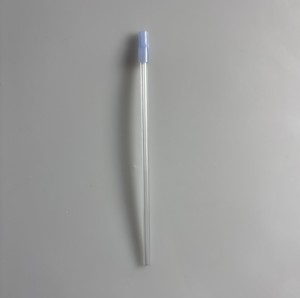
Insemination Pipettets For Dog Cat Small Animal
Send an Inquiry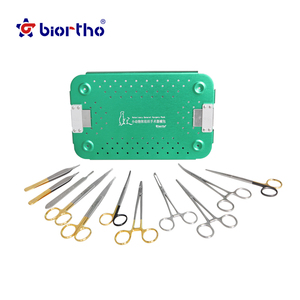
Soft Tissue Surgical Instruments Kit A/B
Send an Inquiry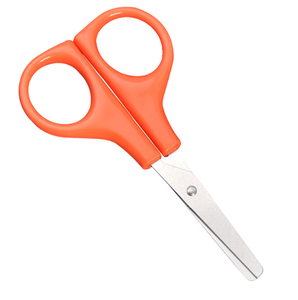
Industrial Grade 5.5 Inch Stainless Steel Medical Scissors Smooth Edge Trauma Nursing Surgical With Sharp Tip
Send an Inquiry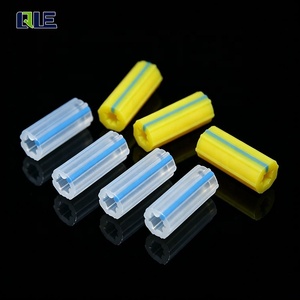
Custom Medical Grade Silicone Protective Tips Soft Flexible Silicone Sharp Instrument Sleeve for Surgical Scalpel Tweezers
Send an Inquiry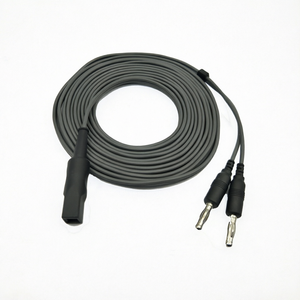
Sinelink Reusable European IEC ISO13485 Bipolar Forceps Cable Autoclavable 4.0mm Banana Connector 3.0m Silicone Electrosurgical
Send an Inquiry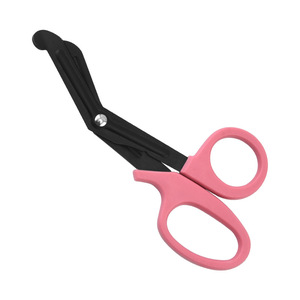
6 Inch Medical Use Trauma Shears Bandage Shears Fluoride Coated Stainless Steel Smooth Edge Nurses Scissors
Send an Inquiry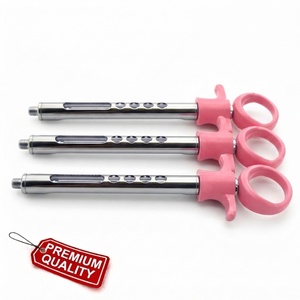
Premium Quality Manual Dental Aspirating Syringe Set Pink Handle Steel Body Surgical Instrument CE Certified
Send an Inquiry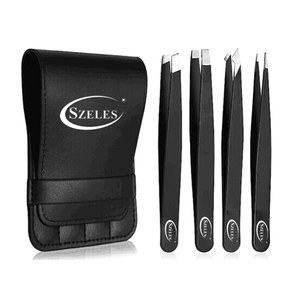
1.5mm Thickness High Quality Set Eyebrow Tweezers With Light Slanted Eyebrow Tweezers Stainless Steel Eyebrow Tweezers
Send an InquiryThe Paradigm Shift to Titanium Alloys in Modern Surgical Instrumentation
An engineering analysis of material properties, stress shielding mitigation, non-magnetic resonance compatibility, and ergonomic weight reduction in modern operating theaters.
1. Why Medical Grade Titanium (Ti-6Al-4V ELI) Over traditional Martensitic Stainless Steels?
In contemporary surgical procedures—spanning neurosurgery, cardiovascular reconstruction, complex orthopedic trauma, and ophthalmic microsurgery—the selection of instrument alloy directly impacts surgical outcomes, tactile feedback, and patient safety. While traditional martensitic stainless steels (such as AISI 410, 420, and 440A) have served the medical device industry for decades due to high tensile strength and edge retention, Ti-6Al-4V ELI (Grade 23 Titanium) has redefined expectations for critical-use surgical hand tools.
Titanium Grade 23 is an Extra Low Interstitial (ELI) alloy engineered specifically for surgical implantables and high-stress hand instruments. By lowering interstitial oxygen, nitrogen, and iron content, Grade 23 delivers enhanced fracture toughness, superior fatigue strength, and extreme resistance to stress corrosion cracking under continuous autoclave sterilization cycles ($134^\circ\text{C}$ steam at 2.1 bar pressure).
| Material Property | Ti-6Al-4V ELI (Grade 23) | Commercially Pure Ti (Grade 2) | AISI 420 Surgical Stainless Steel |
|---|---|---|---|
| Density ($\text{g/cm}^3$) | 4.43 (42% Lighter) | 4.51 | 7.75 (Heavy) |
| Elastic Modulus (GPa) | 110 - 114 | 102 | 200 - 210 |
| Yield Strength (MPa) | 795 - 875 | 275 - 450 | 650 - 750 |
| MRI Compatibility | 100% Non-Magnetic (Zero Artifact) | Non-Magnetic | Ferromagnetic (Distortions) |
| Biocompatibility / Passive Layer | Sub-surface $\text{TiO}_2$ Passivation | $\text{TiO}_2$ Oxide Film | Chromium Oxide ($\text{Cr}_2\text{O}_3$) |
| Autoclave Cycle Lifespan | 1,000+ Sterilization Cycles | 800+ Cycles | 300-500 Cycles (Pitting Risk) |
Ergonomic Weight Reduction & Surgeon Fatigue Mitigation: The 42% density differential between titanium ($4.43\,\text{g/cm}^3$) and stainless steel ($7.75\,\text{g/cm}^3$) yields significant practical advantages. In micro-vascular and extended spinal reconstructions lasting up to 8–12 hours, heavy surgical forceps, needle holders, and retractors cause micro-tremors and forearm strain in surgeons. Titanium instruments provide superior balance and feedback, directly enhancing delicate tissue manipulation precision.
MRI Artifact-Free Clearance
Titanium is completely non-ferromagnetic. Under 1.5T and 3.0T High-Field MRI guidance (intraoperative MRI procedures), titanium forceps and clamps produce zero metallic artifacts or magnetic torque, allowing real-time intraoperative imaging without signal distortion.
Corrosion & Autoclave Endurance
Titanium forms a self-healing native titanium dioxide ($\text{TiO}_2$) passivation film when exposed to oxygen. Unlike stainless steel, it is completely immune to galvanic corrosion, pitting from saline solutions, and chemical breakdown during harsh enzymatic washing.
Flexural Toughness & Memory
Titanium's lower Modulus of Elasticity ($110\,\text{GPa}$) provides exceptional spring action for micro-tweezers and tissue forceps. Jaws return to their exact geometric zero position even after repeated spring flexure, eliminating jaw misalignment.
Manufacturing Excellence: Sialkot Craftsmanship & CNC Precision
Combining 30+ years of master forging legacy from Sialkot with state-of-the-art Swiss 5-axis CNC machining, vacuum heat treatment, and automated Type II titanium anodization.
1. Multi-Axis CNC Machining & Vacuum Heat Treatment
Our specialized manufacturing facility in the Small Industrial Estate, Sialkot, integrates modern production technologies tailored specifically for titanium and medical stainless steel alloys:
- Swiss-Type 5-Axis CNC Milling: Enables single-setup machining of complex geometric micro-forceps, ratchet joints, and anatomical handle grips with tolerances down to $\pm 0.005\,\text{mm}$.
- Vacuum Atmosphere Annealing & Hardening: Eliminates oxidation scale and alpha-case embrittlement during thermal treatment, preserving material purity.
- Micro-Laser Welding & Assemblies: High-energy picosecond lasers assemble multi-part bipolar electrosurgical instruments and delicate wire guides without altering adjacent heat-affected zones.
- EDM Wire Erosion: Precision wire Electrical Discharge Machining for non-contact cutting of intricate jaw serrations and tungsten carbide insert pockets.
2. Surface Finishing, Anodization & Passivation
Surface integrity determines instrument performance in sterilizing environments. We provide comprehensive OEM surface treatment solutions:
- Type II & Type III Electrochemical Titanium Anodization: Produces vibrant color-coded oxide layers (Gold, Royal Blue, Magenta, Green, Violet) without pigments or dyes, enabling immediate color distinction in surgical trays.
- Citric & Nitric Passivation (ASTM F1089 / ASTM A967): Completely strips free iron contaminants from stainless and hybrid titanium surfaces to ensure zero corrosion formation.
- Glare-Reduction Satin & Matte Finishing: Micro-bead blasting with high-purity glass media eliminates glare under high-intensity operating room surgical LED lighting.
- Tungsten Carbide (TC) Surface Bonding: Gold-handled Mayo and Metzenbaum scissors feature vacuum-brazed TC inserts ($88-90\,\text{HRA}$) for long-lasting edge sharpness.
Global Sourcing Trends & Supply Chain Analytics for Surgical OEM Buyers
Key shifts transforming the medical instrument procurement landscape over the next decade—from Additive Manufacturing to UDI Traceability and Sustainable Manufacturing.
1. Hybrid Additive-Subtractive Manufacturing
The market is transitioning toward 3D printed titanium (SLM/DMLS technology) for custom ergonomic handles and lattice-structured orthopedic trial implants, combined with CNC micro-finish machining on working jaws. OEM buyers are reducing new instrument prototype development lead times from 16 weeks to under 14 days.
2. UDI Laser Direct Part Marking (DPM)
Global healthcare regulatory compliance mandates (US FDA UDI rule & EU MDR 2017/745) require permanent 2D DataMatrix code engraving on every reusable instrument. Modern OEM manufacturing integrates picosecond fiber laser marking that penetrates beneath passive oxide layers without compromising corrosion resistance.
3. Circular ESG Sourcing & Decarbonization
Tier-1 medical device procurement departments are prioritizing manufacturing hubs that implement closed-loop titanium scrap recycling, closed-circuit acid neutralization plants, and solar-powered factory operations to meet Scope 3 corporate decarbonization targets.
End-to-End Contract Manufacturing Process
From technical blueprint drawing validation to custom sterile packaging, our streamlined OEM workflow guarantees batch consistency and expedited time-to-market.
CAD/CAM & Prototyping
Reviewing 3D CAD files (STEP/IGES) or sample reverse engineering. Rapid prototyping in 10-14 days.
Material Certification
Raw material sourcing with full Chemical Composition & Mechanical Test Reports (EN 10204 3.1 MTRs).
Precision Production
CNC milling, hand-fitting box joints, vacuum heat treatment, and automated anodization.
QC, Branding & Pack
100% CMM dimensional audit, laser marking, private label pouching, and global logistics dispatch.
Frequently Asked Questions for Medical Procurement Managers
Detailed technical answers to common queries regarding material selection, certification, OEM minimum order quantities, and custom tooling.
Q1: What is your factory's Minimum Order Quantity (MOQ) for custom OEM/ODM orders?
Our standard production MOQ starts at 50 pieces per pattern for catalog instruments. For custom OEM/ODM designs requiring dedicated CNC tooling or custom forging dies, prototype orders can be initiated at 10-20 pieces. Production MOQs are confirmed following technical drawing review.
Q2: Are your titanium and stainless surgical instruments ISO 13485 and CE certified?
Yes. Our manufacturing facilities operate under an ISO 9001:2015 and ISO 13485:2016 Certified Quality Management System. All products are manufactured in strict alignment with European CE marking standards (EU MDR 2017/745), and full FDA Technical Documentation Files (Device Master Files) are provided for US hospital distributors.
Q3: Which raw material grades do you utilize for titanium and stainless surgical hand tools?
We exclusively source certified medical-grade raw materials:
• Titanium: Grade 5 Ti-6Al-4V ELI (ASTM F136 / ISO 5832-3) and Commercially Pure Grade 2 Titanium (ASTM F67).
• Stainless Steel: Martensitic AISI 410 (ASTM F899), AISI 420A/B/C, AISI 440A for sharp cutting blades, and Austenitic AISI 304/316L for hollowware and retractor handles.
Q4: Can you apply custom color anodization and private label laser branding?
Yes. We provide complete private labeling services including high-resolution Picosecond Fiber Laser Engraving for company logos, catalog numbers, batch numbers, and DataMatrix UDI barcodes. For titanium lines, we offer Type II anodization in Gold, Blue, Green, Magenta, and Black.
Q5: What are your standard production lead times and sample delivery schedules?
Sample evaluation orders are typically manufactured and dispatched within 7 to 14 business days. Full-scale production lead times range from 3 to 5 weeks depending on batch size, surface treatment requirements, and custom packaging specifications.
Q6: How do you ensure corrosion resistance and pass autoclave validation?
Every instrument batch undergoes rigorous post-machining chemical passivation according to ASTM A967 / ASTM F1089 standards. Instruments are subjected to boiling water testing, copper sulfate testing, and salt spray fog testing to guarantee zero rust formation over 1,000+ autoclave sterilization cycles.
Partner with a Trusted OEM/ODM Titanium Instrument Factory
Looking to scale your surgical brand, develop a new titanium instrument line, or optimize your distribution supply chain with direct factory pricing? Connect with our senior engineering team today.
Send an Inquiry