Featured Precision Instruments & Sets
Medical-grade stainless steel catalog engineered for global healthcare distributors, hospitals, and specialized OEM brands.
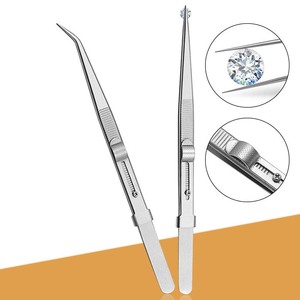
Adjustable Diamond Jewelry Tweezers No-Groove Lock
Anti-slip tip with high elasticity, anti-magnetic surgical stainless steel for ultra-fine micro-grasping applications.
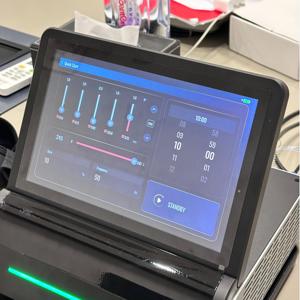
Portable Veterinary Surgical Laser Unit
High-precision tissue coagulation and soft tissue surgery machine engineered for modern veterinary operating theaters.
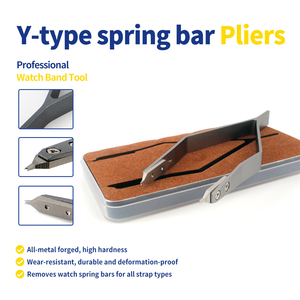
Stainless Steel Y-Shaped Spring Bar Repair Tweezers
Precision-machined spring bar removal tools engineered with high-hardness stainless alloys for micro-mechanical applications.
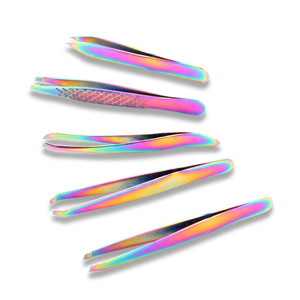
Pointed Tip Stainless Steel Precision Tweezers Set
Durable, hand-aligned aesthetic & surgical grooming forceps set supplied in executive travel protection cases.
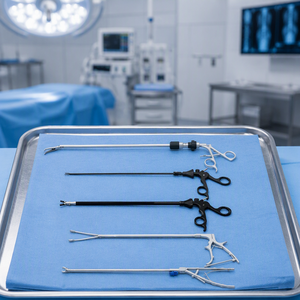
Medical Grade 5mm Laparoscopic Grasping Forceps
Abdominal surgical grasper featuring non-traumatizing jaw serrations, 360-degree rotation, and high-dielectric insulation.
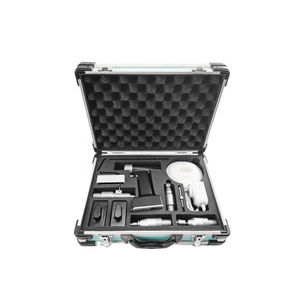
Reusable Veterinary Orthopedic Drill & Saw System
Heavy-duty, fully autoclavable veterinary orthopedic surgical power unit designed for small and large animal bone reconstruction.
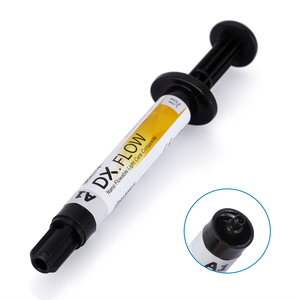
AZDENT Dental Nano Flowable Composite Kit
Light-cure restoration composite system with optimized viscosity, radiopacity, and high compressive strength for clinical dentistry.
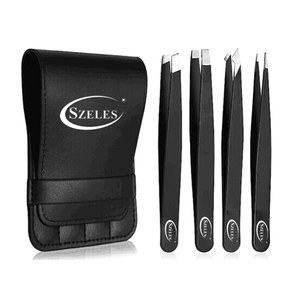
1.5mm Illuminated Slanted Surgical Steel Tweezers Set
High-precision slanted micro-forceps featuring integrated LED spotlighting and heavy-gauge 1.5mm structural stainless steel.
Engineering Authority: Metallurgical Standards in OEM/ODM Surgical Forceps Manufacturing
In modern surgical intervention—spanning cardiovascular, orthopedic, laparoscopic, and micro-neurological procedures—the operational integrity of a surgical forceps set dictates both clinical outcomes and patient safety. As a leading OEM/ODM manufacturer and exporter based in Sialkot's world-renowned surgical cluster, SIAL Surgical combines over a quarter-century of metallurgical expertise with automated CNC machining and strict quality management systems (QMS).
The manufacturing process of surgical forceps relies on selecting specialized martensitic and austenitic stainless steel alloys. Unlike commodity surgical tools, professional-grade forceps require a precise balance between tensile strength, yield strength, fatigue resistance, and chemical passivation capability. A failure in blade tension, ratchet engagement, or jaw alignment can lead to intraoperative tissue slippage or micro-fractures during sterilization cycles.
Information Gain Insight: The mechanical reliability of surgical forceps relies heavily on post-forging thermal treatment. SIAL Surgical utilizes vacuum-controlled hardening and sub-zero cryogenic tempering cycles to achieve an optimal Rockwell Hardness (HRC 48–52 for standard clamping jaws; HRC 54–58 for tungsten carbide cutting inserts), eliminating retained austenite and preventing micro-corrosion.
Metallurgical Alloy Comparison for Medical-Grade Forceps Manufacturing
| Stainless Steel Grade | ISO / AISI Standard | Typical HRC Hardness | Primary Clinical Application | Corrosion Resistance Level |
|---|---|---|---|---|
| AISI 410 / 1.4006 | Martensitic Steel | 42 – 46 HRC | Standard Tissue Forceps, Dressing Forceps | High (Passivated ASTM A967) |
| AISI 420 / 1.4021 | Martensitic Premium | 48 – 52 HRC | Haemostatic Forceps, Micro-Graspers, Needle Holders | Superior (Electropolished) |
| AISI 440A / 1.4109 | High-Carbon Alloy | 54 – 56 HRC | Heavy-Duty Bone Forceps, Rongeurs, Cutting Forceps | Excellent High-Wear Stability |
| AISI 316L / 1.4404 | Austenitic Low-Carbon | Non-Hardened (Rigid) | Non-Magnetic Microsurgical Tweezers, Implant Holders | Maximum Chemical Inertness |
Laparoscopic & Micro-Surgical Forceps: Engineering Anatomy & Tolerance Benchmarks
Surgical forceps are not singular monolithic devices; they are intricate mechanical assemblies consisting of three key components: the working end (jaw profile and teeth geometry), the box-lock or screw joint (fulcrum point), and the spring or ratchet handle mechanism. For OEM/ODM procurement directors, evaluating these structural elements is critical to ensuring product longevity and compliance with international regulatory bodies such as the US FDA and the European Union MDR 2017/745.
1. Jaw Geometry and Micro-Serration Patterns
Depending on the clinical application—whether grasping delicate atraumatic vascular tissue, retracting abdominal organs during 5mm laparoscopic procedures, or securing bone fragments in veterinary orthopedics—the tip geometry must deliver uniform pressure distribution. OEM customization choices include:
- Atraumatic DeBakey Serrations: Interlocking fine ribs that minimize intimal damage during vascular clamping.
- Tungsten Carbide (TC) Jaw Inserts: Gold-handled instruments fitted with vacuum-brazed TC inserts that feature micro-pyramid teeth (0.4mm to 0.2mm pitch) to eliminate needle rotation in needle holders and tissue forceps.
- Adson & Tissue Forceps Teeth: 1x2 or 2x3 interlocking tooth configurations milled to precision tolerances within ±0.005mm to ensure positive engagement without crushing adjacent soft tissue.
2. Box-Lock Mechanics and Friction Optimization
The joint of a ratcheted haemostatic forceps (such as Kelly, Crile, or Rochester-Péan patterns) represents the highest stress concentration point. In inferior manufacturing, improper joint fitting results in "jaw scissoring" (lateral displacement of the tips) or binding after repeated autoclave cycles. SIAL Surgical utilizes high-precision CNC wire-EDM (Electrical Discharge Machining) to produce smooth box-lock shoulders that guarantee fluid movement, zero lateral play, and minimal friction resistance.
3. Surface Passivation & Chemical Inertness
Raw forged stainless steel contains free iron particles deposited on the surface during machining and grinding processes. If unaddressed, these particles oxidize rapidly during steam sterilization (autoclaving at 134°C / 273°F). Our production line incorporates multi-stage ultrasonic degreasing followed by citric or nitric acid passivation under ASTM A967 and ISO 16061 guidelines. This chemical treatment strips free iron oxides and generates a passive, chromium-rich oxide barrier ($\text{Cr}_2\text{O}_3$) that guarantees long-term rust prevention and biocompatibility.
Global B2B Procurement Trends & Procurement Dynamics (2026–2035)
The global market for surgical instrumentation is undergoing a rapid transition driven by modern healthcare trends. Procurement directors, hospital purchasing managers, and private-label distributors must adapt to evolving economic, technological, and regulatory pressures:
Shift to Hybrid Instrument Kits
Hospitals are moving away from single-piece purchasing toward standardized, procedure-specific forceps sets (e.g., Laparoscopy Packs, Veterinary Orthopedic Packs). Modular sets lower inventory costs and simplify sterile processing workflows in operating rooms.
UDI & Direct Laser Marking
Under US FDA and EU MDR regulations, every reusable surgical forceps must carry a Unique Device Identification (UDI) laser mark. High-resolution fiber laser etching ensures 2D Matrix codes remain readable through hundreds of wash cycles.
Autoclave Sustainability & Total Cost
With rising environmental awareness, global healthcare providers are reducing reliance on cheap disposable plastic tools. High-grade reusable stainless steel forceps sets yield a lower Total Cost of Ownership (TCO) over 5 to 10 years.
Future Technological Evolution in Forceps Manufacturing
Looking ahead toward the next decade, surgical forceps engineering will continue to converge with robotic surgery interfaces, advanced ceramic surface coatings, and additive manufacturing (3D printing):
Robotic-Assisted Microsurgical Forceps
As robotic surgical systems become standard in tertiary care hospitals worldwide, OEM clients increasingly request custom forceps tips engineered with high-flexibility wrist-joints and tactile feedback sensors. These tools require ultra-lightweight titanium alloys or micro-machined 440A stainless components that integrate seamlessly with robotic drives.
Diamond-Like Carbon (DLC) & Ceramic Coatings
Traditional satin and mirror finishes are being augmented by specialized surface treatments such as Black DLC (Diamond-Like Carbon) and Titanium Nitride (TiN). DLC-coated forceps exhibit friction coefficients below 0.1, preventing blood coagulation adhesion and enhancing laser non-reflectivity during endoscopic and laser-assisted surgical procedures.

Why Partner with SIAL Surgical?
Founded in 1995 in Sialkot, Pakistan—the world's premier cluster for medical instrument manufacturing—SIAL Surgical combines centuries-old artisan forging tradition with state-of-the-art automated CNC machinery. Operating under an ISO 9001:2015 certified Quality Management System, we export premium surgical, dental, orthopedic, and beauty instruments to distributors in more than 60 countries.
- Complete Private Labeling (OEM/ODM): Custom jaw patterns, laser logos, catalogue references, and tailored retail packaging or sterilizing trays.
- 100% Quality Inspection: Every individual forceps undergoes dimensional checks, alignment audits, tension evaluation, and boil/corrosion testing prior to dispatch.
- Regulatory Documentation Support: CE-compliant manufacturing processes with full material certificates, batch traceability records, and technical files ready for FDA compliance.
- Flexible B2B Order Quantities: Scalable production pipelines accommodating both boutique trial orders and large-scale hospital supply contracts.
Frequently Asked Questions for B2B Procurement
Essential guidance for medical device distributors, hospital supply directors, and OEM brand managers.
What is your standard Minimum Order Quantity (MOQ) for custom OEM forceps?
Our standard catalogue instrument MOQ starts at 50 pieces per model. For custom OEM/ODM development—including proprietary jaw designs, specialized dimensions, or custom laser branding—our baseline MOQ is typically 100 to 200 units, depending on tooling requirements.
What quality management certifications and standards does SIAL Surgical hold?
SIAL Surgical operates an ISO 9001:2015 certified production facility. Our surgical forceps range is produced in compliance with CE marking guidelines for the EU market and complies with international standards such as ISO 13485 QMS principles and ASTM F899 material requirements.
How do you verify passivation and corrosion resistance before shipping?
Every batch undergoes stringent quality control tests including boiling water corrosion testing (under ISO 16061 / ASTM A967 parameters) and copper sulfate surface verification to ensure complete removal of free surface iron, guaranteeing non-rust performance during repeated autoclaving.
Can you provide custom private label branding, laser marking, and custom trays?
Yes. We provide complete OEM private labeling services. We laser-etch your brand logo, catalogue reference numbers, and UDI matrix codes directly onto the stainless steel instruments. We also manufacture custom sterilization cassettes and padded leatherette pouches.
What are your typical production lead times for bulk international orders?
Standard catalogue instruments are generally fulfilled within 7 to 14 business days. Custom OEM orders or bulk production contracts typically require 3 to 5 weeks depending on order volume, surface finish specifications, and packaging complexity.
What payment terms and shipping options do you offer international buyers?
We support flexible international commercial terms including T/T (Telegraphic Transfer), L/C at sight for large contracts, and major global payment gateways. Shipping is managed via express air freight (DHL, FedEx, UPS) or ocean cargo depending on destination and volume.