ISO 9001:2015 CertifiedExport Team OnlineBulk Inquiry
ISO 13485 & ISO 9001 Certified Manufacturing
China Top Root Canal Files Manufacturers & Endodontic Instrument Solutions
An Executive B2B Procurement Whitepaper on Heat-Activated NiTi Metallurgy, Precision CNC Engineering, OEM Customization, and Global Market Trends
Featured OEM Product Catalog
Precision Endodontic & Medical Instrument Supply
Explore our export-ready range of high-performance root canal treatment systems, electrosurgical accessories, and stainless surgical instruments engineered for global distributors.
Endodontic Tech
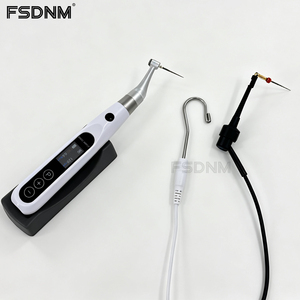
Cordless Endo Motor with Built-in Apex Locator 2-in-1 Root Canal Treatment System Wireless Endodontic Motor with Digital Screen
Industry Whitepaper: Evaluating Top China Root Canal Files Manufacturers
In modern endodontic therapy, the root canal file remains the single most critical instrument determining treatment success, canal transportation prevention, and structural preservation of pericervical dentin. Over the past decade, China has emerged as a global hub for advanced endodontic file manufacturing, combining state-of-the-art metallurgical heat treatment, precision CNC wire-edm micro-grinding, and rigorous cleanroom automated packaging. For international dental equipment distributors, group purchasing organizations (GPOs), and private-label brand owners, identifying a high-tier manufacturer requires evaluating more than just unit cost; it demands a comprehensive analysis of crystal phase transformation dynamics, cyclic fatigue resistance, cutting efficiency, and international regulatory compliance.
This comprehensive industry guide provides a deep-dive technical blueprint into how top Chinese manufacturers engineer Nickel-Titanium (NiTi) endodontic rotary and reciprocating file systems, the metallurgical shifts shaping the industry, future procurement benchmarks, and key parameters for establishing OEM/ODM supply chains.
Metallurgical Evolution: Conventional NiTi vs. Heat-Activated Alloys
The mechanical performance of endodontic files is fundamentally governed by the crystallographic structure of Nickel-Titanium alloy (typically 55-Nitinol comprising approximately 56% Nickel and 44% Titanium by weight). Traditional rotary files manufactured from superelastic equiatomic NiTi operate primarily in the Austenitic phase at body temperature (37°C). While Austenitic files offer high cutting efficiency and surface hardness, their rigidity poses significant risk of ledge formation, canal transportation, zip formation, and unexpected instrument separation when negotiating severely curved canals.
Leading Chinese endodontic manufacturers have pioneered proprietary thermal processing protocols to manipulate the alloy’s Austenitic Finish ($A_f$) temperature, shifting the microstructural phase toward Martensite or R-phase under clinical operating conditions.
Conventional Austenitic NiTi
High springback force and superior surface hardness. Best suited for straight coronal flare enlargement, but susceptible to cyclic fatigue in sharp apical curves.
Controlled Memory (CM-Wire)
Thermomechanically processed alloy lacking shape memory at room temperature. Extreme flexibility allows files to pre-bend and follow intricate root anatomy without rebound.
Blue Heat-Treatment (Blue-Wire)
Features a visible titanium oxide titanium surface layer created through controlled heating and slow cooling. Delivers a balanced hybrid of flexibility, cutting power, and cyclic fatigue resistance.
Gold Heat-Treatment (Gold-Wire)
Processed via proprietary heating cycle post-machining. Elevates the $A_f$ point above body temperature, ensuring the file remains in a soft, fatigue-resistant Martensitic state during canal shaping.
By utilizing specialized thermal oxidation chambers and automated micro-milling machinery, top Chinese manufacturers offer custom heat-activation options tailored to clinician preferences in different international markets.
File failure in endodontics primarily occurs through two distinct mechanical mechanisms: Torsional Fatigue (occurring when the instrument tip becomes bound in the canal while the shaft continues to rotate) and Cyclic Fatigue (occurring due to repeated alternating tension-compression stress cycles when rotating in curved canals).
To minimize stress concentration vectors, Chinese precision engineers utilize advanced geometry cross-sections:
Single-file reciprocating systems; generates a mechanical wave motion.
Square / Quadrangular
Maximum Mass & Torsional Resistance
Compact Flute Area
Hand K-Files and C-Files for negotiating tight, fibrous passages.
Continuous Rotation vs. Reciprocating Kinematics
While continuous 360° rotation remains the global standard for routine root canal preparation, reciprocating kinematics (unequal forward and reverse counter-rotation angles, such as 150° counter-clockwise and 30° clockwise) have gained massive market traction. Reciprocating motion constantly relieves stress on the instrument metal, extending cyclic fatigue life by up to 300% compared to continuous rotation at identical RPM. Chinese manufacturers design optimized file tip angles and pitch geometry specifically tailored for both continuous rotary motors and smart reciprocating endo drives with integrated apex locators.
Manufacturing Quality Control: From Raw Wire to Sterile Blister
The manufacturing quality of endodontic files directly dictates clinical reliability. Leading production facilities in China follow a rigorous 6-stage quality management workflow under ISO 13485 compliance:
Raw Material Verification & Spectroscopy: Inbound NiTi wire rods undergo optical emission spectroscopy and differential scanning calorimetry (DSC) testing to verify chemical purity ($Ni$ content 55.8–56.2 wt%) and transition temperatures prior to processing.
Precision CNC Micro-Grinding: Using multi-axis CNC wire grinding centers equipped with diamond grinding wheels, raw wires are milled into tapered helical instruments with dimensional tolerances within $\pm 0.01 \text{ mm}$.
Thermal Heat-Treatment & Surface Passivation: Milled files undergo proprietary heat-treatment in vacuum furnaces followed by chemical electropolishing. Electropolishing removes micro-burrs and surface micro-fissures created during grinding, dramatically elevating resistance to crack initiation under cyclic loading.
Laser Marking & Stopper Assembly: Automated optical systems apply high-contrast laser depth markings, ISO color-coded handles, and silicone radiopaque positioning stoppers.
Batch Mechanical Bench Testing: Samples from every production lot are subjected to destructive torque-to-failure testing (per ISO 3630-1 standards) and cyclic fatigue bench testing inside 60° curved stainless steel simulated canals at 37°C.
Cleanroom Packaging & Gamma/EO Sterilization: Finished instruments are sealed in medical-grade Tyvek blister packs within Class 100,000 cleanrooms and processed through Ethylene Oxide (EO) or Gamma-ray sterilization cycles for ready-to-use clinical deployment.
Future Sourcing Trends for Endodontic Instruments (2025–2030)
As global dental healthcare transitions toward minimally invasive endodontics (MIE), purchasing managers must align their procurement strategies with five key industry shifts:
1. Single-File Shaping Systems
Clinicians increasingly favor single-file sequences (glide path to final shaping in one instrument) to shorten chair time, reduce inventory overhead, and eliminate cross-contamination risks.
2. Smart Wireless Endo Motor Integration
High-margin bundles combining pre-programed brushless cordless endo motors with real-time apex locators and customized file presets are outperforming standalone file kits in B2B sales.
3. Pre-Sterilized Single-Use Blister Bundles
Strict infection control mandates in Europe and North America have accelerated demand for factory-sterilized, single-patient blister packs carrying unique device identification (UDI) barcoding.
4. Private Label OEM / ODM Customization
Distributors are leveraging custom laser etching (brand logos, catalog codes, lot numbers), tailored taper sequences, and custom blister branding to build high-equity proprietary lines.
Enterprise Manufacturing Advantages: Why Partner With Us
Combining over 25 years of master instrument hand-crafting heritage with automated CNC micro-machining, controlled vacuum heat treatment, and ISO-certified cleanroom packaging, our manufacturing alliance sets the global standard for endodontic and surgical equipment.
ISO 13485 & ISO 9001 QMS
Fully audited Quality Management System ensuring complete raw material heat numbers, batch records, and sterile barrier validation.
Full private label support including custom blister layout design, laser handle etching, custom color coding, and tailored sequence kits.
Global Compliance Ready
Comprehensive technical documentation packages, CE mark technical files (MDR compliant), and FDA 510(k) assistance for seamless import.
Frequently Asked Questions for B2B Importers & Distributors
Q
What is your Minimum Order Quantity (MOQ) for catalog vs. OEM private label root canal files?
Our standard catalog root canal files carry a flexible MOQ starting at 50 packs per specification. For OEM private label manufacturing (including custom laser handle marking, tailored taper sequences, and custom-branded blister foil printing), the typical MOQ starts at 500 packs per size sequence. Trial orders can be customized upon evaluation.
Q
What international regulatory certifications do your endodontic files and instruments carry?
Our manufacturing facilities operate under an ISO 13485:2016 and ISO 9001:2015 certified Quality Management System. Our export product lines comply with European CE marking standards (EU MDR 2017/745), and full technical documentation files, bio-compatibility reports, and sterilizer validation certificates are available on request for FDA 510(k) and international health authority registrations.
Q
How do you guarantee batch-to-batch consistency in heat-activated NiTi files?
Every batch of raw Nickel-Titanium wire undergoes inbound Differential Scanning Calorimetry (DSC) phase transition analysis. Post-milling, heat treatment cycles are conducted in vacuum furnaces with digital temperature monitoring ($\pm 0.5^\circ\text{C}$). Final lots undergo automated optical inspection for dimensions, along with destructive torque and cyclic fatigue testing according to ISO 3630-1 standards prior to packaging release.
Q
Can we request custom taper profiles, file lengths, or asymmetric cross-sections?
Yes. Our R&D engineering team specializes in custom tool geometry. We can manufacture continuous taper (.02, .04, .06, .08), regressive/progressive variable tapers, custom file working lengths (21mm, 25mm, 31mm), and specialized cross-sections (S-shape, triangular, off-centered parabolic) based on your technical drawings or physical samples.
Q
What are the standard lead times for production and global dispatch?
Standard inventory items are typically prepared for dispatch within 7 to 10 business days. Custom OEM orders, private label printing, and specialized packaging runs generally require 3 to 4 weeks depending on order volume and packaging specifications. Express air freight and sea shipping options are managed directly by our dedicated export team.
Q
Are samples available for clinical testing and mechanical evaluation?
We strongly encourage distributor sampling prior to finalizing bulk contracts. Sample evaluation kits containing representative sizes of our heat-activated Blue-Wire, Gold-Wire, and CM-Wire rotary files can be prepared for immediate dispatch. Sample costs are credited against your initial commercial production order.
Accelerate Your Endodontic & Surgical Supply Chain Today
Whether you require high-volume catalog supplies, custom heat-treated NiTi rotary files, or full OEM private labeling services, our engineering and export team provides 24-hour technical support and direct factory quotations.