Featured Autoclavable & Precision Surgical Instruments
Explore our primary export catalog manufactured under strict medical-grade metallurgical standards. Every instrument is rigorously batch-tested for corrosion resistance and dimensional tolerance.

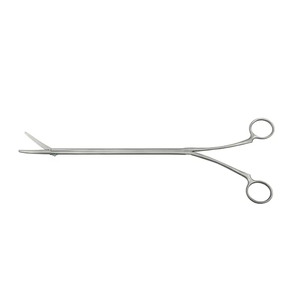
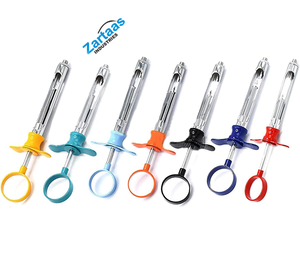
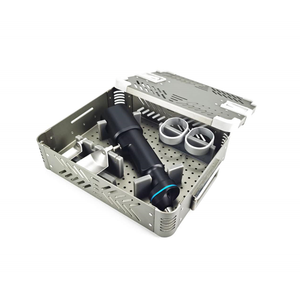
Executive Industry Analysis: The Evolution of Autoclavable Dental Instrument Manufacturing
In modern dental surgery and periodontics, sterilization integrity is non-negotiable. As global healthcare regulations under the European Medical Device Regulation (MDR 2017/745) and the US FDA 21 CFR Part 820 tighten, healthcare procurement teams are re-evaluating their instrument supply chains. The demand for autoclavable dental instruments capable of enduring repeated pressurized steam sterilization cycles at 134°C without structural micro-fracturing, corrosion pitting, or hinge stiffening has shifted the manufacturing paradigm.
China has transitioned from a high-volume manufacturing hub into a sophisticated engineering epicenter for specialized medical alloys, precision computer numerical control (CNC) machining, and automated chemical passivation. As a leading primary manufacturer, our facility integrates artisanal hand-finishing traditions with cutting-edge metallurgy to deliver dental diagnostic, restorative, endodontic, and surgical extraction instruments that exceed ISO 7153-1 and ASTM F899 technical benchmarks.
Medical Metallurgy Integrity
Utilizing specialized German AISI 420 and Japanese SUS420J2 martensitic stainless steel, optimized for edge retention, tensile flexibility, and thermal resistance up to 134°C autoclaving.
ASTM A967 Citric Passivation
Automated chemical dipping creates an ultra-pure Chromium Oxide (Cr₂O₃) passive layer, completely eliminating free iron contaminants to guarantee corrosion-free performance.
Zero-Defect Quality Control
100% individual piece inspection including 10x optical magnification jaw alignment, boiling water corrosion testing, and mechanical fatigue endurance evaluations.
Technical Deep-Dive: Material Science & Autoclave Degradation Mechanisms
Understanding why dental instruments fail during autoclave cycles is essential for strategic B2B sourcing. Steam sterilization subjects instruments to saturated steam under pressure (typically 121°C at 1.05 bar for 15 minutes or 134°C at 2.1 bar for 3 minutes). The primary failure modes include:
- Pitting Corrosion: Caused by residual micro-impurities (free iron) reacting with moisture and chloride ions, breaching the passive oxide barrier.
- Intergranular Stress Cracking: Resulting from improper heat treatment, leading to carbide precipitation along grain boundaries when exposed to rapid thermal expansion and contraction.
- Joint & Box-Lock Stiffening: Caused by thermal deformation of misaligned mechanical joints lacking micro-machining tolerance stability.
To overcome these challenges, our engineering team selects surgical stainless steels based on mechanical utility requirements, balancing Carbon (C) content for hardness with Chromium (Cr) content for passivation potential:
| Steel Designation | Material Standard | Hardness Range (HRC) | Corrosion Resistance | Primary Clinical Application | Rated Autoclave Lifespan |
|---|---|---|---|---|---|
| AISI 420 / 1.4021 | Martensitic Stainless | 50 – 54 HRC | Very High | Diagnostic Scalers, Forceps, Elevators | 3,000+ Cycles |
| AISI 440C / 1.4125 | High-Carbon Martensitic | 56 – 60 HRC | High | Surgical Scissors, Bone Chisels, Burs | 2,500+ Cycles |
| AISI 304 / 1.4301 | Austenitic Stainless | 25 – 30 HRC (Non-hardenable) | Maximum | Dental Syringes, Cassette Trays, Handles | 5,000+ Cycles |
| Titanium Grade 5 (Ti-6Al-4V) | Medical Titanium Alloy | 36 – 40 HRC | Immune to Steam Corrosion | Implantology Tools, Ultra-light Handles | 10,000+ Cycles |
Future Sourcing Trends in Autoclavable Dental Instruments (2025–2030)
As dental clinics transition toward automated sterilization workflows, washer-disinfectors, and high-frequency turnaround schedules, instrument procurement managers must align with four overarching technological shifts:
1. Nanocomposite Coatings (DLC & TiN)
Applying Diamond-Like Carbon (DLC) and Titanium Nitride (TiN) physical vapor deposition (PVD) coatings reduces friction at joint pivot points, increases surface hardness up to 2,300 HV, and enhances contrast during microsurgical procedures.
2. Ergonomic Weight Reduction
Prolonged repetitive strain injuries (RSI) among dental practitioners drive demand for large-diameter (10mm–12mm) hollow-handle instruments. Our ultra-lightweight designs reduce clinician hand fatigue by over 35% while retaining structural rigidity.
3. Smart RFID Traceability Integration
Embedding autoclavable RFID microchips into instrument handles enables hospitals to track sterilization counts, maintenance history, and inventory rotation digitally, fulfilling stringent UDI (Unique Device Identification) regulatory demands.
Factory Core Competencies & OEM/ODM Manufacturing Mastery
Rooted in decades of precision engineering expertise and refined through continuous capital investment in automated Swiss-type CNC turning, 5-axis milling, and vacuum heat treatment furnaces, our China manufacturing center serves as a trusted white-label engine for global medical brands.
Custom Laser Branding & Markings
We offer ultra-precise fiber laser marking for corporate logos, SKU numbers, lot codes, and DataMatrix 2D barcodes. Markings remain crisp and legible even after hundreds of intense thermal autoclave cycles.
Complete Regulatory Documentation
Every shipment is supported by comprehensive quality documentation, including Material Mill Certificates (EN 10204 3.1), Passivation Validation Reports (ASTM A967), ISO 13485 QMS compliance records, and CE Declaration of Conformity.
Frequently Asked Questions (B2B Procurement & Technical Guide)
What is the maximum autoclave temperature your dental instruments can tolerate?
Our stainless steel dental instruments are engineered for standard gravity displacement and pre-vacuum steam sterilization up to 134°C (273°F) at 2.1 bar pressure for 20 minutes, complying with ISO 17665 sterilization guidelines. They are also compatible with dry heat sterilization up to 180°C.
How do you prevent rust spots or water staining after autoclaving?
Rusting or staining post-autoclaving is typically caused by water minerals or incomplete passivation. We utilize multi-stage ultrasonic cleaning and automated citric acid passivation per ASTM A967 to build a dense Chromium Oxide layer. Additionally, we advise buyers to use demineralized or distilled water in autoclaves and process instruments with neutral pH cleaners.
What is your standard Minimum Order Quantity (MOQ) for OEM/ODM orders?
For standard catalog items, our MOQ starts as low as 50 pieces per SKU. For custom OEM designs requiring specialized CNC tooling, forging dies, or customized laser markings, our standard MOQ is typically 100 to 300 pieces depending on the product complexity.
Can you supply custom dental kits with private-label packaging?
Yes. We specialize in turn-key contract manufacturing. We supply custom dental examination kits, periodontal sets, surgical extraction kits, and endodontic trays complete with customized silicone cassettes, pouch packaging, branded outer boxes, and multilingual instruction manuals.
What quality testing protocols do you execute before shipment dispatch?
Every batch undergoes a 4-point verification process: (1) Dimensional inspection using digital optical comparators, (2) Rockwell Hardness testing (HRC), (3) Boiling water corrosion testing per ISO 7153-1, and (4) Functional feel testing for smooth hinge movement, box-lock alignment, and tip closure.
What is the typical production lead time for international bulk shipments?
For standard inventory orders, dispatch takes 7 to 10 business days. For OEM production runs, manufacturing lead time typically ranges between 25 and 35 calendar days, depending on order volume and custom tooling requirements. Express air freight and sea freight options are supported worldwide.
Partner with China's Premier Autoclavable Dental Instrument Factory
Streamline your medical instrument procurement with certified quality, direct factory pricing, and dedicated OEM support. Request custom samples or instant wholesale pricing today.
Get a Quote