Recommended Diagnostic & Surgical Instrument Kits
Engineered to international ISO 9001:2015 & CE standards. Manufactured using premium AISI 410, 420, and 440A surgical steel with high-precision passivation treatment.
1. Diagnostic Instrument Kit Manufacturing & Global Sourcing Standards
In modern surgical and clinical practice, the diagnostic instrument kit represents the frontline of patient assessment, diagnostic accuracy, and therapeutic planning. Whether utilized in general surgery, specialized periodontal care, endodontic diagnostics, or veterinary clinical procedures, diagnostic tools demand uncompromising dimensional accuracy, metallurgical integrity, and ergonomic balance.
China has emerged as a global hub for high-volume, high-precision medical instrument fabrication, working in technical collaboration with renowned global manufacturing clusters such as Sialkot, Pakistan—a region celebrated for over a century of artisanal surgical steel craftsmanship. Leading manufacturers merge traditional hand-finishing techniques with automated computer numerical control (CNC) milling, precision drop-forging, vacuum heat treatment, and automated passivation to produce diagnostic sets that conform strictly to international medical standards.
Information Gain Insight: Procurement executives evaluating diagnostic suppliers must analyze raw steel grade composition, passivation quality (ASTM A967 compliant), and hinge box-lock tolerances rather than focusing solely on initial unit cost. A low-grade diagnostic probe failing under repetitive autoclaving presents severe clinical risk and increased long-term total cost of ownership (TCO).
1.1 Metallurgical Specifications: Surgical Stainless Steel Grades
The operational longevity and mechanical reliability of a diagnostic instrument kit depend directly on the grade of steel specified during forging. Premier China and export suppliers utilize distinct grades of martensitic and austenitic stainless steel tailored to specific functional requirements:
| Steel Grade | Hardness Range (HRC) | Primary Application | Key Performance Characteristics |
|---|---|---|---|
| AISI 410 | 40 - 45 HRC | Handles, Instrument Trays, Retractors | Moderate hardness, superior ductility, high resistance to mechanical stress and distortion. |
| AISI 420 | 48 - 52 HRC | Diagnostic Probes, Explorers, Forceps | High tensile strength, optimal spring temper, excellent edge retention and wear resistance. |
| AISI 440A / 440C | 54 - 58 HRC | Sickle Scalers, Precision Scissors, Chisels | Maximum carbon content providing extreme hardness, surgical sharpness, and wear longevity. |
| AISI 304 / 316L | Non-Martensitic | Sterilization Trays, Hollowware | Austenitic structure offering ultimate chemical passivation and resistance to harsh autoclaving agents. |
1.2 The Passivation & Surface Resistance Science
To eliminate surface impurities, micro-iron particles, and scale introduced during CNC machining or hand polishing, diagnostic instruments undergo rigorous chemical passivation in warm nitric or citric acid baths according to ASTM A967 standards. This process strips free surface iron and facilitates the natural formation of a continuous, self-healing Chromium Oxide (Cr₂O₃) passive layer.
This chromium oxide barrier protects diagnostic kits against chemical oxidation, saline solution corrosion, and pitting during repeated steam autoclaving at 134°C (273°F) and 2.2 bar pressure. High-end exporters subject finished inventory to 100% boiling test and copper sulfate drop tests to verify absolute passivity before final packaging.
ISO 9001:2015 QMS
Every manufacturing phase—from raw steel billet inspection to final passivation—is controlled via documented Quality Management System procedures ensuring complete lot traceability.
OEM & Private Labeling
Full-service OEM manufacturing including ultra-precise fiber laser marking of custom logos, SKU barcodes, catalogue reference codes, and bespoke retail/clinical packaging.
CE & FDA Compliance
Products are manufactured in strict compliance with EU Medical Device Regulations (MDR) and technical documentation files are readily accessible for international regulatory clearance.
2. Key Product Recommendations & Structural Architecture
When selecting diagnostic instrument kits for hospital networks, dental franchises, or medical supply distribution networks, purchasing managers should target specialized kits designed for targeted anatomical procedures. Below are the key structural requirements of top-performing diagnostic configurations:
2.1 Periodontal & Endodontic Diagnostic Kits
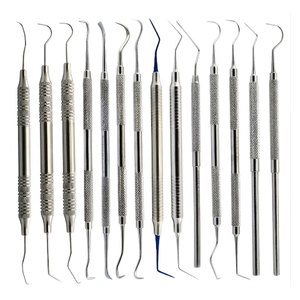
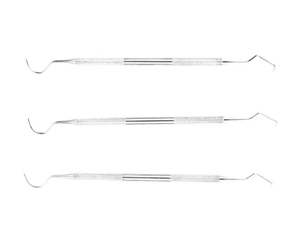
Complete periodontal diagnostic sets require calibrated Williams or CP-12 color-coded probes, double-ended Williams explorers, and anatomical sickle scalers. The working ends must feature millimeter-accurate laser etchings (1-2-3-5-7-8-9-10mm markings) that remain legible even after hundreds of sterilization cycles. Handles must incorporate ergonomic knurling or hollow-core designs to minimize hand fatigue during prolonged clinical evaluations.
2.2 Veterinary General Surgical & Diagnostic Sets
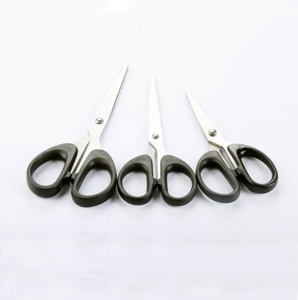
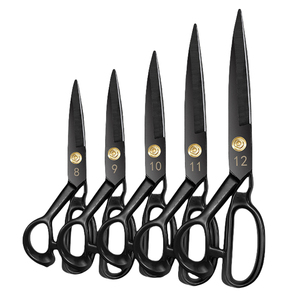
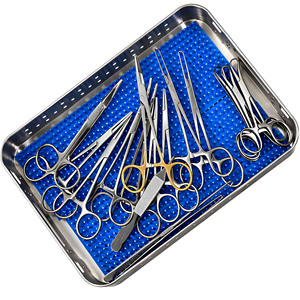
Veterinary diagnostic and surgical packs demand heightened mechanical robustness. Instruments such as dental elevators, calculus removers, suture scissors, and tissue forceps must withstand higher torque loads and thicker tissue structures. The inclusion of autoclavable stainless steel organizing trays with silicone locking tabs guarantees that instrument tips remain uncompromised during transit and autoclave cycles.
2.3 Aesthetic & Precision Diagnostic Tweezers
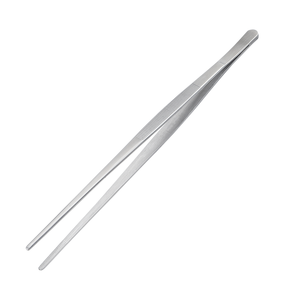
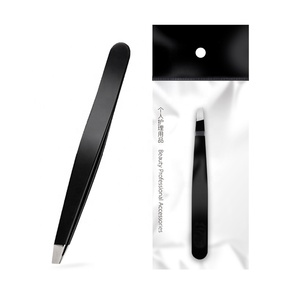
Precision diagnostic tweezers engineered for micro-procedural, dermatological, or fine cosmetic applications feature hand-aligned tips with tip tolerances within ±0.01mm. Anti-static matte black, rose gold, or satin finishes enhance tactile grip while preventing reflective glare under high-intensity surgical theater lighting.
Looking for Custom OEM Diagnostic Kit Manufacturing?
Whether you require tailored instrument patterns, specific stainless steel alloy formulations, private label laser marking, or custom sterilization pouches, our expert engineering team delivers complete turn-key solutions within 3 to 5 weeks.
Inquire Now3. Future Procurement Trends in Diagnostic Instrument Manufacturing (2025–2030)
As global healthcare systems shift toward enhanced infection control, operational efficiency, and value-based care, procurement strategies for diagnostic instrument kits are rapidly evolving. Leading China suppliers and global exporters are investing in several key technological developments:
3.1 Lightweight Titanium-Hybrid Handles
To alleviate practitioner Repetitive Strain Injury (RSI) and Carpal Tunnel Syndrome, next-generation diagnostic tools incorporate lightweight hollow titanium handles joined to medical-grade stainless steel working tips. This hybrid construction reduces total instrument weight by up to 40% while preserving the high hardness and sharp edge retention of high-carbon stainless steel working tips.
3.2 RFID-Enabled Data Matrix Tracking
Modern hospital networks and centralized sterile supply departments (CSSD) are adopting unique device identification (UDI) standards. Premier diagnostic instrument manufacturers are incorporating laser-etched 2D Data Matrix codes and micro RFID chips into instrument handles. This enables automated tracking of instrument lifecycle, sterilization count, maintenance logs, and asset allocation across major healthcare networks.
3.3 Advanced PVD & Anti-Microbial Coatings
Physical Vapor Deposition (PVD) technology enables the application of ultra-thin, hard biocompatible coatings such as Titanium Nitride (TiN) or Diamond-Like Carbon (DLC). These coatings increase surface hardness beyond 70 HRC, drastically reduce friction, eliminate light reflection, and provide enhanced anti-microbial surface properties.
Frequently Asked Questions (Procurement FAQ)
Essential technical and commercial answers for international healthcare buyers, importers, and distributors.
What is the standard Minimum Order Quantity (MOQ) for diagnostic kit orders?
Our standard catalogue minimum order quantity starts at 50 pieces per item or 20 complete diagnostic sets. For customized OEM projects requiring private label laser marking, unique handle knurling, or custom packaging boxes, MOQs typically range between 100 to 300 sets based on specification complexity.
Are your diagnostic instrument kits fully certified for EU and US markets?
Yes. Manufacturing operations strictly abide by ISO 9001:2015 Quality Management Systems. Export products meet European CE marking specifications under EU MDR guidelines, and comprehensive technical files, raw material mill certificates, and FDA compliance documentation are accessible upon request for bulk procurement orders.
How do you guarantee corrosion resistance over thousands of autoclave cycles?
Corrosion protection begins with raw steel selection (using low-sulfur AISI 420/440 martensitic alloys). Post-machining, instruments undergo rigorous ultrasonic cleaning, automated electrochemical polishing, and chemical passivation according to ASTM A967. Every lot is subjected to boiling water testing and salt-spray testing to guarantee zero surface corrosion under repeated steam sterilization at 134°C.
What is your standard production lead time for export orders?
Standard catalogue inventory dispatches within 7 to 14 business days. Bulk OEM orders, customized diagnostic kits, or specialized private label packaging projects typically require 3 to 5 weeks from technical sample approval to final factory shipment.
Can we request pre-production samples prior to placing a formal bulk contract?
Yes, we strongly encourage sample evaluation prior to mass production. Physical samples complete with custom laser etching and designated finishes are provided for buyer inspection. Sample evaluation charges are credited directly against your initial production contract.
Partner with Leading Diagnostic Instrument Kit Exporters
Connect directly with our senior medical export engineering team today for technical catalogs, OEM quotations, and instant sample requests.