OEM Surgical
Precision-engineered diagnostic, endodontic, and surgical instruments crafted for global medical distributors, OEM brands, and clinical procurement teams.
Navigating global supply chain complexities, metallurgical standards, and private-label customization demands a data-driven approach to partner selection.
In the modern global healthcare ecosystem, dental clinics, surgical centers, and healthcare distributors face unprecedented demands for clinical precision, infection control compliance, and cost optimization. As procurement executives seek the China Best Custom Dental Kits Supplier & Suppliers, the criteria have expanded beyond basic pricing to encompass metallurgical traceability, ergonomic customized handles, regulatory documentation (CE, ISO 9001:2015, FDA compliance), and low-friction private label branding.
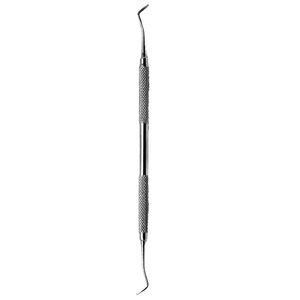
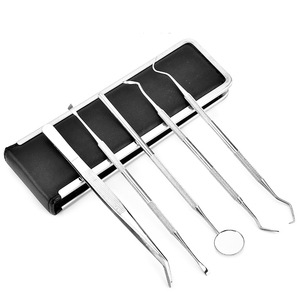
Custom dental kits—comprising diagnostic probes, periodontic scalers, endodontic explorers, tissue forceps, and specialized surgical accessories—serve as the primary touchpoint for clinicians. Subpar steel composition or inconsistent heat treatment leads to tip micro-fractures, premature corrosion during autoclave sterilization, and ergonomic fatigue for practitioners. Therefore, leading international buyers evaluate suppliers through a multi-dimensional framework balancing advanced CNC engineering with time-tested hand-finishing craftsmanship.
When evaluating custom dental kit suppliers, top-tier procurement directors audit four core technical parameters:
Bridging generations of surgical instrument crafting heritage with state-of-the-art CNC automation, controlled thermal processing, and rigorous quality control.
We source certified medical-grade stainless steel tailored to instrument mechanics. Cutting edges utilize high-carbon martensitic steel for sustained sharpness, while forceps utilize spring-tempered alloys.
Our production facilities integrate multi-axis CNC milling, EDM wire cutting, and robotic polishing to achieve flawless box-locks, ratchet teeth, and ultra-fine probe tips.
Every single instrument undergoes a multi-stage quality protocol including ultrasonic bath cleaning, chemical citric/nitric passivation, optical tip inspection, and boil testing.
Understanding material performance parameters enables procurement managers to specify optimal configurations for clinical and commercial requirements.
| Instrument Category | Primary Stainless Steel Grade | Hardness Rating (HRC) | Key Manufacturing Process | Clinical Application | Sterilization Compatibility |
|---|---|---|---|---|---|
| Diagnostic Explorers & Probes | AISI 420A / 420B | HRC 50 – 54 | Precision Tip Grinding & Hand Finishing | Caries Detection, Periodontal Pocket Measurement | Autoclave 134°C / Dry Heat |
| Periodontal Scalers & Curettes | AISI 440A / High-C Steel | HRC 52 – 56 | Cryogenic Heat Treatment & CNC Beveling | Calculus Removal, Root Planing, Subgingival Scaling | Autoclave 134°C / Chemical Wash |
| Extraction Forceps & Elevators | AISI 410 / Forged Martensitic | HRC 44 – 48 | Drop Forging, Box-Lock Fitting & Satin Polishing | Exodontia, Luxation, Bone Expansion | Autoclave 134°C / Gamma Ray |
| Endodontic Instruments & Files | AISI 316L / NiTi Alloy | Flexible / Super-elastic | Micro-fluting & Electrochemical Polishing | Root Canal Exploration, Shaping & Obturation | Autoclave 134°C |
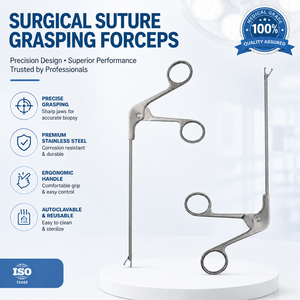
| Surgical Soft Tissue Scissors | AISI 420C (Tungsten Carbide Insert Option) | HRC 54 – 58 | Micro-Serration & Vacuum Hardening | Gingivectomy, Flap Surgery, Suture Cutting | Autoclave 134°C / Gas Plasma |
How market dynamics, environmental standards, and digital supply chains are reshaping global dental kit sourcing over the next decade.
Global dental chains and hospital networks are moving away from generic bulk instrument orders toward highly customized, procedure-specific kits. Procurement managers are requesting modular tray configurations designed for specific clinical workflows—such as Implantology Preparation Kits, Composite Restorative Sets, and Periodontal Flap Kits. This modularity reduces chairside preparation time, streamlines sterilization inventory, and minimizes cross-contamination risks.
Suppliers capable of offering flexible custom tool selection, color-coded silicone identification rings, and custom-molded stainless steel cassette trays are gaining significant competitive advantages in North American and European markets.
Environmental sustainability has shifted from an optional marketing angle to an essential procurement mandate. Leading European and Australian buyers now require suppliers to minimize single-use plastics in favor of biodegradable pouches, recyclable aluminum packaging, and reusable autoclavable sterilization containers.
Forward-thinking manufacturers in China are introducing eco-optimized bulk export packaging that reduces volumetric freight emissions while maintaining sterile barrier integrity throughout international transit.
With regulatory authorities like the US FDA and EU MDR mandating Unique Device Identification (UDI) for medical devices, custom dental kit suppliers are embedding 2D DataMatrix laser codes and micro-RFID chips into instrument handles. This enables clinic asset tracking, automated sterilization cycle logging, and anti-counterfeiting verification.
B2B buyers now prioritize suppliers equipped with fiber-laser marking systems capable of permanent, high-resolution UDI etching that withstands hundreds of autoclave cycles without degradation.
Traditional multi-tier distribution channels are rapidly consolidating. Dental brands and regional distributors prefer partnering directly with original manufacturers offering comprehensive OEM/ODM services—from 3D CAD rapid prototyping to custom logo laser etching and retail packaging assembly.
Direct manufacturer collaboration reduces lead times, cuts middleman markups by 25–40%, and allows brands to rapidly launch proprietary instrument designs tailored to local market preferences.
Discover how cutting-edge material science, surface engineering, and automation are revolutionizing the next generation of custom dental kits.
Application of Diamond-Like Carbon (DLC) and Titanium Nitride (TiN) physical vapor deposition (PVD) coatings increases surface hardness beyond HRC 70, drastically reduces friction, and eliminates light reflection under operating microscopes.
Metal 3D printing (Direct Metal Laser Sintering - DMLS) enables complex hollow handle structures with optimized center-of-gravity balance and custom tactile knurling patterns that traditional turning lathes cannot produce.
Integrating computer vision and AI-powered optical measuring machines ensures 100% micro-dimensional validation for critical instrument angles, blade bevels, and probe tip radii prior to packaging.
Clear, authoritative answers to common inquiries regarding minimum order quantities, private labeling, steel selection, and compliance certification.
Whether you are planning a high-volume distributor order, establishing a private label dental line, or seeking OEM custom instrument engineering, our technical export team is ready to assist you with instant quotes, specifications, and sample dispatch.