Export-Grade Reusable Surgical & Electrosurgical Instruments
Explore our international CE-compliant portfolio manufactured with medical-grade stainless steel (AISI 410, 420, 440A) and high-grade autoclavable silicone polymers.
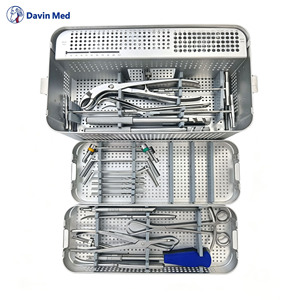
CE Certified Orthopedic Surgical Instruments Set for Fracture Surgery Large Fragment Kit
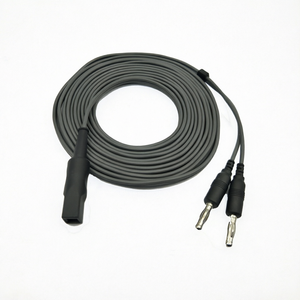
Reusable European IEC ISO13485 Bipolar Forceps Cable Autoclavable 4.0mm Connector
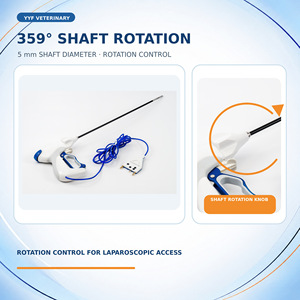
YYF SM1500 5mm 37cm Straight Jaw Reusable Veterinary Laparoscopic Vessel Sealing Cutter
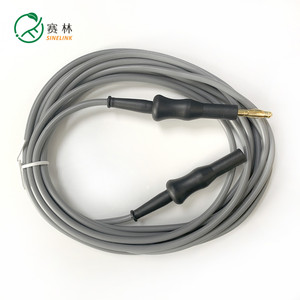
Reusable Monopolar Cable 4mm 4mm Connector Electrosurgical ESU High Frequency Cord
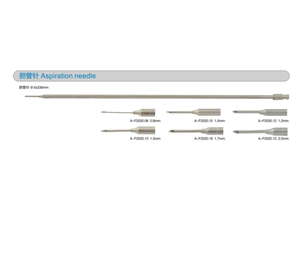
Reusable Laparoscopic Single-lumen Puncture Needle 5*330mm 0.8mm Biliary Instrument
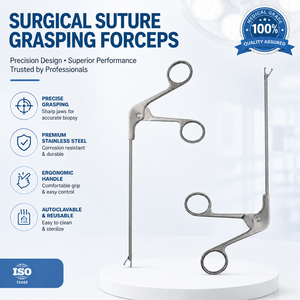
Surgical Suture Grasping Forceps Arthroscopy Stainless Steel Autoclavable Forceps
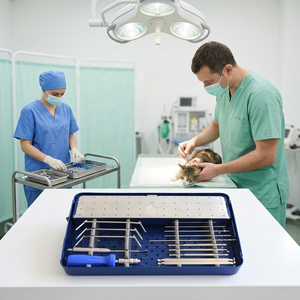
High Quality Reusable Basic Veterinary Surgical Instrument Kit for Pet & Animal Operation
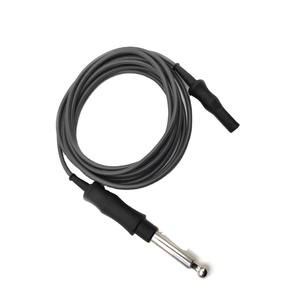
Reusable Monopolar Electrosurgical Laparoscopy Cable 4mm To 8mm Copper Core Silicone Cord
The Evolution of Reusable Surgical Instruments: 2025–2030 Global Procurement Outlook
The global market for surgical instruments is undergoing a structural paradigm shift. Driven by clinical cost-efficiency mandates, strict hospital environmental sustainability targets (ESG compliance), and enhanced regulatory scrutiny under the European Union Medical Device Regulation (EU MDR 2017/745), healthcare providers are re-evaluating their capital expenditure on single-use disposables versus high-grade, reusable surgical tools.
As a leading CE Certified Reusable Surgical Instruments Exporter, our manufacturing intelligence reveals three critical micro-trends shaping global medical procurement over the coming decade:
Total Cost of Ownership (TCO) Optimization
While single-use surgical items initially present lower upfront unit acquisition costs, their long-term operational impact on hospital budgets is substantial. High-quality reusable instruments—crafted from German-equivalent martensitic stainless steel—withstand over 500 to 1,000 steam sterilization cycles (autoclaving at 134°C), effectively reducing per-procedure instrument cost by up to 74% over a 3-year operating lifecycle.
Micro-Passivation & Metallurgy Standardization
Corrosion resistance is no longer optional; it is a clinical safety benchmark. Modern Central Sterile Supply Departments (CSSD) utilize aggressive enzymatic detergents and high-temperature autoclaving. Exporters must employ advanced chemical passivation processes (complying with ASTM F1089 standards) to create a self-healing chromium oxide passive layer that prevents pitting, crevice corrosion, and stress cracking during repeated processing.
Traceability & Unique Device Identification (UDI)
Regulatory bodies including the US FDA and EU Commission require mandatory 2D DataMatrix laser etching on reusable surgical tools. Direct Part Marking (DPM) allows hospitals to integrate instruments into automated CSSD tracking software, recording sterilization frequency, repair history, and surgeon preferences with 100% audit accuracy.
Comparative Procurement Matrix: Reusable vs. Disposable Surgical Instruments
To assist hospital procurement boards and international medical equipment importers in calculating long-term ROI, the following data matrix synthesizes clinical and financial parameters:
| Assessment Metrics | Medical-Grade Reusable Instruments | Single-Use Disposable Instruments | Strategic Advantage |
|---|---|---|---|
| Material Engineering | Martensitic Stainless Steel (AISI 410, 420, 440A) | Low-grade stamped steel or reinforced plastics | Superior edge retention, tactile feedback & mechanical strength |
| Autoclave Longevity | 500+ Cycles (Validated ISO 17664 compliance) | 0 Cycles (Single procedure life) | Massive reduction in solid clinical waste volumes |
| Regulatory Compliance | CE Mark, ISO 13485:2016, EU MDR Technical File | Basic Class I / II Disposables | Fully traceable for hospital quality audits |
| 3-Year Operational Cost | Low (Amortized initial procurement cost) | High (Recurring restock and waste disposal fees) | Up to 74% financial savings for high-volume ORs |
| Tactile Surgical Precision | Hand-finished tips, calibrated box-lock alignment | Machine-molded, variable tolerance joints | Improved surgical control and reduced surgeon fatigue |
Metallurgical Precision: The Engineering Behind Long-Lasting Surgical Tools
A primary failure point in low-grade medical instruments exported by uncertified suppliers is premature rusting, tip misalignment, and jaw slipping. As an established manufacturer based in Sialkot—the world's historic capital of surgical instrument craftsmanship—combined with modern CNC automation, we adhere to strict raw material selection guidelines.
Stainless Steel Grade Selection by Instrument Function
Not all surgical stainless steel is created equal. The physical demands of an orthopedic bone chisel differ vastly from a fine Metzenbaum scissor or a bipolar electrosurgical cable. Our engineering facility utilizes specific alloy compositions tailored to surgical utility:
AISI 420 (Martensitic Steel)
Primary Use: Cutting scissors, bone rongeurs, extraction forceps.
Features: Contains higher carbon content to achieve Rockwell Hardness (HRC 48–54) after vacuum heat treatment. Provides exceptional edge sharpness and wear resistance, allowing repeated sharpening without compromise to structural integrity.
AISI 410 / 410L
Primary Use: Hemostatic forceps, tissue clamps, speculums, retractors.
Features: Engineered for maximum ductility and tensile strength. Offers superior flexibility without breaking under continuous clamping pressure, paired with excellent corrosion resistance after automated passivation.
AISI 440A / Tungsten Carbide (TC)
Primary Use: Premium surgical scissors, needle holders with TC inserts.
Features: Ultra-hard alloy formulation (HRC 55–60). Tungsten carbide gold-handle inserts are silver-brazed onto the working tips, extending cutting and gripping performance by up to 5 times over standard steel.
Rigorous 6-Stage Quality Assurance Workflow
To deliver flawless surgical equipment to our healthcare partners across Europe, North America, the Middle East, and Asia-Pacific, every single item produced at our facility undergoes a standardized 6-stage quality control protocol:
- 1. Spectrometric Raw Material Verification: Testing incoming steel billets to guarantee exact chemical percentages of Chromium (12-14%), Nickel, and Carbon prior to hot forging.
- 2. Drop Forging & CNC Milling: High-energy forging creates dense grain structures, followed by multi-axis computer numerical control (CNC) milling of box-locks, ratchets, and teeth to ±0.01mm tolerances.
- 3. Vacuum Heat Treatment: Computer-controlled thermal hardening and tempering cycles eliminate internal stress and establish exact Rockwell Hardness specifications.
- 4. Surface Polishing & Satin Finishing: Hand-finishing by master artisans to achieve glare-free satin or mirror polishes that eliminate reflection under bright operating theater lights.
- 5. Ultrasonic Cleaning & Chemical Passivation: Full immersion in nitric or citric acid passivation baths to build an impenetrable surface oxide barrier (verified via Boil Test and Copper Sulfate Test).
- 6. Microscopic Inspection & Functionality Testing: 100% piece-by-piece inspection under optical magnifiers for jaw alignment, ratchet lock engagement, smooth spring action, and razor-sharp tissue shearing.
Enterprise Advantages of Working with SIAL Surgical
Navigating global healthcare supply chains requires a reliable, certified, and agile manufacturing partner. Combining more than 25 years of Sialkot craftsmanship with modern international regulatory compliance, SIAL Surgical stands out as a trusted supplier for hospital purchasing groups, medical device brand owners, and government tenders.
OEM & Private Label Manufacturing
We provide full-service contract manufacturing tailored to your exact drawings, physical samples, or custom brand catalogs. Our in-house fiber laser marking systems apply high-density logos, customized part numbers, GS1-compliant UDI barcodes, and lot batch codes directly onto instruments.
Complete CE & ISO Certification Support
All exported products are manufactured under an ISO 9001:2015 and ISO 13485 certified Quality Management System. We furnish our global distributors with full technical documentation, certificates of conformity, material test reports, and FDA device listing codes on demand.
Flexible Order Quantities & Rapid Lead Times
We accommodate both small-batch specialized surgical kit orders and high-volume wholesale contracts. Standard catalog lines are dispatched within 7 to 14 business days, while custom OEM production runs typically complete within 3 to 5 weeks with full export clearance.
Autoclavable & High-Frequency Silicone Cables
Beyond hand tools, our electrosurgical range (Monopolar and Bipolar cables) utilizes pure copper core conductors coated in medical-grade, flame-retardant silicone. Designed for universal compatibility with major ESU generators (Erbe, Valleylab, Martin), our cables withstand hundreds of autoclave cycles without insulation breakdown.
Frequently Asked Questions for Medical Importers & Distributors
Clear, transparent answers regarding manufacturing capabilities, quality assurance, compliance standards, and international logistics.
What makes your surgical instruments truly "reusable" and autoclavable?
Our instruments are manufactured exclusively from high-grade martensitic stainless steel (such as AISI 410, 420, or 440A) and medical-grade silicone. After CNC machining and heat treatment, every instrument undergoes automated chemical passivation according to ASTM F1089 standards. This produces a protective chromium oxide layer that prevents corrosion, rusting, and degradation during repeated steam sterilization (autoclaving at 134°C / 273°F) for hundreds of clinical cycles.
Are your surgical tools CE marked and compliant with EU MDR regulations?
Yes. Our manufacturing facility operates under a strictly audited ISO 9001:2015 and ISO 13485:2016 quality management system. Our product lines meet CE marking requirements under European regulations, and we maintain complete Technical Documentation Files (TDF) for Class I and Class II reusable surgical devices, supporting seamless importation into European Union member states.
Can you manufacture custom surgical tools based on samples or engineering drawings?
Absolutely. We offer complete OEM (Original Equipment Manufacturing) and ODM (Original Design Manufacturing) services. Importers, surgical kit packagers, and medical brands can send us physical samples, CAD files, or technical blueprints. Our R&D engineering team will produce pre-production prototype samples for clinical evaluation before full-scale manufacturing begins.
What is your Minimum Order Quantity (MOQ) for catalog items and custom branding?
Our standard catalog instrument MOQ starts as low as 50 pieces per item pattern. For customized private-label orders involving fiber laser logo marking, custom catalogue coding, and bespoke packaging (such as pouch kits, sterilization cassettes, or branded display boxes), MOQs are evaluated based on product complexity and typically range between 50 to 100 units.
What quality control tests do you perform to prevent rusting and failure?
Every production batch undergoes mandatory quality control checks: (1) Boil Test (submerging instruments in boiling distilled water for 30 minutes to detect surface impurities), (2) Copper Sulfate Test (to verify passivation layer integrity), (3) Rockwell Hardness Test (HRC 45-58 depending on tool type), and (4) 100% mechanical functionality testing for jaw mesh, ratchet lock tension, and cutting edge alignment.
Which international markets do you currently export to?
We export high-precision surgical, dental, electrosurgical, veterinary, and beauty tools to more than 60 countries across the globe. Our key export markets include the United States, United Kingdom, Germany, France, Italy, United Arab Emirates, Saudi Arabia, Australia, Canada, South Africa, and emerging markets across Latin America and Southeast Asia.
How do you ensure safe international shipping for delicate instruments?
Instruments are individual poly-bagged or tip-protected with silicone sleeves to shield delicate cutting edges and pointed jaws. They are then vacuum-sealed or packed into inner padded boxes before being placed into heavy-duty corrugated export master cartons. We partner with leading global freight forwarders (DHL, FedEx, UPS, air freight, and sea freight lines) to guarantee safe delivery.
Ready to Upgrade Your Surgical Supply Chain?
Request our complete product catalog, detailed technical specifications, regulatory certificates, or request a customized OEM quotation today. Our expert international sales team responds within 24 hours.