Dental Surgical Curettes remain essential instruments for precise tissue management, debridement, and access in demanding clinical environments. Global buyers often choose them for their controlled handling, durable construction, and consistent working performance. A well-designed curette should feel balanced in the hand, with a secure grip and a smooth shank transition. These details matter during procedures requiring careful pressure and steady wrist movement.
Material quality deserves close attention. Surgical stainless steel can support repeated use when it is manufactured, cleaned, and sterilized according to approved instructions. Buyers should examine the working-end finish, edge consistency, handle texture, and corrosion resistance. Supplier documentation also matters. Batch traceability, inspection records, user instructions, and applicable quality certifications can provide stronger confidence than marketing language alone. Price is not enough.
No instrument fits every hand.
Clinical teams may prefer different curette shapes, angulations, and handle diameters. Some favor tactile sensitivity, while others prioritize grip comfort during longer procedures. These preferences are real, but they can make product comparisons less objective. Even a polished surface does not guarantee reliable performance. Buyers should request samples, review technical specifications, and confirm compatibility with their facility’s reprocessing workflow.
This guide examines why Dental Surgical Curettes attract international purchasing interest and how informed buyers can assess them responsibly. It considers design, materials, usability, supplier reliability, and practical value. The discussion also recognizes an uncomfortable point: the most suitable instrument is not always the most expensive one. Careful evaluation remains essential.
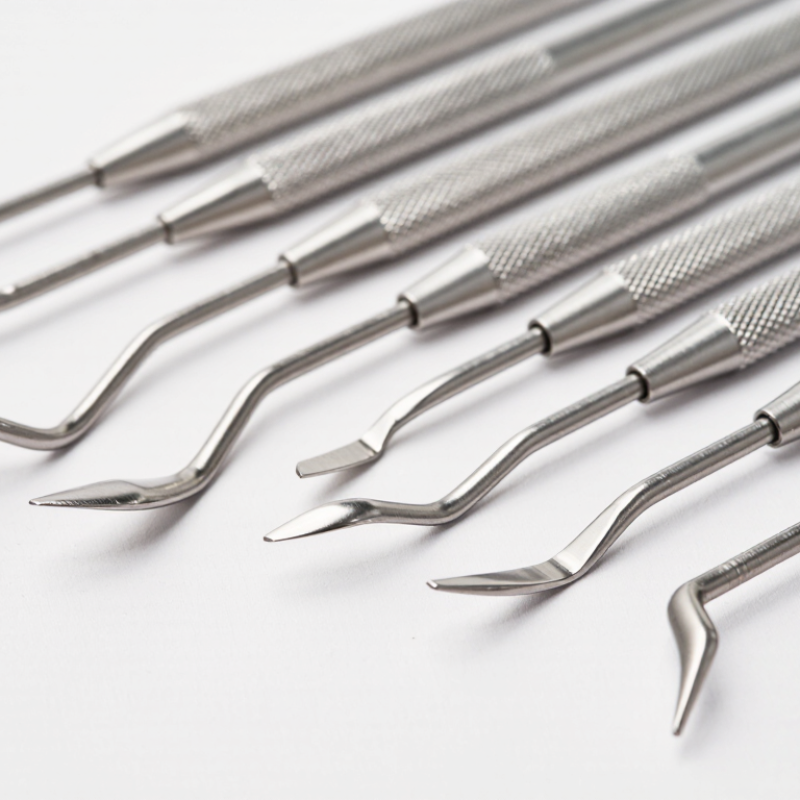
What Dental Surgical Curettes Are and How They Are Used
Dental surgical curettes are hand instruments with a small, shaped working end and a firm handle. Depending on the design, the tip may be spoon-like or gently curved. Dental professionals use them to remove soft tissue, debris, or diseased material from a surgical site. They may also help clean a tooth socket or carefully reach a confined area. The exact task depends on the curette’s shape and the clinical situation.
During use, a trained clinician selects a tip suited to the site, then works with controlled pressure and a clear view. A curette is not a substitute for diagnosis or careful tissue handling. Small, controlled movements matter. The instrument should feel stable in the hand, and its working end should be free from visible damage. Reusable instruments need cleaning and sterilization according to validated facility procedures; inspection after processing can reveal wear that is easy to miss. Still, no instrument makes judgment automatic.
Tips: Check the tip profile, handle grip, material, and reprocessing instructions before choosing a curette. Ask whether the design fits the procedures your clinical team actually performs. A fine tip may reach narrow spaces, but it can feel less robust in other tasks. That trade-off deserves consideration.
Why Choose Dental Surgical Curettes for Global Buyers? — What Dental Surgical Curettes Are and How They Are Used
| Dimension | What It Means | Typical Use or Consideration | Why It Matters to Buyers |
|---|---|---|---|
| Instrument definition | A dental surgical curette is a hand instrument with a small, shaped working end designed for scraping or removing tissue and debris from a surgical site. | Commonly used in oral surgery and periodontal procedures where controlled access to a site is needed. | Helps buyers distinguish surgical curettes from instruments intended primarily for scaling or examination. |
| Working-end shape | Many surgical curettes have a spoon-shaped or scoop-like working end. Designs vary by instrument and intended access. | Used to remove soft tissue, granulation tissue, or debris from an accessible site, when clinically indicated. | Shape and size affect access and handling; buyers should compare product drawings and specifications rather than assume all curettes are interchangeable. |
| Typical procedure context | Curettes may be used during procedures such as extraction-site debridement or removal of tissue from a surgical area. | The clinician selects the instrument and technique according to the procedure, anatomy, and clinical judgment. | Useful for assembling procedure-specific instrument sets; the exact application should be confirmed with the intended clinical users. |
| Access and handle design | Handle length, diameter, balance, and working-end angle differ among models. | These features influence reach, visibility, and grip during use. | Review handling requirements, dimensions, and product images to ensure the instrument suits local workflows and operator preferences. |
| Material and finish | Reusable dental instruments are commonly made from corrosion-resistant stainless steel; material and surface finish vary by product. | Material suitability depends on the intended use, care instructions, and reprocessing method. | Request material information and care instructions, and verify compatibility with the facility’s cleaning and sterilization processes. |
| Reusable-instrument processing | Reusable curettes must be cleaned, inspected, packaged, and sterilized according to the manufacturer’s instructions and applicable local requirements. | Cleaning should remove soil from the working end and any joints or hard-to-reach areas before sterilization. | Clear, validated reprocessing instructions support safe use and help buyers assess suitability for their facilities. |
| Inspection and maintenance | Working ends should be checked for damage, corrosion, or other deterioration before use. | Follow the manufacturer’s guidance for inspection, maintenance, and replacement. | Documented checks can support instrument quality management and help identify products that need servicing or removal from use. |
| Purchasing documentation | Relevant documentation may include product specifications, intended-use information, labeling, and reprocessing instructions. | Importers and healthcare facilities should check applicable regulatory and procurement requirements in each destination market. | Complete documentation makes product evaluation and market-specific compliance checks more straightforward. |
Note: Instrument designs and indications vary. Buyers should confirm intended use, dimensions, material details, and reprocessing instructions with the product documentation and qualified clinical or regulatory personnel.
FAQS
It is a hand instrument with a shaped tip and firm handle. Clinicians use it to remove soft tissue, debris, or diseased material.
It may clean a tooth socket or reach a confined area. The exact task depends on the tip shape and clinical situation.
A trained clinician should work with a clear view and controlled pressure. Small movements help protect nearby tissue.
Designs differ by blade shape, angle, and working area. Some have two cutting edges, while others have one primary edge.
Check the tip profile, dimensions, handle grip, and intended use. A fine tip reaches narrow spaces but may feel less robust.
Examine it under bright light. Look for even edges, no burrs, no pits, and smooth transitions.Small details matter.
Request material specifications, inspection records, product identification, and reprocessing instructions. Confirm that documents match the exact product model.
Follow validated facility procedures for cleaning, disinfection, and sterilization. Inspect the instrument afterward for hidden wear or damage.
No. Similar shapes can differ in balance, finish, and blade behavior. A sample inspection helps, but it cannot replace quality records.
Review current certificates, declarations, dates, scope, packaging, traceability, and batch records. Requirements may differ between destinations.Paperwork can be incomplete.
Conclusion
Dental Surgical Curettes are precision instruments used to remove unwanted tissue, debris, or deposits from surgical sites and support controlled procedures in dental care. Their shape, working end, and handle design allow clinicians to access different areas with accuracy. Common types may include spoon, periodontal, and bone curettes, each suited to specific clinical applications such as tissue debridement, root surface cleaning, or the removal of soft and hard deposits. Their effectiveness depends on a balanced design, a comfortable grip, a properly finished working edge, and durable materials that can withstand repeated cleaning and sterilization.
For global buyers, evaluating curette quality involves checking material composition, manufacturing consistency, surface finish, packaging, and compliance with applicable medical-device requirements in the target market. Buyers should also consider supplier reliability, production capacity, documentation, quality-control procedures, customization options, and the breadth of the product range. A suitable supplier should provide clear specifications and stable product performance, helping distributors and healthcare facilities select instruments that meet clinical needs while supporting safe, efficient, and compliant procurement.
