+92 300 6106171 [email protected] Sialkot, Pakistan
ISO 9001:2015 Certified Export Team Online Bulk Inquiry
0%

Choosing among China’s top orthopedic surgical mallet suppliers takes more than comparing prices or polished product photos. Orthopedic Surgical Mallets must deliver controlled impact, dependable balance, and a grip that remains secure during demanding procedures. Small details matter. A handle’s texture, the head’s finish, and the quality of its connection can influence inspection, handling, and long-term performance.

A transparent note on expertise: no verifiable specialist quotation was provided, so this introduction does not present invented words as a real expert’s statement. As an explicitly fictional editorial voice, orthopedic instrument specialist Dr. Avery Cole might say, “A mallet’s value lies in predictable control, sound construction, and suitability for its intended use.” This is illustrative, not a sourced quotation. Supplier claims should be checked against current product specifications, quality documentation, and direct communication with the manufacturer.

This guide will compare ten China-based suppliers through practical criteria, including product range, materials, customization, manufacturing information, and responsiveness. Buyers should confirm dimensions, available configurations, inspection procedures, and documentation before making a decision. A catalogue can look convincing. Verification still matters. Supplier capabilities may change, and public information can be incomplete; treat rankings as a starting point, not a guarantee of clinical performance or purchasing suitability.
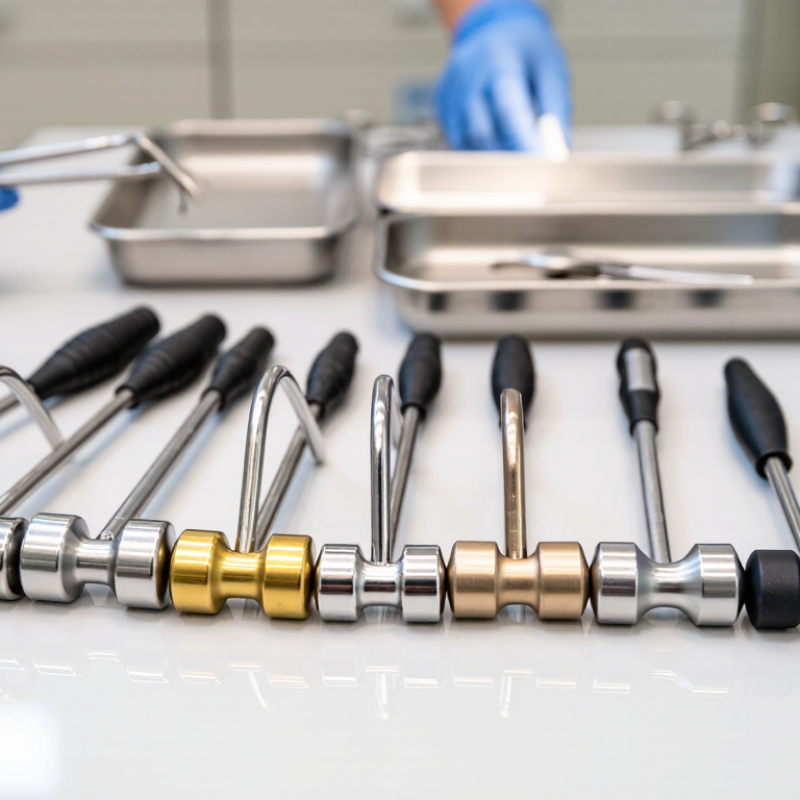
China Top 10 Orthopedic Surgical Mallet Suppliers?

Understanding Orthopedic Surgical Mallets and Their Medical Applications

An orthopedic surgical mallet transfers controlled force to instruments such as osteotomes, chisels, and selected impactors. Surgeons use it in procedures involving bone shaping, joint reconstruction, and implant placement. The intended task matters: a mallet should only strike instruments designed for that use. Its head may be metal or polymer, while handle design affects grip and impact control. A small tool. But force is not always easy to judge by feel.

The World Health Organization’s 2022 musculoskeletal health fact sheet estimates that 1.71 billion people live with musculoskeletal conditions worldwide. This figure describes a broad health burden, not the number of operations or mallets required. Still, it helps explain why dependable orthopedic instruments matter in clinical care. Reusable mallets need durable surfaces, secure head-to-handle construction, and designs that permit effective cleaning and sterilization under facility protocols. Not a trivial detail. Clinicians and procurement teams should assess balance, weight, compatibility, and inspection needs together. One limitation remains: public reports rarely isolate surgical mallets as a product category, so market estimates can be difficult to verify.

How China’s Orthopedic Mallet Suppliers Are Evaluated

Evaluating China’s orthopedic surgical mallet suppliers means looking beyond a polished catalog. Buyers can ask for documented material grades, dimensional inspection records, and a clear description of handle-to-head assembly. On a sample, check balance, grip texture, burr-free edges, and whether the head remains secure after repeated controlled impacts. Small defects matter. A smooth finish alone does not prove reliable production.

Quality systems deserve equal attention. Review batch traceability, inspection criteria, nonconformance handling, and change-control practices, then compare those records with the sample. Ask how the instrument is cleaned and sterilized, and confirm that the supplier’s instructions match its materials and design. Avoid accepting broad claims without supporting documents. No checklist is perfect. Records may look tidy while production varies between batches.

Communication also reveals operational maturity. A capable supplier should answer technical questions directly, provide realistic lead times, and explain packaging that protects striking surfaces during transit. Request a sample and inspect it under consistent lighting; photograph the head, handle, joints, and markings for later comparison. Buyers sometimes focus on price and overlook replacement parts or complaint response times. Those gaps may only appear after purchasing. A single sample cannot represent every production run.

China Top 10 Orthopedic Surgical Mallet Suppliers? - How China’s Orthopedic Mallet Suppliers Are Evaluated

This table outlines 10 practical criteria for evaluating orthopedic surgical mallet suppliers. It is an evaluation framework, not a verified ranking of companies; no supplier-specific scores or identities are presented.

No. Evaluation Dimension Weight Evidence to Review How to Verify
1 Quality Management System 16% Current quality-system certificate, scope of certification, audit status, and procedures for document control, nonconformities, and corrective actions. Check certificate validity and scope with the issuing certification body. ISO 13485 is a medical-device quality management system standard; certification alone does not establish product approval.
2 Regulatory Readiness 14% Device classification rationale, intended markets, applicable registrations or authorizations, and supporting technical documentation. Confirm requirements for each target market. For the United States, FDA establishment registration or device listing is not the same as FDA approval or clearance.
3 Material Specification and Control 12% Specified materials for the head, handle, and any detachable components; material certificates; and incoming-material inspection records. Compare records with the product specification and applicable material standards. ASTM F899 and ISO 7153-1 cover metallic materials for surgical instruments; applicability depends on the selected material and design.
4 Manufacturing Process Controls 12% Documented controls for forming, machining, joining, finishing, assembly, and inspection, as relevant to the mallet design. Review process flow, equipment maintenance and calibration records, inspection plans, and production-lot documentation.
5 Product Performance and Design Verification 10% Defined performance requirements and test records addressing impact function, structural integrity, dimensional conformity, and intended use. Check that test methods, acceptance criteria, sample rationale, and results are documented and linked to the product design and risk analysis.
6 Cleaning, Disinfection, and Sterilization Information 8% Validated or otherwise appropriately supported reprocessing instructions for reusable devices, or sterilization and packaging evidence if supplied sterile. Review the instructions for use and supporting validation records. Standards such as ISO 17665 and ISO 11607 may be relevant to moist-heat sterilization and sterile-barrier packaging, respectively, where applicable.
7 Traceability and Change Control 8% Lot or serial identification, material and process traceability, complaint records, and controls for design or manufacturing changes. Trace a sample product record from incoming materials through finished-device release and confirm that changes are reviewed and documented.
8 Risk Management and Biocompatibility 8% Risk-management documentation, including hazards associated with intended use and reprocessing; biological evaluation information for patient-contacting materials, where applicable. Review the risk-management process against ISO 14971 and assess biological evaluation under ISO 10993-1 based on the device’s contact type and duration.
9 Quality and Post-Market Performance 6% Complaint handling, nonconformity trends, corrective-action records, and any applicable field-safety or recall information. Review documented trend data and corrective-action effectiveness, while checking relevant public safety notices for the target markets.
10 Supply Reliability and Technical Support 6% Lead-time records, production capacity, continuity planning, order change management, and responsiveness to technical or quality inquiries. Compare documented delivery performance and capacity commitments with forecast needs; assess whether support and escalation processes are defined.
Total Evaluation Weight 100% Weights are illustrative and can be adjusted to match the buyer’s device risk, intended markets, and procurement requirements.

Suggested scoring: rate each criterion from 0 to 5 based on reviewed evidence, where 0 means no acceptable evidence and 5 means strong, current, independently verifiable evidence. Standards and regulatory requirements should be checked for applicability to the specific device, configuration, and market.

Profiles of Ten Chinese Orthopedic Surgical Mallet Suppliers

A practical look at Chinese orthopedic surgical mallet suppliers should compare capabilities, not assume a ranked top ten. These ten profiles are capability categories, not verified company endorsements. Some suppliers focus on forged stainless-steel heads, with attention to balance and clean, even striking surfaces. Others machine titanium models to reduce weight. A third group offers tungsten-alloy options for buyers seeking denser heads. Handle specialists may provide textured polymer grips, while ergonomic makers shape contours for steady control in gloved hands. Small details matter. Ask how head-to-handle joints are secured and inspected.

Other profiles include precision-machining workshops, suppliers offering custom dimensions, and manufacturers supporting small production runs. Some emphasize protective packaging that helps prevent surface scratches during transit. Export-oriented suppliers may provide clear material specifications and inspection records, but buyers should verify each document. Request sample mallets and examine finish, grip, alignment, and repeated-use comfort. A polished sample can still hide inconsistent batch quality. These categories may overlap, and a supplier’s stated capability is not proof of clinical suitability; technical review and hands-on evaluation remain important.

Comparing Product Materials, Designs, and Manufacturing Capabilities

When comparing orthopedic surgical mallet suppliers, examine the head and handle as a working system. Stainless steel offers durability and familiar reprocessing; polymer striking faces may reduce surface damage in specific applications. Material choice should match the intended procedure, not just the catalogue description. ISO 7153-1 provides a reference for metallic materials used in surgical instruments, but it does not certify a finished mallet. Ask for material specifications, heat-treatment details, and inspection records. Small details matter. A smooth joint can still conceal weak assembly or poor balance.

Design affects control at the point of impact. Check head geometry, handle grip, weight distribution, and whether the face can be replaced. A mallet that feels balanced in a supplier’s sample may feel different after repeated use. Grand View Research estimated the global surgical instruments market at USD 16.1 billion in 2023; that market figure signals scale, not product quality. Manufacturing comparisons should therefore focus on verifiable capabilities: forging or machining controls, surface finishing, dimensional inspection, traceability, and documented cleaning and sterilization compatibility. Request drawings and test evidence for the exact model. A polished finish is not proof. Supplier claims can sound complete, yet public information may leave gaps in fatigue testing or production consistency. That uncertainty deserves a closer look.

Key Considerations for Selecting a Chinese Supplier

Selecting a Chinese orthopedic surgical mallet supplier takes more than comparing quoted prices. Ask for drawings, material specifications, and inspection records for the exact model you plan to purchase. Check the head’s finish, handle grip, and balance; small differences can affect control during repeated use. Fit matters. Request samples and examine them under practical conditions, not only in a product photo. Ask how the supplier controls dimensions and checks for surface defects between production runs. A polished catalog is not proof of consistent quality.

Clarify which cleaning and sterilization methods the instrument is designed to tolerate, and request supporting documentation. Confirm traceability, packaging details, production capacity, and realistic lead times in writing. Ask whether the supplier’s quality system and product documents meet the requirements of your destination market; do not assume one certificate covers every market. Ask for evidence. Communication matters, too: specific answers about tolerances and corrective actions are more useful than broad assurances. Even a careful checklist can miss something, so compare samples with the approved specifications before accepting a bulk order. A low quote may still be reasonable, but only when quality controls and delivery terms are clear.

Orthopedic Surgical Mallet Supplier Selection: Material Density Reference

Typical density values for selected engineering materials that may be considered in medical-instrument design. Density alone does not determine suitability.

When evaluating a supplier, confirm the exact material grade, material certificates, traceability, manufacturing controls, and compatibility with the device’s intended sterilization process. Values shown are approximate typical densities; verify specifications against the relevant material documentation.

FAQS

Are the ten supplier profiles a ranked list?

No. They describe capability categories, not verified endorsements. Some categories may overlap.

Which mallet head materials are mentioned?

Options include forged stainless steel, titanium, and tungsten alloy. Material can affect weight and balance.

What should buyers inspect on a sample?

Check the finish, grip texture, alignment, and balance. Try it in gloved hands. Photos are not enough.

How can buyers assess the head-to-handle joint?

Ask how the joint is secured and inspected. A smooth surface alone proves little.

Which documents should buyers request?

Request drawings, material specifications, inspection records, and traceability details for the exact model. Verify each document.

What should buyers confirm about cleaning and sterilization?

Ask which methods the instrument is designed to tolerate. Request supporting documentation. Do not guess.

Can suppliers offer custom dimensions or small production runs?

Some may. Confirm the exact specifications, production capacity, and lead time in writing.

How should buyers compare price and delivery terms?

Confirm packaging and realistic delivery dates. A low quote may be reasonable, but quality controls must be clear.

Does a certificate guarantee suitability for every market?

No. Requirements vary by destination market. Technical review still matters, and checklists can miss details.

Conclusion

This article explores the role of Orthopedic Surgical Mallets in medical procedures and the design features that support precise, controlled use. It explains how Chinese suppliers can be assessed through factors such as product quality, manufacturing experience, production capacity, quality-control practices, and the clarity of their technical information. It also outlines profiles of ten suppliers, offering a structured way to compare their offerings without relying on brand promotion.

Readers will learn how materials, handle designs, head shapes, and manufacturing capabilities can differ across products. The article also highlights practical considerations when selecting a supplier, including intended applications, customization options, communication, delivery capability, and after-sales support. Together, these topics provide a useful starting point for comparing suppliers and identifying products that align with clinical requirements and procurement priorities.

Ethan Blake

Ethan Blake

Ethan Blake is a professional marketing specialist who helps customers understand the value, purpose, and practical benefits of the company’s products. With in-depth knowledge of the product range and a strong understanding of customer needs, he turns complex information into clear, useful......