Choosing the right Babcock Tissue Forceps can influence tissue handling, visibility, and procedural control. These forceps are designed to hold delicate tissue with reduced crushing pressure. Their fenestrated jaws distribute contact across a broader surface. However, “atraumatic” does not mean risk-free. Excessive pressure can still cause bruising or tearing.
A sound selection begins with the intended tissue and procedure. Bowel, fallopian tubes, vessels, and other soft structures may require different jaw sizes and working lengths. Larger jaws can improve stability, while smaller jaws may provide better access in confined fields. The handle should feel secure through a sterile glove. Check the ratchet, jaw alignment, surface finish, and smooth opening action. Small defects matter.
Material choice also deserves attention. Stainless steel models usually support repeated cleaning and sterilization when used according to the manufacturer’s instructions. Disposable versions may offer convenience, but their packaging, strength, and intended use require careful review. In practical evaluations, a forceps that looks polished may still close unevenly. That is easy to miss.
This guide compares jaw geometry, size, grip, durability, and reprocessing requirements. It also considers surgeon preference and procedure-specific workflow. Evidence, institutional policy, and the device’s instructions for use should guide the final decision. No single pattern suits every operation. A cautious trial under qualified clinical supervision may reveal handling problems before routine adoption. The best choice is not merely the most expensive instrument. It is the one that provides controlled contact, reliable performance, and appropriate protection for the tissue involved.
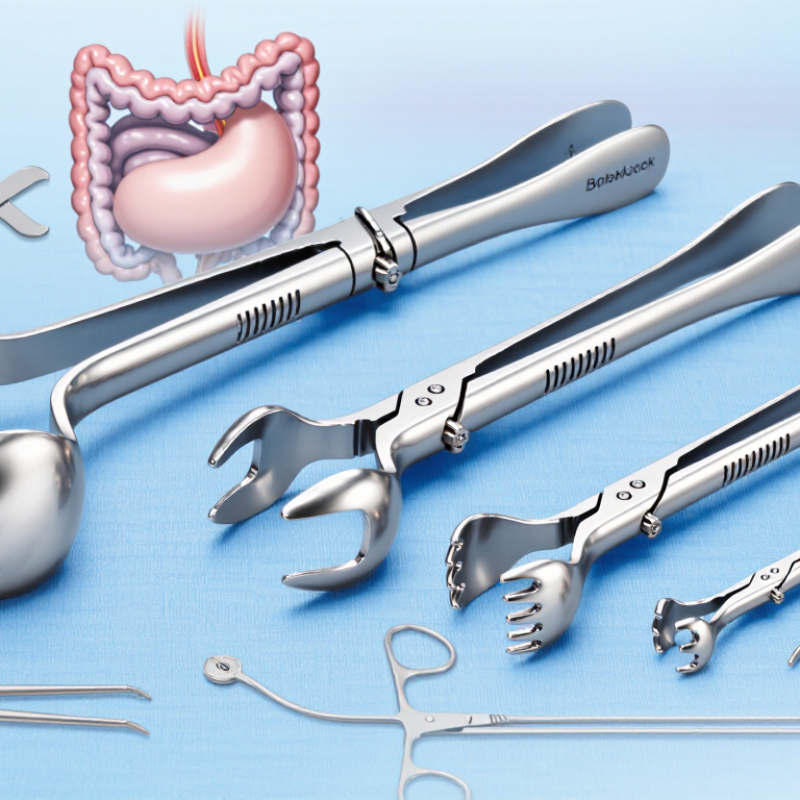
Babcock tissue forceps are designed to hold delicate, tubular structures with limited crushing pressure. Their rounded, fenestrated jaws distribute contact across a wider area. Straight patterns offer direct access in open procedures. Curved patterns can improve visibility around deeper anatomy. Smaller sizes suit narrow operative fields, while larger versions provide a steadier grip on thicker tissue.
Anatomical use matters more than appearance. Surgeons commonly select Babcock forceps for bowel, appendix, fallopian tubes, ureters, and other fragile structures. The broad jaws can support tissue without gripping its edge aggressively. For bowel handling, gentle placement helps reduce bruising and unnecessary traction. A curved instrument may follow pelvic anatomy more naturally. Still, tissue quality, exposure, and the surgeon’s technique can change the appropriate choice. One size does not fit every patient.
Tips: Check that the fenestrated jaws align evenly and open smoothly. Inspect the hinge for stiffness, corrosion, or hidden debris. Confirm the working length before deep placement. Use only the pressure needed to stabilize tissue. I have found that visual inspection alone can mislead; the handle should also feel balanced in the hand. When tissue slips, changing the angle may be safer than squeezing harder. Local surgical protocols and validated instrument guidelines should guide final selection.
Choosing Babcock tissue forceps begins with the jaw design, not the handle finish. Fenestrated, rounded jaws distribute pressure across delicate tissue. Narrow tips improve access, but they can concentrate force quickly. That trade-off matters. The World Health Organization reports an estimated surgical-site infection incidence of 11.8 per 100 operations in low- and middle-income countries. Proper tissue handling cannot prevent every infection, yet atraumatic instruments support cleaner, more controlled technique.
Look for smooth inner surfaces, balanced serrations, and accurate jaw alignment. Serrations should grip without cutting or crushing. Test the instrument with gloved hands. Does the ratchet engage with one controlled click? Can you release it without twisting the wrist? Excessive locking pressure is a warning sign. AAMI ST79 emphasizes inspection, cleaning, sterilization, and functional checks for reusable surgical instruments. A forceps that looks polished may still hide hinge debris or a misaligned tip.
Material and geometry also affect daily reliability. Corrosion-resistant surgical steel should tolerate repeated processing without rough edges or discoloration. The shank length must match the working depth, while the finger rings should support stable rotation. Smaller models may feel precise but fatigue the hand during prolonged procedures. Larger models may offer reach but reduce tactile feedback. That is easy to overlook. During evaluation, compare several sizes using moist, soft test material, then inspect for marks. My own preference would not replace local surgical protocol, because “atraumatic” performance depends on technique, tissue type, and instrument condition.
| Design Feature | Common Design Options | Effect on Tissue Handling | Selection Guidance |
|---|---|---|---|
| Jaw Profile | Curved, oval, or spoon-shaped jaws | A broad, rounded profile distributes pressure over a larger area and reduces localized crushing. | Choose a rounded, atraumatic profile for delicate tubular or hollow structures. |
| Fenestrated Jaws | Open central window or partially fenestrated surface | The opening lowers the amount of tissue trapped between the jaws and helps spread gripping force. | Prefer fenestrated jaws when secure holding is needed without a narrow, concentrated contact point. |
| Jaw Edges | Smooth or lightly rounded edges | Smooth edges reduce cutting, snagging, and surface trauma during grasping and repositioning. | Use smooth-edged jaws for fragile tissue; avoid sharp edges unless specifically indicated by the procedure. |
| Serrations | Generally absent or minimal on atraumatic Babcock jaws | Limited serration helps preserve tissue surfaces but may provide less purchase on slippery tissue. | Select minimal serration when tissue preservation is more important than maximum traction. |
| Jaw Size | Small, standard, or large grasping area | Larger jaws distribute force more widely; smaller jaws improve access in confined operative fields. | Match jaw size to tissue diameter, access requirements, and the amount of tissue that must be controlled. |
| Shaft Length | Short, medium, or long shaft | Longer shafts provide reach but may reduce tactile feedback and increase leverage at the tissue interface. | Use the shortest length that safely reaches the target area while maintaining visibility and control. |
| Jaw Alignment | Straight, curved, or angled alignment | Alignment affects approach angle, visibility, and the ability to grasp tissue without excessive rotation. | Choose curved or angled jaws when anatomy or the incision limits a direct approach. |
| Ratchet Mechanism | Single-position or multi-position locking ratchet | A graduated ratchet allows controlled closure, while excessive locking force can compress tissue unnecessarily. | Prefer a smooth, reliable ratchet with enough adjustment to secure tissue using the minimum effective force. |
| Finger Rings and Balance | Standard rings with balanced or offset handle | Good balance improves hand stability and reduces unintended movement during delicate manipulation. | Check ring comfort, instrument balance, and smooth opening and closing before clinical use. |
| Material and Surface | Surgical-grade stainless steel with a polished or satin finish | Corrosion-resistant construction supports repeated reprocessing; a smooth surface helps reduce residue retention. | Verify material compatibility with the facility’s cleaning, disinfection, and sterilization procedures. |
| Typical Tissue Suitability | Delicate, soft, or tubular tissue | Atraumatic fenestrated jaws can hold tissue while limiting puncture and crushing compared with toothed forceps. | Commonly considered for structures such as bowel, appendix, fallopian tubes, and other soft tissue when clinically appropriate. |
| Primary Limitation | Atraumatic grip with limited cutting or penetrating action | The design is intended for gentle grasping, not for clamping vessels, dissecting, or holding very tough tissue under high traction. | Use a different instrument when toothed purchase, strong hemostatic compression, or sharp dissection is required. |
How to Choose Babcock Tissue Forceps for Surgical Use?
Matching Babcock forceps to tissue size and access angle matters more than choosing the longest instrument. For superficial procedures, 14–16 cm forceps usually provide better control and less wrist strain. Deep pelvic or abdominal access may require 18–24 cm shafts. Straight jaws suit direct exposure, while curved shafts improve visibility around organs. Fenestrated, atraumatic jaws should cradle delicate tissue rather than compress it. The opening must also fit the target. A narrow jaw may slip, while an oversized jaw can obstruct the field.
Tissue handling deserves caution. The WHO Global Guidelines for the Prevention of Surgical Site Infection report surgical-site infection rates of about 9% in high-income settings and 11% in low- and middle-income settings. Forceps selection cannot prevent every infection, but gentle handling can reduce unnecessary trauma. Match jaw width to the tissue’s thickness, and check closure alignment under operating-room light. A common mistake is selecting by shaft length alone. The most convenient size on paper may feel unstable in the hand. That is worth questioning.
Tips: Compare the forceps with the operative site before incision. Test the grip on a soft practice pad. Confirm that the ratchet closes evenly without excessive pressure. Review the current instrument instructions and facility protocol, because jaw dimensions vary. Curved forceps can improve access, but they may hide the tissue edge. If visibility decreases, reassess the angle instead of squeezing harder. Small details matter.
How to Choose Babcock Tissue Forceps for Surgical Use?
Choosing Babcock tissue forceps begins with material, not surface shine. Surgical-grade stainless steel should resist corrosion, pitting, and repeated mechanical stress. ISO 7153-1 identifies metallic materials used for surgical instruments, while ASTM F899 covers stainless steels for these devices. These standards do not replace supplier documentation. Request the declared alloy, passivation details, and cleaning-chemical compatibility. A smooth surface helps. However, appearance alone cannot prove cleanability.
Sterility depends on the entire reprocessing chain. CDC guidance classifies instruments entering sterile tissue as critical devices requiring sterilization. AAMI ST79 stresses thorough cleaning before sterilization because residual protein can protect microorganisms. The WHO Global Guidelines for Surgical Site Infection Prevention report infection rates near 11% in low- and middle-income countries, compared with roughly 2–5% in developed settings. These figures describe healthcare systems, not one forceps. Still, they show why accessible jaws, reliable hinges, and validated packaging matter. Follow the exact instructions for use, including exposure time, drying, and inspection.
Durability means more than hardness. Close the atraumatic jaws gently and check alignment under bright light. The jaws should meet evenly without excessive force. Rough movement, discoloration, or a loose box lock requires removal from service. One practical weakness remains: cycle-life claims are difficult to compare. I would not accept “long-lasting” without documented testing. Local water quality, detergents, and handling can shorten service life, even when the instrument appears intact.
Choosing Babcock tissue forceps starts with the tissue, not the tray label. Their rounded, fenestrated jaws help hold delicate tissue with less crushing than toothed forceps. Match the jaw size and curve to the operative field. Small jaws suit confined spaces. Larger jaws may distribute pressure better. Ask whether the instrument will hold, guide, or expose tissue. These are different tasks.
During handling, keep the jaws aligned and close the ratchet gently. Excessive locking pressure can leave marks, especially on fragile tissue. Grip the handle without forcing it. A secure hold should not require wrist strain. Before use, inspect the jaws, hinge, ratchet, and tips under bright light. Look for misalignment, rough edges, corrosion, or a stiff joint. Do not use a questionable instrument. A near-perfect appearance can mislead.
After the procedure, remove visible soil promptly according to facility protocol. Open the jaws during cleaning so hidden residue is not trapped. Use facility-approved cleaning methods and follow validated processing instructions. Dry the hinge thoroughly, then apply only the specified surgical-instrument lubricant. Sterilize through the approved cycle. Record recurring defects and review them with sterile processing staff. Selection is partly judgment. It improves through honest review of handling mistakes.
Safe selection starts with atraumatic, fenestrated jaws, secure alignment, smooth ratchet action, and a size appropriate for the target tissue. Before reuse, inspect the jaws, box lock, serrations, and hinge for damage, retained soil, corrosion, or stiffness.
The chart shows common minimum exposure examples for wrapped reusable surgical instruments. Processing temperature and exposure time must always follow the validated instructions for use and the healthcare facility’s sterilization protocol.
They hold delicate, tubular structures with limited crushing pressure. Rounded, fenestrated jaws spread contact across a wider area. Common uses include bowel, appendix, fallopian tubes, and ureters.
Straight forceps suit direct access in open procedures. Curved forceps can improve visibility around deeper anatomy. They may also follow pelvic structures more naturally.
Use shorter forceps for superficial fields, often around 14–16 centimeters. Deeper abdominal or pelvic access may need 18–24 centimeters. Longer is not always better.
Match jaw width to the tissue’s thickness and the available space. Narrow jaws can slip or concentrate pressure. Oversized jaws may block the operative field.
Check that the fenestrated jaws align evenly and open smoothly. Inspect the hinge for stiffness, corrosion, and hidden debris. Confirm the working length before deep placement.
Test the instrument with gloved hands. The ratchet should engage with one controlled click. Release should not require wrist twisting. The handle should feel balanced.
Change the angle before increasing pressure. Recheck jaw alignment and tissue placement. Squeezing harder may cause bruising or crushing. I sometimes underestimate angle changes.
No. Instrument choice alone cannot prevent every infection. Proper cleaning, sterilization, inspection, and gentle handling remain essential. Follow current facility protocols and validated instructions.
Choosing the right Babcock Tissue Forceps is essential for handling delicate tissues with control while minimizing unnecessary trauma. Different patterns and sizes are suited to specific anatomical areas and procedures, so selection should begin with the tissue type, access requirements, and level of precision needed. Curved or angled designs may improve visibility in confined spaces, while broader, atraumatic jaws can provide secure support for fragile tissue. Key design factors include jaw shape, serration pattern, tip profile, ratchet function, balance, and grip comfort.
The instrument should also be made from durable, corrosion-resistant material and be compatible with the facility’s sterilization process. Before use, inspect the jaws, hinge, alignment, and locking mechanism for damage or stiffness. During surgery, apply only the pressure necessary to hold tissue securely, and avoid twisting or crushing movements. After use, clean, sterilize, dry, and store the forceps properly, with regular maintenance and replacement when performance or structural integrity declines.
