Choosing the right Straight Mayo Scissors from China requires more than comparing prices and catalog photographs. Global buyers need dependable cutting performance, stable production, and clear quality evidence. These scissors are commonly used for cutting tissue, sutures, dressings, and other clinical materials. Their design must match the intended application, not merely look polished.
A reliable supplier should explain blade geometry, working length, handle balance, stainless steel grade, surface finish, and available tip styles. During evaluation, buyers can inspect hinge movement, jaw alignment, cutting consistency, and resistance to corrosion. A smooth opening action matters. So does a clean, even edge. Small details often reveal larger manufacturing habits. Batch inspection records, material certificates, packaging controls, and traceable production information can strengthen purchasing decisions.
Chinese manufacturers may offer flexible customization, competitive production capacity, and experience serving international markets. However, quality can vary between factories and even between production batches. That point deserves attention. A sample may perform well while later shipments need closer verification. Buyers should request representative samples, define acceptance criteria, and confirm applicable market requirements before placing large orders. Supplier communication also matters, especially when discussing sterilization, labeling, inspections, and after-sales support. The best choice is not always the cheapest option. It is the supplier that combines documented processes, responsive service, and repeatable instrument performance. Some claims still need proof. Careful testing remains essential.
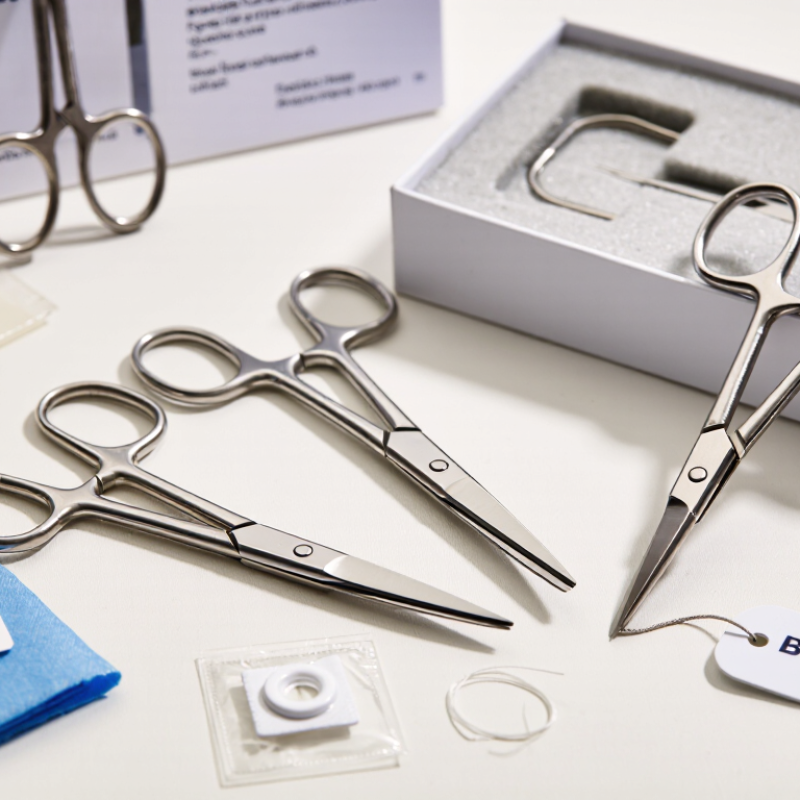
Straight Mayo scissors are sturdy surgical scissors with straight blades and a broad, reinforced profile. Their design gives controlled cutting power through dense tissue, sutures, dressings, and heavier surgical materials. Compared with delicate scissors, they feel more substantial in the hand.
In operating-room practice, the user holds the instrument with the thumb and ring finger. The index finger rests near the shanks for guidance. Short, steady movements usually provide better control than forcing the blades through material. Straight Mayo scissors are commonly used for superficial dissection and cutting sutures. They are not ideal for fine tissue work. The blunt tips can reduce accidental punctures, but they do not replace careful technique.
Different procedures need different blade lengths, tip shapes, and handle balance. A global buyer evaluating instruments from China should check stainless-steel composition, joint smoothness, blade alignment, surface finish, and cleaning instructions. The blades should open evenly and close without a visible gap. Ask for inspection records and sample testing before a large order.
Small details matter.
A scissors that feels stiff may increase hand fatigue. A loose joint may damage cutting accuracy. Reprocessing can also affect performance when cleaning or sterilization is poorly controlled. One practical mistake is judging quality only by appearance. A polished surface looks reassuring, yet it cannot prove reliable cutting or long-term hinge stability. Trained medical staff should verify the instrument in an approved clinical workflow.
Straight Mayo scissors are judged by more than a clean appearance. Global buyers should examine blade alignment, tip symmetry, handle balance, and hinge movement. A well-made instrument opens smoothly without side play. Its straight blades should meet evenly from the pivot toward the tips. Small gaps can reduce cutting control during repeated procedures.
Material selection also affects long-term performance. Surgical stainless steel should resist corrosion after cleaning and sterilization cycles. Buyers should request material documentation, surface-finish details, and passivation records. Hardness must support edge retention without making the blades brittle. In practical inspections, I check smooth closure, uniform cutting, and secure finger-ring construction. The instrument should tolerate repeated handling without developing rough movement. Keep testing consistent.
Performance claims need measurable evidence. A reliable supplier should provide dimensional tolerances, batch inspection records, and a defined cutting test. Quality systems aligned with ISO 13485 can support traceability and process control. Buyers should also review applicable requirements for reusable surgical instruments, sterilization instructions, and packaging integrity. ASTM F899 may help evaluate stainless-steel material selection, depending on the market and application. Standards vary by destination, so local regulatory review remains necessary. One polished sample is not enough. A sample can hide production variation. Random batch checks are more convincing. There is room for improvement, especially when testing methods are not clearly documented.
For global buyers, straight Mayo scissors should begin with traceable stainless steel, not appearance alone. Surgical grades such as 410 or 420 stainless steel offer useful hardness and corrosion resistance. The exact grade still requires verification. A supplier should provide material certificates, batch records, and passivation details. Passivation removes free iron from the surface and supports better resistance after repeated cleaning cycles.
Manufacturing quality appears in small, practical details. The blades should meet evenly, cut cleanly near the tips, and move without grinding. Handles need smooth finger rings and a stable screw or rivet assembly. Excessive looseness is a warning. During inspection, buyers can test alignment, cutting performance, surface finish, hardness, and corrosion resistance. Forged construction may improve strength, but production consistency matters more than a technical label. I would not treat origin as a quality certificate.
Sterilization compatibility must match the intended workflow. Many stainless-steel Mayo scissors tolerate steam autoclaving at 121°C or 134°C, when the manufacturer validates those cycles. Cleaning chemicals, water quality, drying, and storage also affect service life. Hinges should be opened during cleaning, then dried completely to reduce staining and corrosion. A polished surface is not proof of sterilization safety. Request written instructions for use, cycle limits, packaging, and maintenance. One detail is easy to miss: repeated high-heat cycles can expose weak joints, poor passivation, or hidden surface defects. Testing a sample set before volume purchasing is the safer decision.
China Best Straight Mayo Scissors for Global Buyers?
Choosing straight Mayo scissors from China requires more than comparing prices. A reliable supplier should explain steel grade, blade finish, joint construction, and intended use clearly. Ask for recent production samples, not only catalog photographs. The hinge should move smoothly, without side play or rough resistance. Blade edges must meet evenly along their working length. Small gaps can affect handling and repeatability.
Certifications need careful checking. Request an ISO 13485 certificate and confirm the certificate holder, address, validity period, and certified product scope. Market-specific documents may also apply, depending on the destination. Do not treat a registration number as proof of product approval. Independent testing can verify corrosion resistance, passivation, cleaning compatibility, and packaging performance. Supplier audits are valuable, but they should include production records and corrective actions.
Consistency is harder to judge. Use a written specification covering dimensions, weight, surface finish, jaw alignment, hardness, and functional testing. Compare several samples from different batches. A perfect sample proves little. Batch records, inspection photos, and traceability codes provide stronger evidence. An agreed AQL plan can reduce disputes, although it cannot replace technical judgment. I would also inspect the first mass-production lot before shipment. That step costs time. It may prevent larger losses later. Some buyers overlook packaging until instruments arrive with scratches or moisture marks. That mistake deserves reflection. Clear communication, repeat testing, and honest supplier responses usually reveal more than polished sales materials.
How to interpret supplier certifications and product documentation when evaluating straight Mayo scissors.
Buying straight Mayo scissors from China requires more than comparing catalog prices. Define the intended use, length, tip design, and steel grade before requesting quotations. Common options include stainless steel construction, smooth or serrated jaws, and satin or polished finishes. Ask for hardness data, cutting tests, and inspection photos. A sample matters.
Customization can cover handle shape, surface finish, laser markings, protective caps, and retail packaging. Send a clear drawing with tolerances. Small changes may affect tooling, minimum order quantity, and production time. Confirm whether customization applies to every unit or only the package. This detail is often missed. It can become expensive later.
Pricing should separate product cost, packaging, inspection, freight, insurance, duties, and destination taxes. Request both sample pricing and volume pricing. A low quote is not always a saving. Buyers should also confirm payment terms, replacement procedures, and the expected lead time. International shipping needs careful document control, including commercial invoices, packing lists, product descriptions, and the correct customs classification. Use strong inner trays and moisture-resistant cartons to reduce scratches and corrosion during transit. Air freight suits small urgent orders, while sea freight usually lowers larger shipment costs. Delivery estimates can still change because of port congestion, holidays, or customs review. Build in time.
They are sturdy scissors for dense tissue, sutures, dressings, and heavier surgical materials. Their broad blades provide controlled cutting power. They are not ideal for delicate tissue work.
Place the thumb and ring finger in the handles. Rest the index finger near the shanks for guidance. Use short, steady movements.
Blunt tips may reduce accidental punctures during careful handling. They cannot replace trained technique or approved clinical procedures. Care still matters.
Check the steel composition, joint smoothness, blade alignment, and surface finish. The blades should open evenly and close without a visible gap. Test several samples.
Confirm the certificate holder, address, validity period, and certified product scope. Request production records and independent test results when appropriate. A registration number alone proves little.
Use written specifications for dimensions, weight, hardness, finish, and functional testing. Compare samples from different production batches. One perfect sample is not enough.
Customization may include handle shape, finish, markings, protective caps, and packaging. Provide drawings with clear tolerances. Small changes can increase tooling costs or production time.
Separate the product price from packaging, inspection, freight, insurance, duties, and destination taxes. Ask for sample and volume pricing. A low quotation is not always cheaper.
Use strong inner trays and moisture-resistant cartons. This helps reduce scratches and corrosion during transit. Packaging is often overlooked. That deserves reflection.
Do not judge quality only by a polished surface. A shiny finish cannot prove cutting accuracy or hinge stability. I would inspect the first mass-production batch.
Straight Mayo Scissors are specialized surgical instruments designed for controlled cutting and tissue dissection, with straight blades that provide clear visibility and precise handling. For global buyers, important considerations include blade sharpness, smooth opening and closing, balanced weight, secure finger rings, and consistent performance across repeated procedures. The ideal instrument should meet appropriate dimensional and functional standards while supporting reliable operator control.
Material selection and manufacturing quality directly affect durability, corrosion resistance, and sterilization compatibility. Buyers should assess stainless steel grade, surface finishing, joint construction, inspection procedures, and traceability. Supplier evaluation should also include relevant certifications, quality-management systems, sample testing, and evidence of stable production consistency. Before ordering, purchasers should clarify sizes, packaging, private customization options, minimum order quantities, pricing terms, lead times, and international shipping requirements. A careful comparison of technical specifications, documentation, after-sales communication, and total procurement cost can help buyers select Straight Mayo Scissors that offer dependable quality and practical long-term value.