Choosing the best Professional Barber Scissors Kit in 2026 is not just about finding the sharpest blades. A useful kit should suit the work, the barber’s technique, and the demands of a busy day. Scissors that feel balanced during a precise taper may not feel comfortable during repeated, long cutting sessions. Small details matter: finger rings, blade tension, edge type, and how securely the case holds each tool.
This guide compares kits through practical considerations, including steel quality, cutting control, durability, and value. It also looks at what comes in the case, since combs, a cleaning cloth, or a tension key can make a kit more convenient. Still, more pieces do not automatically mean better performance. A low-cost kit may work for occasional use, while a working barber may need dependable construction and readily available care guidance. Check product specifications carefully, and treat dramatic claims about sharpness or longevity with caution. Reviews can help, but hand size and cutting style are personal. There is no perfect set for everyone. Even good scissors need maintenance, and that part is easy to overlook. The goal is a clear, balanced comparison that helps readers choose tools they can use confidently—not a promise that one kit will suit every barber.
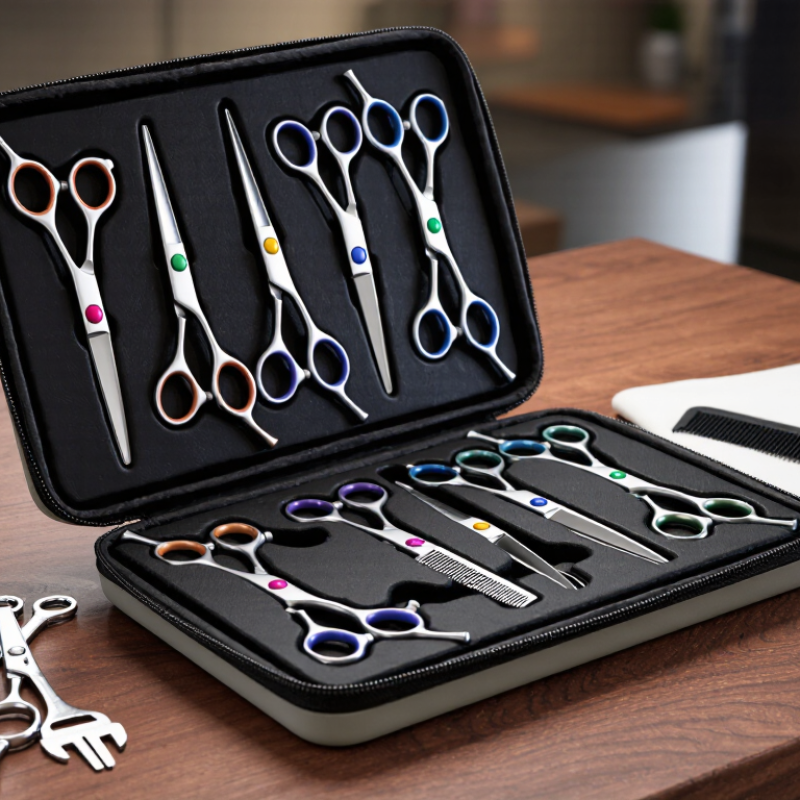
A professional barber scissors kit in 2026 is defined by reliable tools, comfortable handling, and a setup suited to real shop work. It should include sharp cutting shears, thinning shears, and a protective case. Fit matters. The handles should let the barber work without pinching or forcing the wrist. A smooth, adjustable tension screw helps the blades close evenly, while well-aligned edges prevent hair from folding between them.
Materials matter, but a high price alone proves little. Look for stainless steel with clear care instructions and blades that can be professionally serviced. Cutting shears should feel balanced when held near the pivot. Thinning shears need evenly spaced teeth and a clean finish, so they remove hair predictably rather than leaving visible marks. Test the grip with dry hands; a tool that feels comfortable for one cut may become tiring during a full day.
A useful kit also supports hygiene and upkeep. A fitted case keeps edges from knocking against combs or other tools, and a small cloth makes routine cleaning easier. Check the hinge, screws, and blade movement before buying. A kit can still feel wrong, even when every part looks well made. That is worth admitting. Choose tools that suit your cutting technique, hand size, and daily services, not just the product description. Cleaning and careful storage remain essential.
A professional barber scissors kit should cover cutting, blending, upkeep, and clean storage—not just offer several pairs of shears. Look for straight shears, thinning shears, a cutting comb, sectioning clips, a cleaning cloth, shear oil, a tension adjuster, and protective sheaths. A compact case helps keep sharp edges from knocking together between appointments. A neck duster and cape are useful extras, though they do not replace properly cleaned tools.
The U.S. Bureau of Labor Statistics’ Occupational Outlook Handbook projects 7% employment growth for barbers, hairstylists, and cosmetologists from 2023 to 2033. That makes dependable daily tools a practical investment, but a bigger kit is not automatically better. Test the handle fit and balance; even a finely finished shear can feel tiring after repeated cuts. Stainless steel alone does not guarantee lasting sharpness. Maintenance matters.
Tips: After each client, remove hair, clean and disinfect tools according to their material and product instructions, then dry them fully. Add a small oil drop at the pivot and check tension before cutting. A kit may omit a comfortable comb. That detail is easy to overlook. Keep a separate, clean storage space for tools that are ready to use.
Blade design shapes how cleanly scissors meet hair. A convex edge can support smooth, precise cutting, while a beveled edge often feels controlled during everyday work. Neither is automatically better; technique and maintenance matter. One detail gets overlooked. Check that the blades close evenly from heel to tip, without a snag or visible gap. On a small section of damp hair, uneven tension may show up as folding or pushing instead of a clean cut.
Steel affects edge retention, corrosion resistance, and how often sharpening is needed. Ask whether the steel type and sharpening support are clearly documented; vague claims about “premium” steel are not enough to judge durability. Harder steel may hold an edge longer, but can be less forgiving if dropped or poorly serviced. Real conditions matter. Ergonomics are just as personal. Hold the scissors in your usual cutting position for several minutes, and notice pressure around your thumb, wrist, and shoulder. Offset handles may reduce strain for some hands, yet feel awkward to others. A kit is only useful if its sizes, tension adjustment, and case suit your work. I would reconsider any choice made from specifications alone; comfort becomes obvious after a full day, not a quick product photo.
A barber should compare a scissors kit against the cuts performed most often, not simply the number of tools inside. For clipper-over-comb work and clean outlines, a balanced 6- to 6.5-inch straight shear can offer useful reach and control. Shorter shears may feel easier around ears and tight fades. For blending, check whether thinning shears remove hair gradually; tooth count alone does not tell the whole story. Test the tension and grip, too. Feel matters.
Still, varied client demand makes versatility worth weighing. A barber doing mostly classic scissor cuts may favor a dependable straight shear and a modest texturizer. Someone handling frequent fades may value a compact pair, secure finger rests, and a case that keeps edges protected between stations.
Inspect the details before buying: steel specification, return policy, included adjustment key, and maintenance guidance. A polished case can look convincing. It cannot correct poor hand fit. Online measurements also miss how a shear feels after several hours; when possible, handle it before committing. I would not rank kits by piece count alone. That shortcut is tempting, but it can leave useful tools unused and the main shear uncomfortable.
Precision starts with a simple habit: clean and dry the blades after every client. Wipe away hair and product residue with a soft cloth, then apply one small drop of shear oil at the pivot. Open and close the blades gently to distribute it. Avoid soaking scissors or using cleaners that may damage their finish. Follow the tool maker’s care instructions, and check that the pivot moves smoothly without forcing the blades together.
The U.S. Bureau of Labor Statistics projects 5% employment growth for barbers, hairstylists, and cosmetologists from 2023 to 2033, with about 89,400 openings each year. That forecast suggests steady demand for hands-on services, where dependable tools matter throughout a busy day. A loose pivot can fold hair instead of cutting cleanly. Test tension on a small section of hair; the blades should close smoothly, not snap shut. It is tempting to think oiling covers everything. It doesn’t.
Store shears dry, closed, and separate from combs or clips that could nick the edges. If cutting starts to feel rough despite cleaning and correct tension, have a qualified shear technician inspect them. Sharpening too often can remove useful metal, while waiting too long may strain the hand. There is no perfect calendar: watch the cut, and keep a brief maintenance log.
Look for cutting shears, thinning shears, and a fitted protective case. A small cleaning cloth is useful, too. Keep edges protected.
Hold them in your usual cutting position for several minutes. Notice pressure in your thumb, wrist, or shoulder. Photos won’t tell you.
Not always. Convex edges can support smooth, precise cuts, while beveled edges may feel controlled for everyday work. Technique and upkeep matter.
Look for clear details about steel type, care, and professional servicing. A high price alone proves little. Harder steel may hold an edge longer but can be less forgiving if dropped.
Close the blades slowly from heel to tip. They should move without snagging or leaving a visible gap. On damp hair, poor tension may cause folding.
Wipe away hair and residue with a soft cloth, then dry the blades. Add one small drop of shear oil at the pivot and open and close gently.
Keep them dry, closed, and separate from combs or clips. A fitted case helps prevent nicks. Small details count.
If cutting feels rough after cleaning and tension checks, ask a qualified shear technician to inspect them. There is no perfect schedule; track how the scissors cut. I would not sharpen them too often.
Choosing the best Professional Barber Scissors Kit in 2026 means looking beyond the number of tools in the case. A well-rounded kit should include dependable cutting scissors, suitable thinning or texturizing scissors, a comb, cleaning cloth, adjustment key, and protective storage. The right selection depends on the barber’s services, preferred techniques, and experience, so a compact set may suit everyday cuts while a more varied kit can support a wider range of styles.
Blade shape and sharpness influence control and cutting feel, while quality steel can help maintain performance with proper care. Ergonomic handles, balanced weight, and a comfortable fit also matter during long workdays. To keep scissors precise and reliable, clean and dry them after use, lubricate the pivot as needed, store them safely, and arrange professional sharpening when performance declines. The best kit is ultimately one that feels comfortable, matches the work, and is easy to maintain.