Choosing the right Dental Scaler Set can influence clinical comfort, instrument control, and long-term purchasing value. For global buyers, the decision involves more than a polished product photograph. It requires careful attention to working-end design, stainless-steel quality, handle balance, packaging, and sterilization compatibility.
Small details matter. A scaler should feel stable between gloved fingers. Its tip should reach narrow spaces without unnecessary pressure. The surface should remain smooth after repeated cleaning cycles. These qualities support safer, more consistent clinical routines. Dr. Gordon J. Christensen, a respected prosthodontist and dental educator, has emphasized, “Clinical success depends on details.” That principle fits instrument purchasing well.
A reliable Dental Scaler Set should include clear specifications, inspection records, and practical product images. Buyers may also review hardness, corrosion resistance, ergonomic grip, and available replacement policies. Supplier communication matters, especially when orders cross borders. Ask about sample approval, batch consistency, labeling, and shipping protection. A damaged box can reveal weak quality control.
Not every attractive set performs equally. That deserves honest attention. Some handles feel comfortable at first but become tiring during longer procedures. Some tips look sharp but lack consistent finishing. The lowest price may also hide avoidable limitations. Experienced buyers compare measurable features instead of trusting broad promises. They check details repeatedly. That habit improves confidence.
This guide examines key selection factors for a dependable Dental Scaler Set. It considers clinical usability, manufacturing consistency, supplier credibility, and purchasing practicality. The goal is simple: help global buyers choose instruments that perform reliably, arrive safely, and support professional dental care.
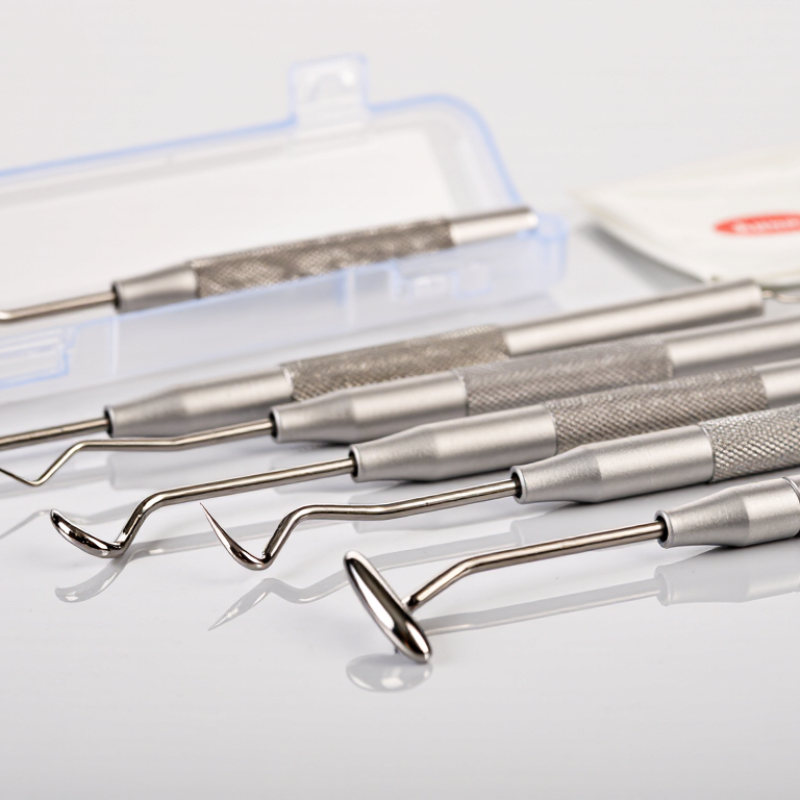
A dental scaler set is a collection of instruments used by dental professionals to remove hardened deposits from tooth surfaces. Depending on its intended use, a set may contain different scaler tips, handles, and basic examination instruments. The exact contents vary, so buyers should check the item list rather than rely on the word “set.” Small differences matter. A tip’s shape affects access around teeth, while handle weight and grip can influence control during detailed work.
For global buyers, a well-specified set can simplify procurement across clinics, distributors, and training environments. Confirm the instrument material, finish, dimensions, and compatibility with the cleaning and sterilization processes used by the intended facility. Ask for clear product documentation and verify that labeling and required market documentation suit the destination country. Requirements differ. A low purchase price may not reflect the costs of inspection, maintenance, or replacement.
Practical evaluation helps. Inspect the joints and working edges, and ask how instruments should be cleaned, dried, and stored. If possible, request samples for review by qualified dental staff before placing a larger order. A catalog image can look convincing, but it cannot show how a handle feels during repeated use. No single set fits every workflow; choosing one takes more than comparing piece counts.
A complete dental scaler set is more than a handpiece and a box of tips. Its core is the control unit, which generates ultrasonic vibration and regulates operating settings. The handpiece transfers that vibration to the working tip, while a water line helps cool the tip and flush the treatment area. A foot pedal lets the clinician activate the unit without reaching for the controls.
Tip variety matters. Different shapes and angles help clinicians reach distinct tooth surfaces, but tips must match the scaler’s connection and operating requirements. A torque wrench supports secure fitting and helps reduce the risk of overtightening. Small parts matter. Some kits also include a holder, power supply, and spare seals. Check which items are actually included, rather than relying on the word “complete.”
For global buyers, confirm voltage, frequency, plug type, and water connections before ordering. Fit is not universal. Ask for clear instructions on cleaning and sterilizing reusable components, and verify which parts can be processed. These details are easy to overlook when comparing sets by price alone. A kit may look suitable on paper, yet still require extra accessories in daily practice. That deserves checking.
Example quantities in a typical ultrasonic scaler setup. Package contents vary by model and supplier.
The control unit powers the scaler, the handpiece transfers ultrasonic vibration to the tip, and the foot control lets the clinician operate the unit. Water irrigation cools the working area and helps flush debris; tips are selected according to the clinical task.
China Best Dental Scaler Set for Global Buyers
Materials, Design Features, and Quality Standards to Evaluate
A dependable scaler set begins with metal that resists corrosion and repeated sterilization. Ask for material specifications, not just “medical-grade steel.” ISO 7153-1 describes metallic materials used in surgical instruments and offers a useful reference when reviewing supplier documentation. Check tips under bright light: rough edges, pits, or uneven joints can complicate cleaning and may affect handling. A glossy finish alone proves little.
Design matters in daily practice. Balanced handles, secure tip connections, and clearly identified tip shapes help clinicians maintain control around tooth surfaces. Inspect the connection for looseness, and check that replacement tips are available. Small details count. Reprocessing instructions should be clear and consistent with ISO 17664-1, which addresses information manufacturers provide for processing medical devices. Ask for test records and traceable documentation; a certificate without relevant scope deserves a closer look.
The need for reliable oral-care tools is substantial. The World Health Organization’s Global Oral Health Status Report (2022) estimates that oral diseases affect nearly 3.5 billion people; untreated caries in permanent teeth affects about 2 billion. These figures do not prove demand for any particular scaler, but they underline the importance of dependable clinical equipment. Buyers should compare corrosion resistance, cleaning access, ergonomic feel, and quality-control evidence. No single feature tells the whole story. A sample set may feel excellent in hand, yet still reveal weak joints after repeated processing.
Use this comparison guide to assess reusable manual dental scaler sets. Specifications vary by instrument and manufacturer; request product-specific documentation and verify requirements for the destination market. This is an evaluation framework, not a product ranking.
| Evaluation area | What to assess | Useful evidence or checks | Buyer notes |
|---|---|---|---|
| Instrument selection | Confirm the set includes the scaler types and working-end shapes required for the intended procedures, such as straight or curved sickle scalers and area-specific designs. | Request an itemized contents list, product drawings, and close-up photographs of each working end. | Names and configurations can differ between suppliers. Compare the actual geometry rather than relying on set names alone. |
| Working-end material | Identify the stainless-steel grade or other material used for each working end. Dental hand instruments commonly use stainless-steel alloys, but grades and properties vary. | Request a material declaration and, where appropriate, a material test report that identifies the alloy and test basis. | Do not treat “stainless steel” as a complete grade specification. Evaluate corrosion resistance, hardness, and intended reprocessing together. |
| Material standard reference | Check whether the supplier identifies applicable material specifications for metallic surgical instruments. | ISO 7153-1 addresses metallic materials used in surgical instruments; ask whether and how it applies to the offered instrument materials. | A standard reference does not by itself prove conformity. Confirm scope, edition, test evidence, and any stated exclusions. |
| Handle and grip | Assess handle diameter, surface texture, balance, and comfort during a secure, controlled grip. | Inspect samples with gloves; check knurling or other texture for consistency, sharp burrs, and areas that could trap soil. | Grip preferences are user-dependent. Request samples for clinical evaluation before placing a larger order. |
| Working-end finish | Inspect the surface for visible pits, cracks, burrs, uneven finishing, and damage around the working end and handle junction. | Use adequate lighting and magnification where needed; record acceptance criteria in the incoming inspection plan. | Surface appearance alone cannot establish material composition, strength, or corrosion resistance. |
| Sharpness and edge consistency | Check that working edges are consistent with the intended instrument design and are free from chips or unintended irregularities. | Request the supplier’s inspection method and documented acceptance criteria; assess representative samples safely. | Sharp edges can cause injury. Handle, inspect, and store instruments using suitable protective procedures. |
| Joints and assembly | For instruments with assembled or joined parts, examine the junction for looseness, gaps, visible defects, and cleanability. | Review assembly inspection records and evaluate whether the design can be cleaned and reprocessed as instructed. | Construction differs by design. Confirm the claimed service life and maintenance requirements with product-specific documentation. |
| Cleaning and sterilization instructions | Confirm that the product is supplied with validated, device-specific instructions for cleaning, disinfection, inspection, packaging, and sterilization, as applicable. | Review the instructions for use and compare them with the healthcare facility’s validated reprocessing workflow. ISO 17664-1 covers information to be provided by the medical device manufacturer for processing of health care products. | Do not assume an instrument is reusable or steam-compatible without the supplier’s instructions and supporting evidence. |
| Quality management system | Evaluate the supplier’s quality controls for design or product changes, production, inspection, traceability, and handling of nonconforming products. | Request a current quality-system certificate and verify its issuer, scope, site, validity, and applicability. ISO 13485 specifies requirements for medical-device quality management systems. | A quality-system certificate is not a substitute for product-specific safety, performance, or regulatory evidence. |
| Risk management | Check whether the manufacturer has assessed relevant product risks, including material-related hazards, sharp edges, breakage, and reprocessing-related risks. | Ask for a declaration or summary of the applicable risk-management process. ISO 14971 provides a framework for medical-device risk management. | Request documentation appropriate to your role and applicable law; the standard reference alone does not demonstrate that every risk is controlled. |
| Biological safety | Determine whether biological evaluation is relevant to the instrument’s materials, patient contact, and intended use. | Request the manufacturer’s rationale and supporting biological-safety documentation where applicable; ISO 10993-1 provides a framework for biological evaluation of medical devices. | Evaluation depends on the specific device and contact conditions; do not assume that a generic material statement is sufficient. |
| Regulatory documentation | Confirm which regulatory requirements apply in the destination market and whether the product and supplier documentation meet them. | Request the applicable declarations, registrations, certificates, labeling, and instructions for use, then verify them with the relevant authority or qualified regulatory adviser. | Requirements vary by country, product classification, and intended use. Do not rely on a general “CE” or “FDA” claim without checking its scope and validity. |
| Traceability and labeling | Check that packaging and records identify the product, lot or batch where applicable, manufacturer, and relevant use or reprocessing information. | Review sample labels, packaging, batch records, and the supplier’s procedure for investigating complaints or recalls. | Agree on labeling language and traceability details before shipment, especially for private-label or multi-market orders. |
| Packaging and transport | Assess whether packaging protects instrument tips and surfaces from damage, contamination, and corrosion during storage and transport. | Inspect packed samples and request documented packaging specifications and shipping-condition controls. | Packaging should match the product’s claimed supply condition and the purchaser’s storage and receiving requirements. |
| Sampling and acceptance | Agree on pre-production samples, incoming inspection criteria, defect classification, and actions for failed lots. | Document the sampling plan, inspection points, acceptance limits, and change-notification requirements in the purchase specification. | Use the same agreed specification for quotations, samples, production approval, and incoming inspection. |
Start with need. Compare each scaler set by procedure mix, not by the number of tips in the box. For routine supragingival maintenance, assess stable power control, water flow, and comfortable handpiece balance. Periodontal care may call for finer tips and settings suited to careful subgingival access. Follow the device instructions and established clinical protocols. For implant surfaces, verify tip compatibility with the manufacturer’s guidance; material matters. That distinction matters.
Also assess cleaning, sterilization, and replacement-part access before purchase. A set is practical only if its reusable components can be processed according to supplied instructions and clinic workflow.
Ask about connector compatibility, regional power requirements, warranty support, and clear instructions staff can use. These details are not glamorous. A larger kit may look reassuring, but unused tips tie up budget and complicate stock control.
If possible, test the handpiece during a typical session and notice grip fatigue, vibration, and access around posterior teeth. No comparison is perfect. A first choice may need revision after staff use it in real appointments.
Sourcing begins with the intended clinic workflow: compare scaler unit, handpiece, tips, foot pedal, water connection, and included accessories. Ask for a complete specification sheet, user manual, warranty terms, and spare-parts availability. The World Health Organization’s Global Oral Health Status Report (2022) estimates that oral diseases affect nearly 3.5 billion people worldwide. That figure signals broad need, but it does not guarantee demand for a particular model or market. Request samples when practical. A catalogue photo cannot confirm grip comfort or setup clarity.
For certification, request current quality-management evidence, such as ISO 13485 documentation, plus applicable electrical-safety and electromagnetic-compatibility test reports. Confirm requirements with the relevant authority or qualified importer in the destination country; certificates alone may not satisfy local registration rules. Compare landed cost, not just unit price. Include replacement tips, freight, insurance, customs charges, and possible inspection fees. Confirm Incoterms, carton dimensions, packing protection, production lead time, and shipment tracking before paying. Small omissions can distort the quote.
Tips: Match the scaler’s voltage and plug to the destination. Check that packaging protects delicate handpieces. Ask for written confirmation of every included accessory. A low quote can still become expensive.
It may include scaler tips, handles, and basic examination instruments. Contents vary, so check the item list carefully.
Match tip shapes, handle weight, and grip to the clinic’s workflow. A catalog photo cannot show repeated-use comfort.
Request material, finish, dimensions, compatibility details, a user manual, warranty terms, and spare-parts information. Details matter.
When practical, ask qualified dental staff to review samples. They can assess grip, working edges, joints, and setup clarity.
Ask how instruments should be cleaned, dried, and stored. Confirm that the process fits the intended facility’s equipment.
Request current quality-management evidence and applicable electrical-safety and electromagnetic-compatibility reports. Check destination-country requirements with a qualified source.
Compare landed costs, including spare tips, freight, insurance, customs charges, and possible inspection fees. A low quote can still become expensive.
Confirm Incoterms, carton dimensions, protective packing, production lead time, and shipment tracking. Ask for every included accessory in writing.
Match them to the destination’s power supply. I might still overlook a small detail, so a final checklist helps.
A Dental Scaler Set is a collection of instruments used by dental professionals to remove deposits from tooth surfaces and support routine clinical procedures. A complete set may include scaler tips or hand instruments, a compatible power unit where applicable, and accessories for setup, maintenance, and storage. Buyers should assess how the components work together, their intended clinical applications, and whether the set suits the equipment and workflows already in use.
When comparing options, consider material durability, ergonomic design, ease of cleaning, compatibility, and clearly documented quality standards. Different practices may need different instrument configurations, so evaluate the expected procedures and frequency of use before choosing. Importers should also confirm product documentation and applicable certifications, compare pricing and order terms, and check packaging, lead times, shipping arrangements, and after-sales support. Careful evaluation of these factors can help global buyers select a reliable set that meets practical clinical and sourcing requirements.