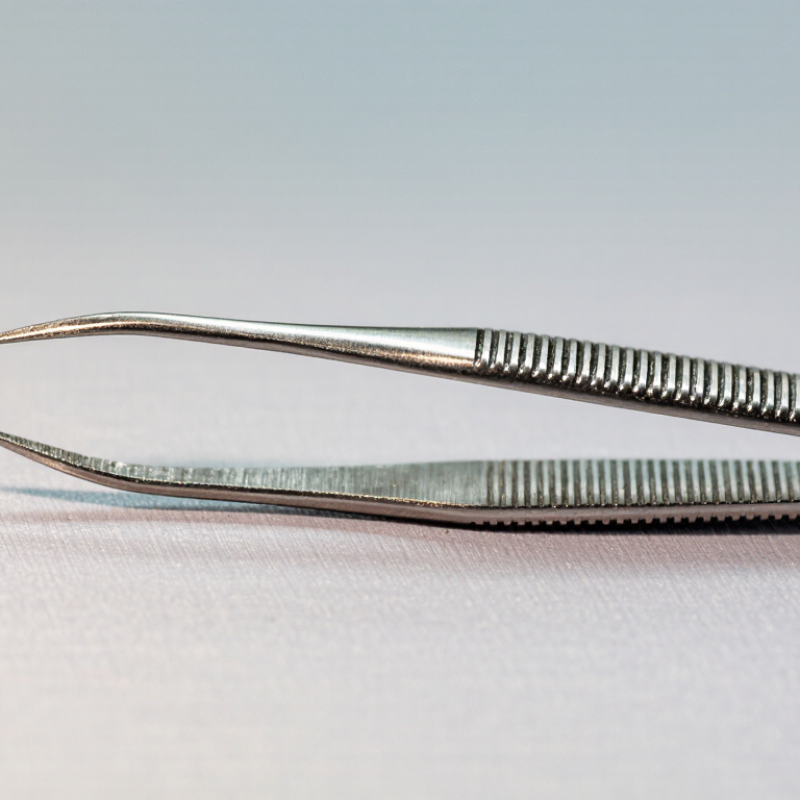
Choosing Stainless Steel Eyebrow Tweezers is not just a matter of finish or price. Buyers need to assess tip alignment, grip, spring tension, and corrosion resistance. A close-up inspection can reveal a slight gap between the tips. That tiny flaw may make fine hairs harder to grasp. Small details matter.
Material claims also deserve careful checking. The worldstainless industry association reported global stainless steel production of 62.6 million tonnes in 2024, up 7% from 2023. This figure describes the wider materials industry, not eyebrow-tweezer quality. It offers useful context, but it cannot prove that a particular tool will perform well. ISO 7153-1:2016 describes metallic materials used for surgical instruments; it is a technical reference, not automatic certification for cosmetic tweezers. Buyers should therefore ask suppliers for clear grade information and relevant test documentation rather than relying on “stainless” alone.
Feel the tool in your hand. Check whether its tips meet evenly, whether the edges are smooth, and whether the body flexes comfortably without feeling flimsy. For retailers and distributors, consistent finishing, packaging, traceability, and supplier quality controls matter alongside appearance. No single feature guarantees a good purchase. The following guide compares key options and practical checks for buyers in 2026, while noting that product performance can vary between manufacturers. A polished surface looks convincing. It is not the whole story.
AISI 304 is a common choice for stainless steel eyebrow tweezers, but buyers should check the grade rather than rely on a polished appearance. ASTM A240/A240M specifies 18–20% chromium and 8–10.5% nickel for Type 304 stainless steel. These figures matter: chromium supports a passive surface film, while nickel helps stabilize the steel’s structure. Nickel Institute technical guidance also identifies 304 as an austenitic stainless steel used across many everyday applications. A useful benchmark.
For tweezers, material is only part of the story. Look for grade documentation, including a mill test certificate where available, and inspect the tips under bright light. The edges should meet evenly, without a visible gap or burr. After use, moisture and cosmetic residue can remain near the joint, so cleaning and drying still matter. Stainless does not mean stain-proof. A certificate also cannot prove that the tips grip fine hairs well; that depends on shaping, alignment, and finishing. I would not judge a pair by shine alone. The uncomfortable detail is that two tools labeled “304” may feel quite different in hand.
For eyebrow-tweezer buyers, corrosion resistance starts with the steel and its finishing process. ASTM A967/A967M covers chemical passivation treatments for stainless-steel parts. Passivation removes surface contamination, including free iron, and supports the formation of a chromium-rich passive layer. It does not make a tweezer immune to corrosion. Small scratches, trapped moisture, or residue near the tweezer tips can still matter.
ASTM A967 describes verification options such as water-immersion, high-humidity, salt-spray, and copper-sulfate tests. These checks help assess treated surfaces; they do not promise a particular service life in a bathroom or salon. The International Stainless Steel Forum reported 58.4 million tonnes of global stainless-steel production in 2023. That figure shows the material’s industrial scale, not the quality of any individual tweezer. Look for clear material and passivation details, plus smooth, clean tip alignment. A certificate helps. It is not the whole story. One practical limitation: buyers rarely see how a supplier controls polishing and handling, where iron contamination can be introduced after treatment. That deserves a direct question.
| Evaluation Dimension | Buyer Consideration | Practical Specification or Check | Why It Matters |
|---|---|---|---|
| Stainless steel grade | Request the exact alloy grade and supporting material documentation. | Common options include 304 and 316 stainless steel. Grade alone does not establish the finished tool’s corrosion performance. | Both are used in corrosion-resistant applications; 316 contains molybdenum and generally offers better resistance to chloride-related pitting than 304. |
| Passivation treatment | Ask whether passivation is performed after fabrication and request the applicable process details. | ASTM A967/A967M covers chemical passivation treatments and specified tests for stainless steel parts. Request a supplier’s process or test records when relevant. | Passivation helps remove free iron and promote a passive surface. ASTM A967/A967M does not specify eyebrow-tweezer dimensions or guarantee performance in every use environment. |
| Tip style | Choose a tip profile suited to the intended task and user preference. | Typical options include slant, pointed, and straight tips. Specify the profile in the purchase specification rather than relying on a generic “precision tip” description. | Tip geometry affects visibility, access, and the type of hair that can be grasped. |
| Tip alignment and closure | Inspect whether both tips meet evenly when the arms are gently pressed together. | Set an incoming-inspection check for visible tip mismatch, burrs, and gaps at the contact point. | Consistent contact can improve grasping and reduce the chance of a hair slipping from the tips. |
| Surface finish | Define the desired finish and inspect for defects that could affect cleaning or handling. | Specify a smooth, cleanable surface and check for rust staining, embedded iron contamination, sharp burrs, or damaged coating, if applicable. | Surface condition and fabrication residues can affect cleanability and corrosion behavior; a polished appearance by itself is not proof of corrosion resistance. |
| Spring action and control | Assess opening, closing, and grip comfort with repeated hand operation. | Agree on a sample-based functional check; the required closing force is a buyer-defined criterion, not a value set by ASTM A967/A967M. | A usable spring action supports control during repeated grooming tasks. |
| Cleaning and care | Confirm care instructions are compatible with the product’s materials and construction. | Request clear cleaning and drying instructions. Do not assume that a stainless steel tool is suitable for every disinfectant or sterilization method. | Chemical exposure, residues, and prolonged moisture can affect the condition of a finished tool. |
| Supplier documentation | Review the documents that support the stated material and treatment claims. | Request material identification, passivation process information, inspection criteria, and relevant test records; confirm that records apply to the supplied production lot. | Traceable evidence is more useful for procurement than an unsupported “rust-proof” claim. |
Buyer note: ASTM A967/A967M addresses passivation treatments for stainless steel parts. It is not a product ranking or a complete specification for eyebrow tweezers. Confirm alloy, finish, functional criteria, and care requirements separately.
For buyers evaluating stainless steel eyebrow tweezers, corrosion resistance deserves more than a polished finish. ASTM B117 describes a controlled salt-fog exposure using a 5% sodium-chloride solution. The chamber creates a fine, continuous mist. Common practice uses a temperature of 35°C, but test setup and reporting details matter. This is not seawater. Nor is it a lifetime forecast.
When reviewing a supplier’s report, check the tested alloy, sample preparation, exposure duration, and inspection criteria. A useful report records rust spots, discoloration, pitting, and changes around the tips. Inspect the body and any joined or finished areas. Tiny orange marks near a tweezer tip can matter when precise contact is needed. Still, a passing result only describes performance under the stated laboratory conditions.
Salt fog can accelerate corrosion, but it does not perfectly reproduce bathroom humidity, skin oils, cleaning products, or repeated drying. ASTM B117 results should not be treated as a universal ranking of materials. That distinction is easy to overlook. Request clear test records and inspect production samples; inconsistent polishing may affect results. Look closely. A lab report is useful, but it cannot tell the whole story.
Slant, pointed, and flat tips solve different gripping problems. Slant tips suit routine brow shaping because their angled edge can catch short hairs along a curved brow line. Pointed tips offer narrower contact for isolated, fine hairs, but need steadier handling. Flat tips spread pressure across a wider edge, which can help grip coarser hairs; they are less forgiving when targeting one tiny strand.
For buyers comparing stainless steel models, inspect tip alignment under a bright light. The edges should meet evenly, without a visible gap, and the arms should close smoothly. Small defects matter. A misaligned point can slip, while a rough edge may tug rather than grip. The World Stainless Association reported 58.4 million tonnes of stainless-steel production in 2023. That scale signals broad material availability, not guaranteed tool quality; buyers should still request the steel grade and corrosion-test details.
Match the profile to the task, then check control with a gentle squeeze. A slant tip is often the practical all-rounder, though not for every hand. Pointed tips can feel twitchy. Flat tips may obscure a fine hair beneath their wider edge. This trade-off is easy to misjudge from product photos, so clear close-ups and alignment checks are useful purchasing evidence.
2026 Top Stainless Steel Eyebrow Tweezers for Buyers
Buyer Checks: Assess Tip Alignment, Grip, Closure, Finish, and Care Needs
Start with the tips. Under bright light, close the tweezers and check whether both edges meet evenly. A narrow gap can leave fine hairs behind, while crossed tips may pinch skin. Try grasping a single hair on your wrist or forearm; steady contact matters more than an especially sharp point. Be cautious with pointed tips if you prefer a broader, less precise edge.
Grip and closure affect control during repeated use. Hold the tool as you would at a mirror, then squeeze gently. It should close without excessive force, and the handles should not slip against dry fingers. A textured surface can help, but deep ridges may collect residue. Small detail. Notice whether your hand tires after several presses. I once judged tweezers by their polished finish alone; that was not a useful test.
Inspect the stainless steel for smooth edges, consistent finishing, and visible pits or rough spots, especially near the tips. A clean, even surface is easier to wipe after use, but appearance alone does not establish quality. Check the care instructions and dry the tool after washing to limit water spots. Store it with a protective cap if available. Care is easy to overlook. If the tips become misaligned, avoid forcing them together; seek guidance from the seller or replace the tool.
Buyer checks: assess tip alignment, grip, closure, finish, and care needs.
Suggested inspection-priority ratings on a 1–5 scale. These are checklist guidance, not laboratory measurements or product test results. Check that tips meet evenly, the grip feels controlled, closure is consistent, the finish is smooth, and care instructions are clear.
Type 304 contains 18–20% chromium and 8–10.5% nickel. These elements support its stainless properties, but they do not guarantee precise tips.
No. Ask for grade documentation, such as a mill test certificate where available. Shine alone proves little.
Hold them under bright light and close the tips gently. They should meet evenly, without a visible gap or burr. Look closely.
No. Grip depends on tip shaping, alignment, and finishing. Two tools with the same grade may feel quite different.
It uses a controlled fog of 5% sodium-chloride solution. Common practice uses 35°C, but setup and reporting details matter.
Not exactly. It reports performance under stated laboratory conditions, not a lifetime forecast or a perfect match for bathroom use.
Check the alloy, sample preparation, exposure duration, and inspection criteria. Reports may record rust spots, discoloration, or pitting.
Cosmetic residue and moisture can collect near the joint. Clean and dry the tool; stainless does not mean stain-proof. I can still overlook that small joint.
Choosing Stainless Steel Eyebrow Tweezers starts with understanding the material and how it is finished. AISI 304 stainless steel typically contains 18–20% chromium and 8–10.5% nickel, a composition that supports corrosion resistance in everyday use. ASTM A967 covers passivation treatments for stainless steel, while ASTM B117 describes a salt-spray test using a 5% sodium-chloride fog. These standards can help buyers understand finishing and testing claims, but they do not replace checking the specific product details.
Tip shape should match the task: slanted tips offer versatility, pointed tips suit precise work, and flat profiles can provide a broader contact surface. Before buying, inspect whether the tips align cleanly and close evenly, and consider grip comfort, surface finish, and care requirements. A well-matched design, carefully finished edges, and straightforward maintenance can make tweezers easier to handle and keep in usable condition.