Curved Kelly Haemostatic Forceps remain practical instruments in surgical and clinical settings. Their curved, serrated jaws help expose vessels and control tissue during dissection. The familiar ring handles also support precise finger control. However, performance depends on jaw alignment, ratchet consistency, finish quality, and repeated sterilization. A forceps that feels smooth on the tray may perform poorly under pressure.
The global surgical instruments market reflects continuing demand for dependable reusable tools. Fortune Business Insights valued this market at approximately US$14.25 billion in 2023. Its report projects continued growth through 2032. Yet published reports rarely separate Curved Kelly Haemostatic Forceps as an individual product category. That limitation matters. Market size cannot prove clinical superiority. As surgical safety expert Atul Gawande wrote in The Checklist Manifesto, “The checklist gets people to talk.” His observation supports careful instrument verification before use, not blind reliance on brand names.
This Top 10 guide compares common Curved Kelly Haemostatic Forceps types by curvature, jaw profile, locking action, material, and handling comfort. It considers stainless-steel construction, atraumatic control, and cleaning access around the hinge. Small details matter. A stiff ratchet can slow a delicate maneuver. Poorly matched serrations may damage fragile tissue. The World Health Organization’s Global Patient Safety Action Plan 2021–2030 also emphasizes safer systems, reliable processes, and measurable improvement. No ranking fits every operating room. Product selection still requires trained professional judgment, validated reprocessing procedures, and verified manufacturer specifications. Some comparisons remain subjective, and that should be acknowledged. Practical testing often reveals what catalog photographs cannot show.
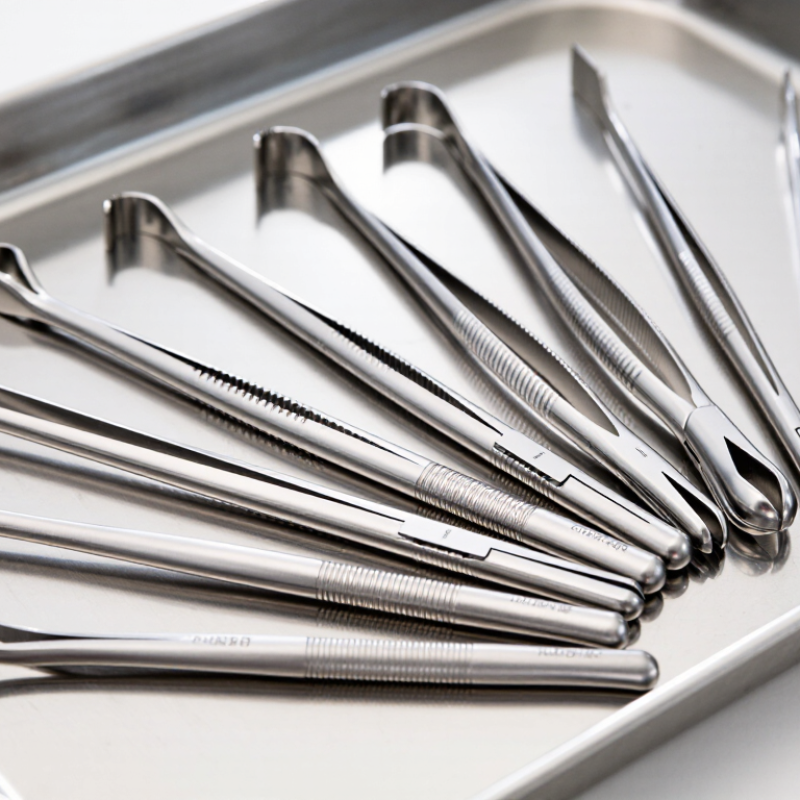
Curved Kelly haemostatic forceps are hinged surgical instruments designed to grasp vessels and control bleeding. Their curved jaws improve visibility around tissue planes and narrow operative fields. Fine transverse serrations help maintain a secure hold without requiring excessive finger pressure. A ratchet lock offers temporary closure, while the finger rings support controlled manipulation.
The “top 10 types” may differ by jaw length, curve depth, shaft size, and construction. Some patterns suit delicate vessels, while heavier versions provide firmer control in deeper areas. The defining feature remains the curved, serrated jaw, not the handle shape alone. A neat classification can mislead. Selection should follow the procedure, tissue sensitivity, and the operator’s assessed need for access.
Tips: Check the hinge, ratchet, and serrations before use. The jaws should meet evenly and release smoothly. Keep the instrument aligned with the intended tissue plane. Avoid using the forceps as a blunt dissector unless the procedure specifically permits it. Excessive pressure can crush tissue and obscure the actual bleeding source. Cleaning and sterilization must follow the facility’s validated protocol. Small surface damage matters. It can affect grip, cleaning, and reliability. In practice, familiar instruments are not always the best choice. Reassess when visibility, vessel size, or tissue condition changes.
Classifying the Top 10 Curved Kelly Forceps Types requires more than comparing length.
A useful clinical framework considers curvature, jaw pattern, shaft size, and locking control.
The standard curved Kelly forceps suit routine vessel clamping and tissue handling.
Fine-tip Kelly forceps offer better access in narrow fields.
Heavy-duty versions provide stronger grip for thicker structures.
Pediatric Kelly forceps use smaller jaws and shorter handles.
Long-shaft models reach deep cavities, while short-shaft models improve control near the incision.
Angled-handle Kelly forceps can improve wrist position during awkward procedures.
Curved Kelly forceps with delicate serrations support lighter handling.
Deep-serrated versions resist sliding on firmer tissue.
Partially serrated jaws may offer a balance between grip and reduced surface contact.
The tenth category is the atraumatic curved Kelly variant, designed with refined jaw edges and controlled closure.
Its suitability depends on the actual tissue, not the label alone. In practical assessment, inspect the hinge, ratchet teeth, alignment, and jaw closure under bright light.
A loose lock can change pressure unexpectedly. A stiff hinge can cause hand fatigue.
Stainless steel construction is common, but surface finish and joint quality still matter. These categories overlap, and that is the difficult part. A long-shaft instrument may also be heavy-duty. A fine-tip model may still have aggressive serrations.
Selection should follow procedural training, tissue sensitivity, required reach, and institutional protocols. Personal preference helps, but it should not replace measured handling and careful inspection.
Curved Kelly haemostatic forceps differ mainly in shaft length, handle balance, and jaw pattern. Ten useful configurations include standard, fine, heavy-duty, pediatric, short-shaft, long-shaft, narrow-jaw, wide-jaw, serrated, and atraumatic designs. Each supports a different level of access and tissue control.
Size changes the working feel. A compact forceps suits confined fields, while a longer shaft reaches deeper areas without crowding the hand. However, extra length can reduce tactile feedback. That trade-off is easy to underestimate.
Jaw features deserve close attention. Fully serrated jaws usually provide dependable grip on vessels or pedicles, but their pressure must remain controlled. Fine serrations can improve precision around small structures. Wider jaws distribute force more evenly across larger material.
Atraumatic patterns may reduce surface marking, although they may not hold slippery tissue as firmly. Some curved jaws have a sharper profile, improving visibility around corners. Others use a gentler curve for smoother positioning. The boundary is not always neat.
In practical selection, I compare the jaw tip against the intended field before considering handle style. A 12-centimetre instrument may feel precise in superficial work, while a 20-centimetre model offers reach but demands steadier control. That trade-off is easy to underestimate.
Stainless construction, smooth ratchet action, and even jaw alignment remain essential quality checks. I have occasionally preferred a heavier pattern, then changed my choice after noticing hand fatigue. That small failure matters.
Instruments should be assessed by trained professionals, with cleaning, inspection, and sterilization performed under approved clinical procedures.
Top 10 Types of Curved Kelly Haemostatic Forceps
Clinical Applications and Handling Techniques
Curved Kelly haemostatic forceps provide a clear working angle around vessels, tissue planes, and wound edges. Their curved serrated jaws support temporary haemostasis during general, vascular, and soft-tissue procedures. The ten common variations usually reflect length, jaw width, curvature, tip profile, and ratchet design. Small patterns suit narrow fields, while longer versions reach deeper cavities. Fine tips improve precision, but broad jaws may distribute pressure more evenly.
Selection should match the tissue and the required exposure. A clinician should inspect the hinge, serrations, alignment, and locking mechanism before use. The instrument must close smoothly without excessive force. Place the jaws across the target, not diagonally, when stable control is needed. Engage the ratchet only as far as necessary. Too much pressure can crush delicate tissue or damage a vessel wall.
During handling, keep the thumb and ring finger in the handles, with the index finger guiding the shaft. This supports steady opening and release. Avoid twisting a locked forceps, especially in a deep field. Release pressure before repositioning it. Small details matter.
A frequent error is choosing length for reach alone. Longer instruments can reduce tactile feedback and control. Another imperfect habit is relying on the ratchet instead of direct visual confirmation. Clinical judgment still matters. Sterility, inspection, and reprocessing must follow approved institutional procedures and the instrument’s validated instructions. Training under supervision remains essential for safe use.
| Type | Typical Size | Jaw Profile and Serration | Common Clinical Applications | Handling Technique | Important Precautions |
|---|---|---|---|---|---|
| Standard Curved Kelly Forceps | 14–16 cm 5½–6¼ in |
Moderately curved jaws with transverse serrations extending approximately halfway along the working surface. | General-purpose clamping of medium-sized vessels, connective tissue pedicles, and small bleeding points in open surgery. | Apply the jaws perpendicular to the vessel or pedicle, close gradually, and lock only as firmly as needed for haemostasis. | Do not use as a needle holder or for crushing delicate tissue. Confirm that the entire target is within the jaws before locking. |
| Fine Curved Kelly Forceps | 12–14 cm 4¾–5½ in |
Narrower, lighter jaws with partial serration for controlled work in confined or superficial fields. | Small-vessel control, minor soft-tissue dissection, dermatologic procedures, and delicate general surgical tasks. | Use the tips for precise placement and maintain a low closing force. Release the ratchet before repositioning whenever possible. | Avoid excessive traction and repeated gripping of fragile tissue, which may produce crush injury or local tearing. |
| Long Curved Kelly Forceps | 18–20 cm 7–8 in |
Extended curved jaws and shaft provide increased reach while retaining the typical half-serrated Kelly pattern. | Deep cavities, larger operative fields, pelvic or abdominal exposure, and control of vessels situated beneath superficial structures. | Keep the hand stable near the ring handles and use the curvature to approach the target without levering against adjacent tissue. | Long instruments amplify movement at the tip. Use visual control and avoid blind clamping near nerves, ducts, or major vessels. |
| Short-Jaw Curved Kelly Forceps | 12–14 cm 4¾–5½ in |
Compact curved jaws designed for short working distances and improved tip control. | Superficial procedures, hand and foot surgery, minor wound procedures, and precise control in small operative sites. | Support the instrument with the thumb and ring finger while using the index finger to guide jaw placement. | Limited jaw length reduces tissue capacity. Do not force large pedicles into the tips or clamp beyond the visible field. |
| Heavy-Duty Curved Kelly Forceps | 16–20 cm 6¼–8 in |
Thicker shanks and stronger curved jaws with partial serrations for increased holding capacity. | Robust tissue pedicles, larger vessel bundles, dense connective tissue, and situations requiring a firmer temporary clamp. | Center the tissue in the jaws, close in a controlled manner, and use the ratchet only after confirming secure placement. | Higher jaw pressure increases crush risk. It is not a substitute for a vascular clamp when atraumatic vessel control is required. |
| Extra-Fine Curved Kelly Forceps | 10–12 cm 4–4¾ in |
Slender, sharply defined curved tips with fine partial serrations for delicate manipulation. | Microsurgical assistance, fine dissection, small superficial vessels, and procedures requiring accurate tip placement. | Use minimal finger pressure and position the tips under direct illumination or magnification when appropriate. | Fine tips can bend or lose alignment if used on hard materials. Inspect jaw alignment before and after use. |
| Angled-Handle Curved Kelly Forceps | 14–18 cm 5½–7 in |
Curved jaws combined with an offset or angled handle to improve access around structures or within restricted fields. | Deep or awkwardly positioned operative sites where a straight-handled instrument may obstruct the surgeon’s view or hand position. | Approach along the instrument’s natural axis and rotate the wrist rather than twisting the clamped tissue. | Confirm the actual jaw direction before application. An angled handle can make spatial orientation less intuitive during rapid use. |
| Narrow-Profile Curved Kelly Forceps | 14–18 cm 5½–7 in |
Reduced jaw width and a slim shaft for access between closely spaced tissue planes. | Dissection in narrow spaces, tissue-plane separation, small pedicles, and procedures where preservation of the surgical view is important. | Advance the closed tips gently, open only after reaching the target, and clamp with the smallest effective bite. | Do not use lateral force to widen tissue planes. Narrow jaws may concentrate pressure and increase localized tissue trauma. |
| Broad-Jaw Curved Kelly Forceps | 16–20 cm 6¼–8 in |
Wider curved jaws distribute pressure across a larger tissue bundle while maintaining partial serration. | Broad soft-tissue pedicles, larger nonvascular bundles, packing material, and controlled grasping of substantial tissue masses. | Place the tissue evenly between the jaws and avoid catching only the edge of a broad pedicle. | Broad jaws are less suitable for very small vessels. Do not assume a larger contact area eliminates crush or ischemic injury. |
| Fenestrated Curved Kelly Forceps | 14–18 cm 5½–7 in |
Curved, partially serrated jaws with a fenestrated or relieved profile intended to reduce unnecessary tissue coverage. | Selected soft-tissue handling, temporary control of pedicles, and procedures where visual access through or around the jaws is useful. | Use the opening or relieved area to maintain visibility, then apply the ratchet only after the target is centered. | Verify that the fenestration does not allow the target to slip through. It should not be used when a completely secure vascular occlusion is required. |
Top 10 Types of Curved Kelly Haemostatic Forceps: Selection, Care, and Sterilization Considerations
Choosing among ten curved Kelly haemostatic forceps requires more than comparing lengths. Tip curvature, jaw serration, shaft reach, and ratchet pressure affect vessel control and tissue handling. A narrow curve may improve visibility in deep fields, while a broader jaw can provide steadier compression. Selection is not perfectly standardized. Review the procedure, anatomy, and the manufacturer’s validated instructions for use.
Care begins immediately after use. Wipe visible soil from the forceps and keep the instrument moist during transport. Dried blood can hide inside serrations and complicate cleaning. Open the ratchet fully before manual or ultrasonic cleaning. Inspect the hinge, jaw alignment, and locking action under good light. Replace instruments with pitting, stiffness, or damaged teeth. Small defects matter.
Sterilization cannot correct poor cleaning. The CDC classifies surgical instruments as critical items requiring sterilization, while AAMI ST79 emphasizes validated processing, monitoring, and documentation. The WHO Global Report on Infection Prevention and Control (2022) states that effective infection-prevention programs can reduce healthcare-associated infections by up to 70%. Steam sterilization is commonly preferred for heat-stable forceps, but cycle parameters must follow validated equipment instructions. Do not guess. A practical weakness remains: rushed inspection and incomplete drying still undermine otherwise compliant workflows.
Typical nominal instrument lengths used to support selection, handling, and procedural access
Curved Kelly forceps are commonly selected by working length, jaw profile, tip delicacy, and the depth of the operative field. Shorter instruments are generally easier to control in superficial or pediatric procedures, while longer patterns can improve reach in deeper fields. Reusable stainless-steel instruments should be cleaned promptly after use, inspected for alignment and ratchet function, and sterilized according to the applicable institutional protocol and manufacturer’s instructions. The lengths shown are typical nominal sizes for common configurations; exact dimensions may vary by instrument design.
Common types include standard, fine, heavy-duty, pediatric, short-shaft, and long-shaft designs. Narrow, wide, serrated, and atraumatic jaws offer different tissue control. The best choice depends on access, anatomy, and pressure requirements.
Short instruments usually provide better tactile feedback in superficial fields. Long shafts reach deeper areas but may feel less precise. Extra reach is useful, but it can increase hand fatigue.
Narrow jaws support precise control around small structures. Wide jaws spread pressure across larger material. Wider is not automatically safer. Pressure still requires careful control.
Serrated jaws can grip vessels or tissue pedicles securely during temporary haemostasis. Fine serrations may improve precision around small structures. Excessive pressure can crush delicate tissue or damage a vessel wall.
Atraumatic jaws may reduce surface marking on delicate tissue. They might not grip slippery tissue as firmly as deeper serrations. The choice should match the tissue and required stability.
Place the jaws across the target rather than diagonally when stable control is needed. Keep the thumb and ring finger in the handles. Use the index finger to guide the shaft. Release pressure before repositioning.
Check the hinge, serrations, jaw alignment, and locking mechanism under good light. The jaws should close smoothly without excessive force. Damaged teeth, stiffness, or pitting require removal from service.
Wipe visible soil away promptly and keep the instrument moist during transport. Open the ratchet fully before cleaning. Dry blood can hide inside the serrations. Sterilization does not replace thorough cleaning.
Longer shafts can reach deep fields with less hand crowding. A sharper curve may improve visibility around corners. However, longer instruments reduce tactile feedback and demand steadier control.
Choosing length only for reach is a common mistake. A heavy pattern may feel stable, then cause hand fatigue. Direct visual confirmation matters more than relying only on the ratchet.
Curved Kelly Haemostatic Forceps are essential surgical instruments designed to grasp, clamp, and control blood vessels or tissue during medical procedures. Their curved jaws provide improved visibility and access in deeper or confined operative areas, while the locking ratchet mechanism allows secure, temporary clamping with controlled pressure. This article introduces the defining structure of these forceps and classifies ten common types according to their size, curvature, jaw pattern, tip design, and locking characteristics.
It also compares how different designs influence precision, grip, and tissue handling, while explaining practical clinical applications and safe handling techniques. Proper selection depends on the procedure, vessel size, access depth, and desired level of control. Regular inspection, careful cleaning, lubrication of the hinge and ratchet, and validated sterilization are important for maintaining reliable performance. Understanding these features helps medical professionals choose, use, and care for Curved Kelly Haemostatic Forceps safely and effectively.